How Can the Desired Product Size Be Controlled Using a Hammer Crusher?
Hammer crushers...offers robust and flexible solutions for reducing various raw materials to a target particle size. However, businesses cannot consistently maintain the same product size simply by commissioning the machine. Feed size, hammer design, rotor speed, screen aperture, and material properties directly influence the product size. When any of these parameters change, the particle size distribution of the output product also changes. Therefore, facilities must focus not only on capacity but also on product standards. Construction chemicals, mineral processing, mining, and dry-mix facilities, in particular, require a narrow particle size range. Inconsistent product sizeleads to efficiency losses during the subsequent screening, mixing, and packaging stages.
Metkan Makine, Hammer crusher ...places product size at the center of the process. The project team jointly examines the material's hardness, moisture content, initial size, and production capacity. Subsequently, they select the appropriate rotor structure, hammer type, screen aperture, and motor power. This holistic approach supports not only the crushing process but the entire production line. When the operation maintains the correct settings, it achieves a more balanced product distribution, lower energy consumption, and extended equipment lifespan. In this content, product size with hammer crushers we will examine in detail the key technical factors that keep [product size] under control.
Contents
- How do hammer crushers reduce product size?
- How does screen aperture affect product size?
- Why is rotor speed critically important?
- How do hammer type and wear alter the outcome?
- Why must feed size remain consistent?
- What impact do material hardness and moisture content have?
- How does feed rate affect product distribution?
- Why is the internal crusher clearance setting important?
- How is particle size regularly monitored?
- How is the balance between capacity and fineness achieved?
- Frequently Asked Questions
- Metkan Makine hammer crusher solutions
How Do Hammer Crushers Reduce Product Size?
Hammer crusherIt fragments the material using the impact energy generated by hammers rotating on the rotor. As the rotor spins at high speed, the hammers deliver powerful blows to the product entering through the feed inlet. The material is reduced in size by the initial impact and subsequently strikes the crusher housing and other components. This repetitive action allows the product to reach finer sizes. Particles reduced to a sufficient size pass through the screen openings in the lower section and exit the crusher. Larger particles remain in the crushing chamber; the rotor carries them back to the impact zone.
Product size control depends on the balanced operation of this cycle. If the hammers do not generate sufficient energy, coarse particles remain in the system for a longer period. Conversely, excessively high energy can result in an over-abundance of fines. Therefore, the plant must maintain an operating setup suited to the target particle size range. The crusher yields more consistent results when rotor speed, hammer geometry, and screen aperture are harmonized. Additionally, consistent feeding balances the load within the crushing chamber and minimizes fluctuations in product size.
How Does Screen Aperture Affect Product Size?
The screen aperture, directly controls the product size in a hammer crusher. A small aperture produces a finer product, whereas a wide aperture allows for a coarser product output. However, simply reducing the screen aperture does not always yield better results; an excessively narrow opening slows down product discharge and leads to material accumulation inside the crusher. This density increases the rotor load, raises energy consumption, and reduces capacity.
To select the right screen, both the product objective and the capacity target must be considered together. Material moisture and flow characteristics are also important factors. Moist powders clog small screen apertures more quickly, while abrasive products enlarge the screen openings over time. This change causes the output product to become progressively coarser. Regular inspection of the screen surface by the maintenance team helps maintain a more consistent particle size distribution. Metkan Makine supports system performance by selecting the appropriate screen geometry based on the product structure and target fineness.
Why Is Rotor Speed Critically Important?
Rotor speeddetermines the impact energy transferred from the hammers to the material. At low speeds, the hammers do not generate sufficient force. Consequently, the crusher struggles to reduce coarse particles to the target size. This results in a wider particle size distribution in the output and increases the load on the screen. Additionally, the material remains in the crushing chamber for a longer period, which negatively affects capacity.
Excessively high rotor speeds give rise to different issues. The hammers may over-pulverize the material, increasing the proportion of fine dust. Additionally, the hammers, screens, and housing liners wear out more rapidly, and the motor consumes more energy. Therefore, the operation must adjust the rotor speed based on product hardness and the target particle size. Variable-speed motor systems allow for quick transitions between different recipes. Metkan Makine preserves both product quality and equipment lifespan by determining the optimal speed range based on process data.
How Do Hammer Type and Wear Affect the Outcome?
Hammer geometry, weight, and material quality directly influence crushing performance. Heavy hammers generate higher impact energy and break down hard raw materials more easily, whereas lighter hammers can offer the advantage of controlled crushing for brittle products. Furthermore, the shape of the hammer tip alters the contact area; a narrow contact surface generates intense impact, while a wide surface distributes force more evenly. Consequently, not every product group yields the same results with the same hammer design.
As wear progresses, the effective surface area of the hammers diminishes, and discrepancies in hammer weights may arise. This change disrupts impact balance and causes fluctuations in product size; some particles receive sufficient energy while others remain coarse. Uneven wear also increases rotor vibration. The maintenance team must regularly monitor hammer thickness and weight. Replacing hammers as a complete set helps the operation better maintain rotor balance. Proper hammer selection keeps the target product size within the same range over the long term..
Why Must the Feed Size Remain Consistent?
Hammer crusherIt operates based on a specific maximum input size. When excessively large pieces enter the crushing chamber, the impact load on the rotor increases. The hammers may fail to reduce these pieces sufficiently in a single blow. Consequently, the material circulates within the chamber for a longer period, and capacity drops. Large pieces also exert intense pressure on the screen surface, accelerating mechanical wear.
Variations in particle size within the feed also affect product standards.When very fine and very coarse particles enter the system simultaneously, the crusher cannot apply equal processing time to each piece. Fine particles may be over-crushed, while coarse pieces might fail to reach the target size. A pre-screening or pre-crushing system mitigates this disparity, Hammer crusher ensuring a more consistent feed. A uniform input size keeps the rotor load under control and narrows the product size distribution. This approach also enhances energy efficiency.
How Do Material Hardness and Moisture Content Affect the Process?
Not all materials behave the same way under impact.While brittle minerals shatter quickly, hard and tough materials require higher energy. As hardness increases, wear on the hammers, screens, and housing accelerates. Furthermore, the same rotor speed yields different particle size distributions for different materials. Therefore, when switching to a new raw material, the operation should not simply use existing settings. Instead, a small-scale trial run should be conducted first to evaluate the resulting product.
Moisture content also significantly alters crushing behavior.Dry materials flow freely and pass through the screen more easily. Moist products, however, tend to clump, adhere to the housing, and clog the screen apertures. This increases the proportion of coarse material and reduces capacity. The production team must regularly monitor raw material moisture levels and, if necessary, optimize the process through drying, controlled storage, or the selection of an appropriate screen. Metkan Makine manages these variables from the outset by incorporating material analysis into the project design.
How Does Feed Rate Affect Product Distribution?
Consistent feeding, product size with hammer crushers is a fundamental requirement for control. An excessively low feed rate fails to adequately fill the crushing chamber; consequently, the material may sustain excessive impact from the hammers, leading to an increase in the quantity of fines. Furthermore, the plant will fail to meet its target capacity. Conversely, an excessively high feed rate overfills the chamber and impedes rotor movement, resulting in a higher proportion of coarse material.
Vibrating feeders or controlled conveyor systems balance the material flow. The automation infrastructure can adjust the feed rate by monitoring motor current. When the motor load increases, the system reduces the feed; when the load drops, it increases the material flow. This dynamic control stabilizes the product size. It also protects the crusher from sudden loads. Metkan MakineIt aims for uninterrupted and balanced production by planning the crusher and the feeding system as part of the same process.
Why Is the Crusher Gap Setting Important?
The gap between the hammers and the inner surfaces of the crusher affects the path the material takes through the system. A narrow gap creates more intense impact and friction, potentially yielding a finer product. However, an excessively narrow setting increases energy consumption and wear. It also creates a risk of mechanical damage from oversized or foreign objects.
A wide gap, on the other hand, results in less impact on the material. In this case, the output product becomes coarser, and the particle size distribution widens. As the hammers wear down, the effective gap increases. Therefore, the maintenance team must measure not only the hammer thickness but also the operating gap. Regular adjustments prevent gradual changes in product size. Keeping maintenance records makes it easier to track wear trends, allowing for part replacement before an unplanned breakdown occurs.
How Can Particle Size Be Regularly Monitored?
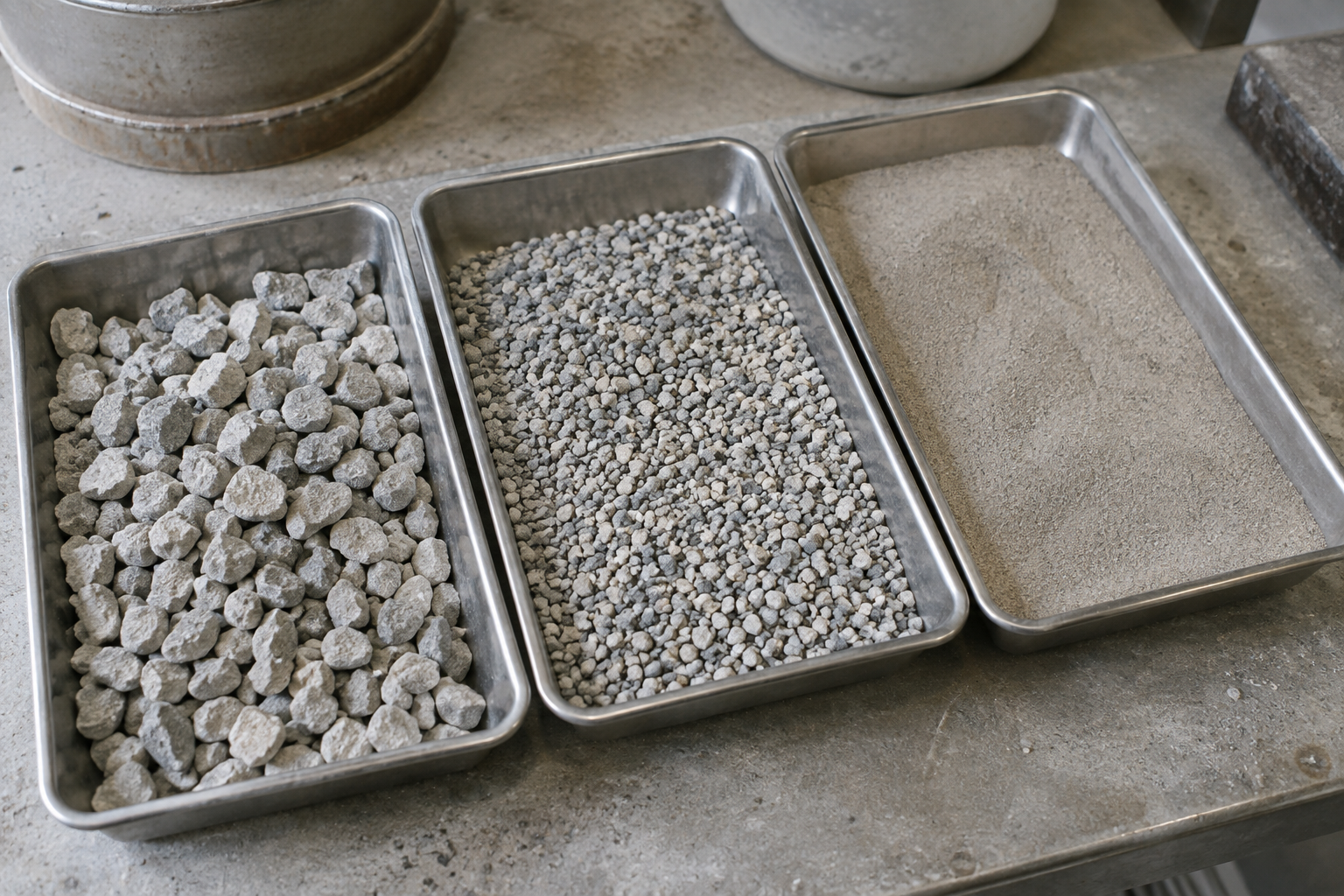
Relying solely on visual inspection to check product size does not yield reliable results.The facility must take samples at specific production intervals and perform sieve analysis. This analysis reveals the proportions of different particle size groups within the product. Deviations outside the target range indicate issues with system settings. In particular, an increase in the proportion of coarse particles may be linked to screen wear, loss of hammers, or low rotor speed.
Conversely, a rise in the proportion of fine product may indicate excessive speed, prolonged crushing time, or a low feed rate. The production team should examine the analysis results alongside data on motor current, capacity, and maintenance. This enables faster identification of the source of the problem. Automation and recording systems allow for recipe-based comparisons. Regular data monitoring helps maintain product standards while reducing unnecessary part replacements.
How Can a Balance Be Struck Between Capacity and Fineness?
Demand for a finer product often reduces capacity, as the material remains inside the crusher for a longer period and must pass through smaller screen apertures. If the facility focuses solely on increasing fineness, energy consumption rises, and the service life of hammers and screens is shortened. Conversely, excessively increasing the screen aperture to achieve high capacity compromises product standards.
The right balance is based on the actual requirements of the process. The facility must clearly define the particle size needed for the subsequent stage of production. Crushing material finer than necessary incurs costs without providing additional quality benefits. A suitable multi-stage crushing and screening system distributes the load. A hammer crusher, yields more efficient results only when operating within its intended range. Metkan Makine...develops a solution tailored to the production line by calculating capacity and product size together.
Frequently Asked Questions
Which component has the greatest impact on product size in a hammer crusher?
The screen aperture directly limits the maximum size of the output product. However, rotor speed, hammer condition, and feed pattern also alter the particle size distribution. Therefore, the operator must monitor all parameters collectively.
Does a smaller screen aperture always yield a finer product?
A smaller opening supports the goal of producing finer material. However, excessively narrow openings can lead to clogging and a loss of capacity. The operator must select the screen by taking product moisture and flow characteristics into account.
Does hammer wear result in a coarser product?
Worn hammers generate lower impact energy. This can increase the proportion of coarse material. Furthermore, uneven wear leads to rotor vibration and irregular particle size distribution.
Does the product become finer when rotor speed increases?
Higher rotational speeds generate a stronger impact for most products. However, excessive speed increases the proportion of fine dust, energy consumption, and component wear. The correct speed should be selected based on product characteristics.
Does moist material affect hammer crusher performance?
Moist products tend to clump and can clog screen openings. This issue reduces capacity and increases the proportion of coarse particles. However, controlled storage and proper pre-processing help maintain crushing performance.
Does the feed rate affect product size?
Yes. Overfeeding overloads the crusher and increases the proportion of coarse product. Conversely, an excessively low feed rate can result in an overabundance of fines. A balanced feeding system yields more consistent results.
How often should product size be checked?
The frequency of checks depends on production capacity and product specifications. High-output facilities should take regular samples during shifts. Additionally, sieve analysis provides early indications of changes in product distribution.
Does Metkan Makine design crushers based on the target product size?
Metkan Makine analyzes the input material and target particle size range at the start of the project. It then selects the rotor, hammers, screen, and motor based on this data, ensuring the system delivers a product distribution that meets process requirements.
Metkan Makine Hammer Crusher Solutions
For various minerals and industrial raw materials process-specific hammer crusher systems develops. The project team analyzes the feed size, target product size, material hardness, and hourly capacity. Subsequently, they select the rotor diameter, hammer configuration, screen aperture, and motor power. This engineering approach ensures measurable production performance rather than relying on arbitrary settings.
The company plans the hammer crusher to integrate seamlessly with feeding, screening, conveying, mixing, and packaging equipment. This ensures the entire line operates toward the same capacity goal. A robust housing structure, easy maintenance access, and appropriate automation support maintain product standards over the long term. Hammer crusher To achieve your desired product size and develop a solution tailored to your process Metkan Makine you can contact their experts..