BUCKET SELECTION
Conveying suited to the material
Bucket volume, fill level, and speed collectively determine capacity.
 MACHINERY AND PLANT
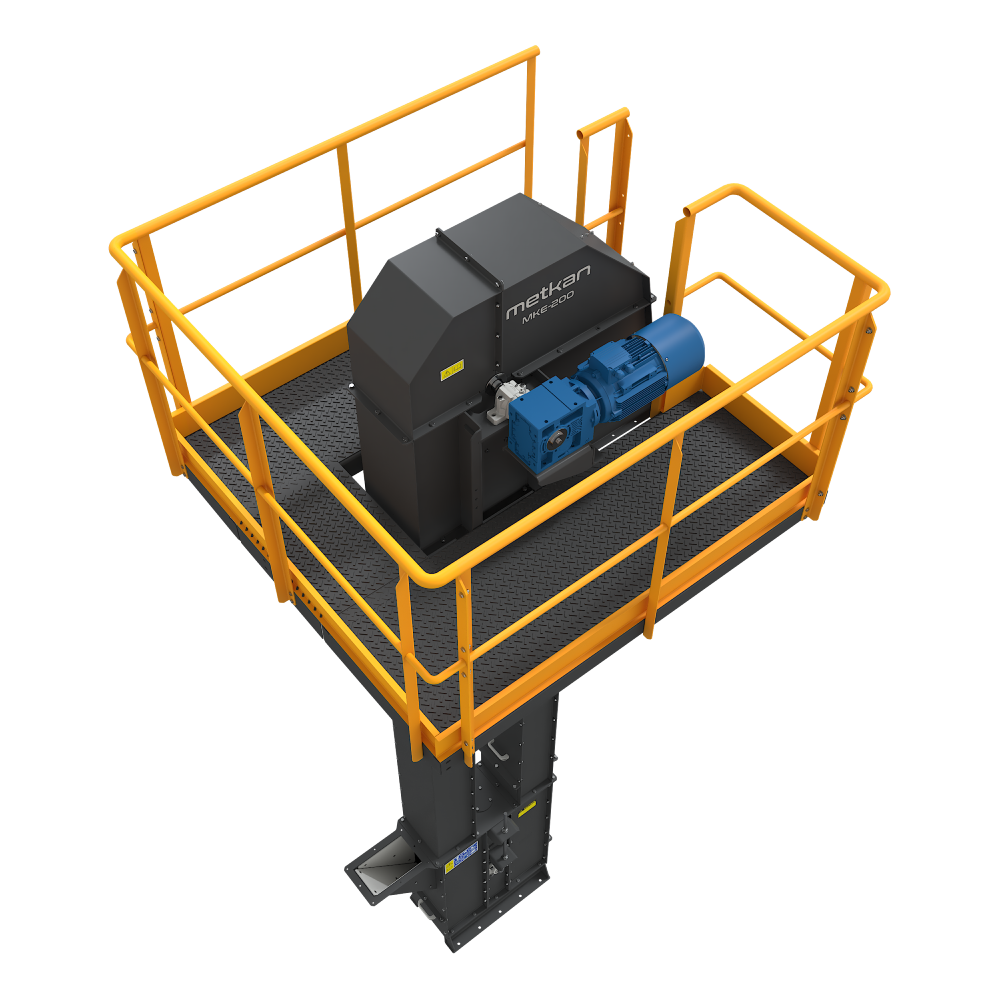
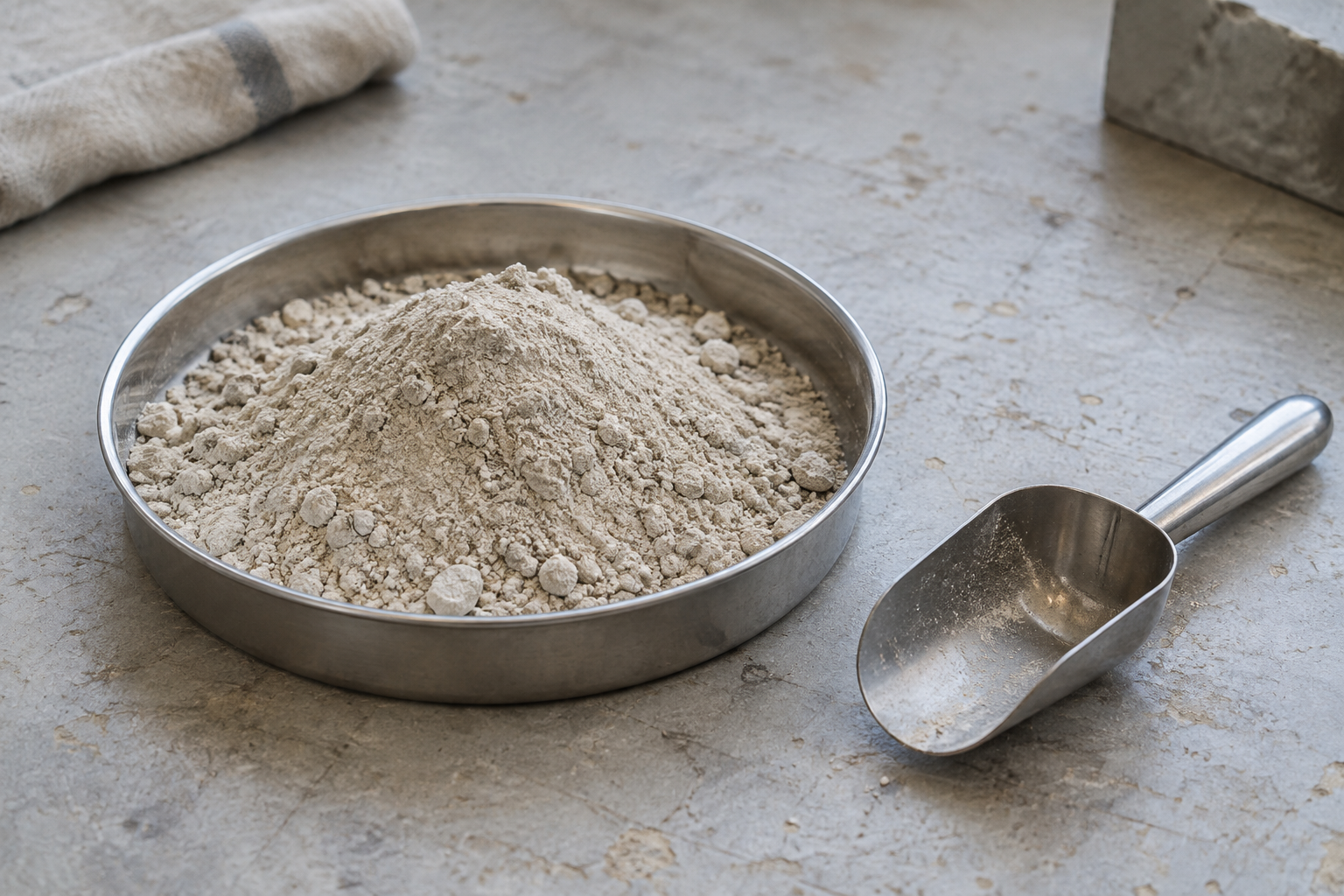
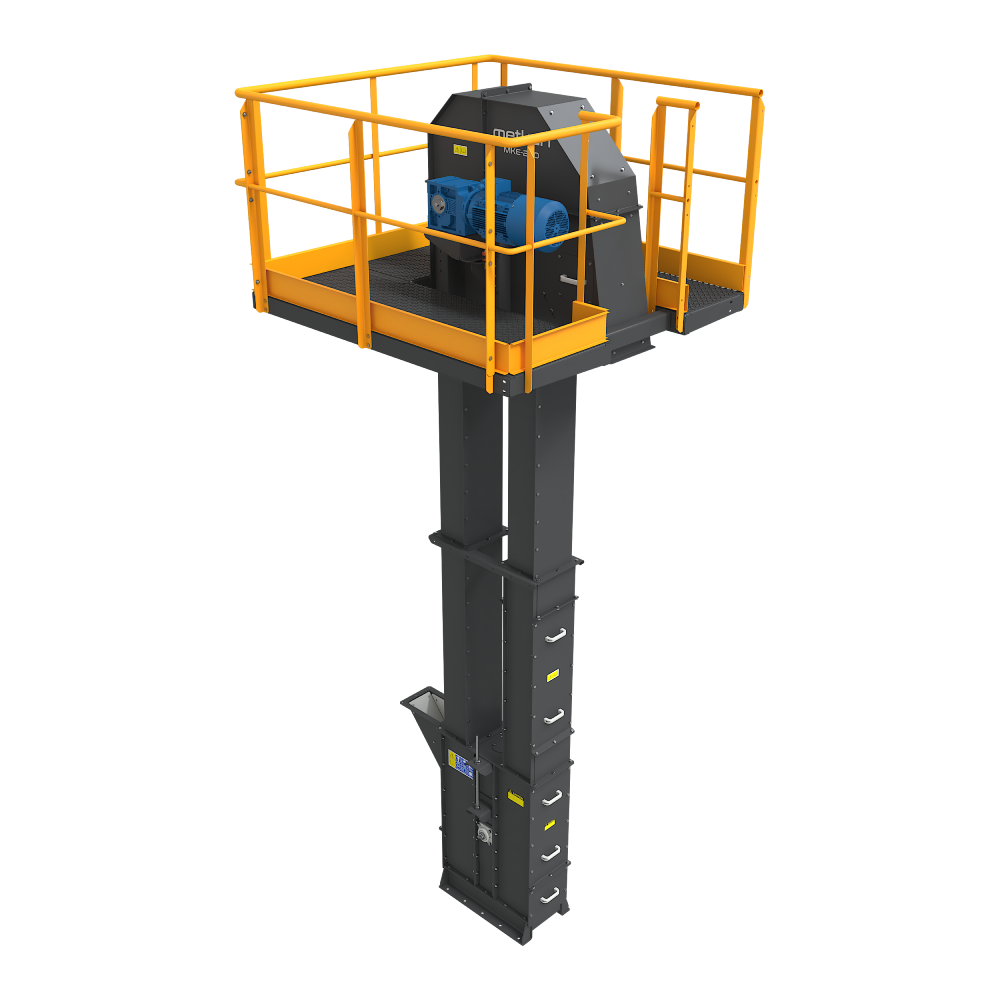
Vertical conveying for powder and granulated materials. Bucket design, drive, and housing arrangement are evaluated according to the material's properties.
Explore up closeMETKAN / Bucket selection
Bucket volume, fill level, and speed collectively determine capacity.
BUCKET SELECTION
Bucket volume, fill level, and speed collectively determine capacity.
DRIVE AND MAINTENANCE
Tensioning, bearings, and bucket connections are key inspection points in the maintenance plan.
Consider capacity, structure, and dimensions together.
Your material determines the right choice.
| Technical specification | MKE-100 | MKE-150 | MKE-200 | MKE-250 | MKE-300 | MKE-350 |
|---|---|---|---|---|---|---|
| Bucket size | 100 | 150 | 200 | 250 | 300 | 350 |
| Casing cross-sectionmm | 190 x 170 | 240 x 200 | 300 x 250 | 340 x 280 | 430 x 340 | 530 x 340 |
| Belt widthmm | 120 | 200 | 250 | 300 | 350 | 400 |
| Belt speedm/s | 1,5 | 1,6 | 1,6 | 1,6 | 1,6 | 2 |
| Pulley diametermm | 330 | 420 | 420 | 520 | 520 | 620 |
| Conveying capacitym³/h | 8 | 22 | 38 | 71 | 125 | 148 |
| Bucket volumeL | 0,38 | 0,87 | 1,79 | 3,18 | 6,7 | 8,6 |
| Bucket weightkg | 0,22 | 0,5 | 0,86 | 1,65 | 2,54 | 3,65 |
| Selection for your project | Request a quote ↗ | Request a quote ↗ | Request a quote ↗ | Request a quote ↗ | Request a quote ↗ | Request a quote ↗ |
Technical values should be considered alongside material specifications and operating conditions.
Material, capacity, and line layout. Selecting the right machine begins with understanding the entire production process.
Let's assess your needsBucket and speed selection based on flow characteristics.
Vertical conveying and transfer to an upper level.
Integration of equipment at different elevations.
TECHNICAL LIBRARY
PDF / Technical document SELECTION AND MAINTENANCE
Bucket elevators are industrial conveying systems developed for the vertical transport of granular, powder, and fine-grained materials in a controlled, are industrial conveying systems developed for this purpose. Their compact vertical design saves space in production plants, while the enclosed, sealed housing creates a clean and orderly working environment.
Uninterrupted flow, maximum efficiency.
METKAN bucket elevators transport material vertically in a continuous and stable manner, thanks to their specially designed bucket structure and balanced drive system. They operate without disrupting production flows or causing capacity loss.
Space-saving, smart design.
Its compact structure—based on the vertical conveying principle—offers maximum flexibility in facility layout. The modular casing design easily adapts to varying height and capacity requirements, ensuring seamless integration into both existing and new production lines.
Clean production, safe environment.
The fully enclosed housing design prevents dust leakage during conveying, offering an environmentally friendly and safe working environment. It ensures clean and controlled conveying, particularly for production lines sensitive to dust.
Structure suitable for demanding conditions.
METKAN Bucket elevators are designed to meet the continuous production needs of various sectors.
Bucket elevators are reliably used in silo feeding, production lines, and vertical material conveying applications across the construction chemicals, cement, gypsum, agriculture, food, and chemical sectors.
THE NEXT STEP
Tell us about your material and target capacity.
Let's choose the right machine for your process together.
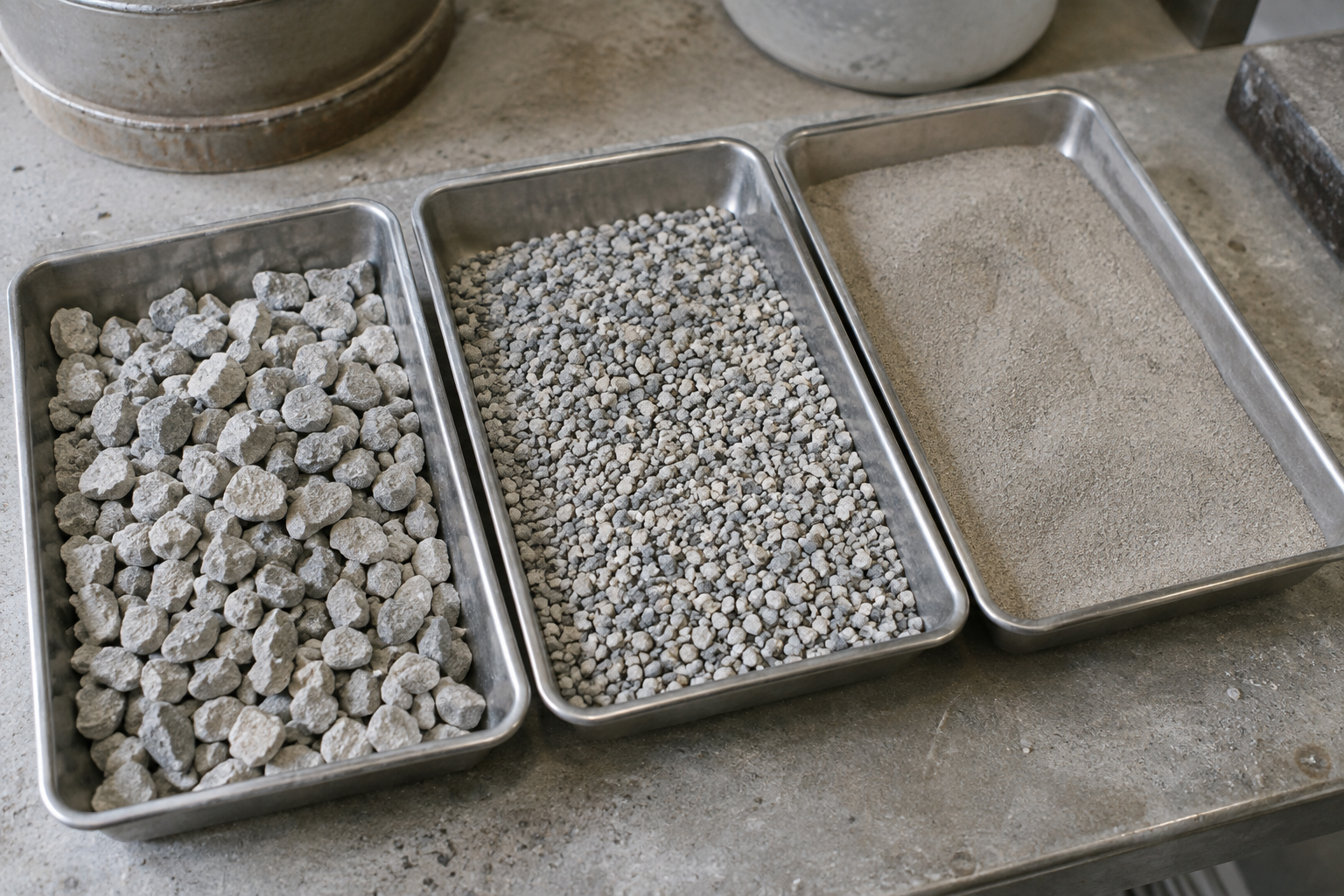
Bucket elevators lift bulk solids between process levels. For sand, minerals and dry mix ingredients, selection considers bucket filling, bulk density and discharge behaviour. Silo and mixer feeding require coordinated inlet and outlet transfers as well as sufficient lifting height.
RELATED ARTICLES
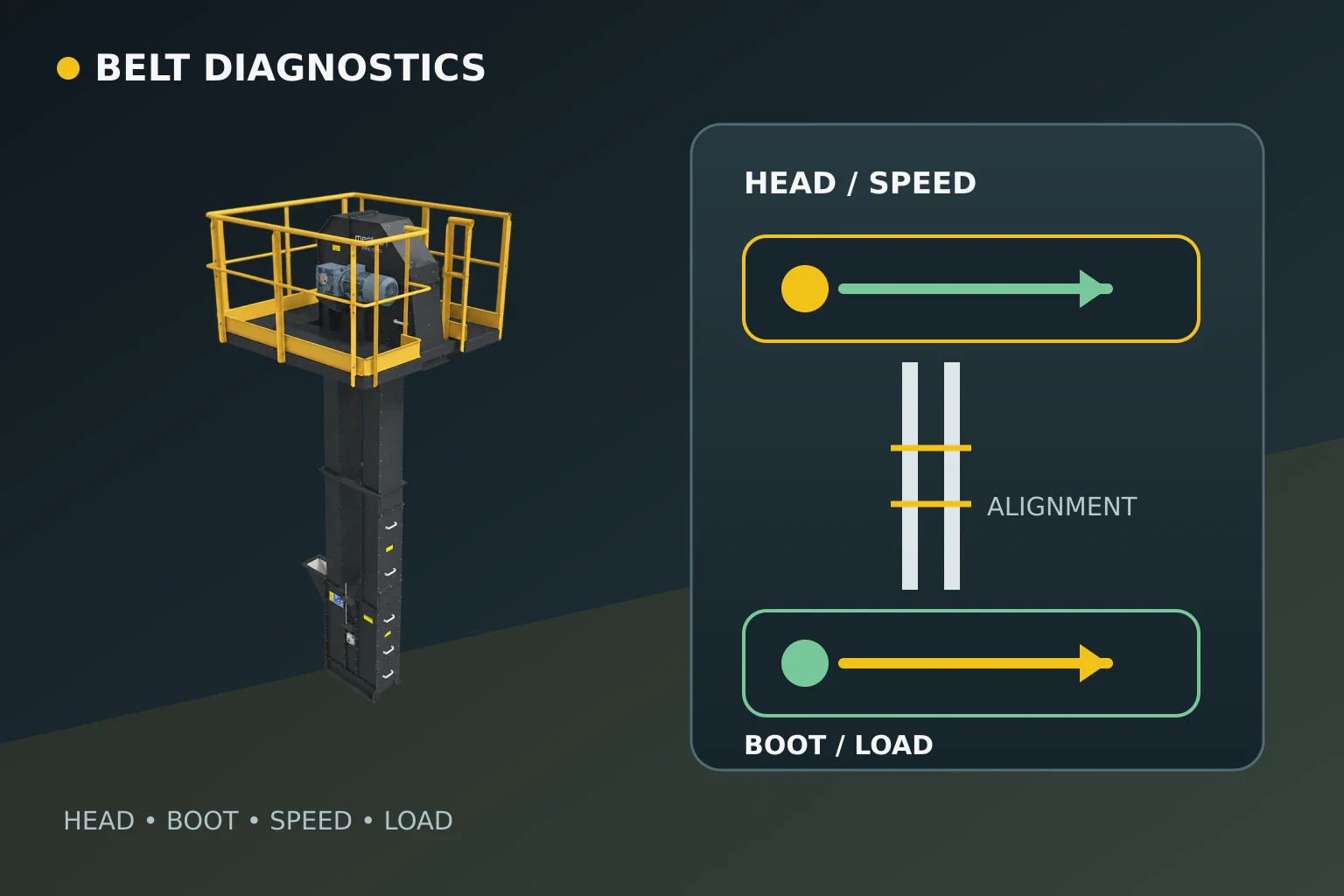
Belt misalignment and speed loss can occur together in a bucket elevator, but they are not the same fault. Misalignment means that a belt edge approaches a pulley or casing; speed loss can point to slip between drive and belt, overload or a transmission problem. Diagnosis starts by reading head and boot position signals, belt speed, motor load and the operating condition in which the event occurs, rather than relying on one alarm.
Read the technical articleBucket elevators play a vital role in the vertical transport of bulk materials. Selecting the right system is crucial, especially for production lines requiring high capacity. However, simply looking at the elevator height or motor power does not yield accurate results; calculating bucket elevator capacity requires the simultaneous evaluation of numerous technical parameters.
Read the technical articleBucket elevator systems play a crucial role in manufacturing facilities for the vertical conveyance of bulk materials. Sectors such as construction chemicals, mining, cement, grain, animal feed, and mineral processing rely heavily on this equipment. However, not every facility handles the same type of product. Material temperature, density, particle size, abrasiveness, and moisture content directly influence the choice of system. Therefore, businesses should not select a bucket elevator based solely on capacity. Belt-driven and chain-driven systems offer distinct advantages under varying operating conditions. Making the right choice boosts line efficiency while reducing maintenance costs and unplanned downtime.
Read the technical articleThe bucket elevator is a critical piece of equipment that ensures high efficiency in production lines requiring vertical material conveying. Industries such as construction chemicals, mining, aggregates, cement, gypsum, agriculture, food processing, and chemical manufacturing make extensive use of this system. Consequently, the issue of fallback in bucket elevators signifies more than just minor product loss; it directly impacts the entire line's capacity, energy consumption, cleaning requirements, maintenance intervals, and production continuity. When facilities analyze this problem early on, they can reduce mechanical failures and achieve a more stable flow along the production line.
Read the technical article