PLC and scenario design
Control logic tailored to inter-equipment operation sequences and process conditions.
 MACHINERY AND PLANT
From field equipment to operator screens: clear, traceable control solutions aligned with the process.
Discover our approachEffective automation is about more than just operating machinery; it involves maintaining production stability and making errors visible. Metkan installs systems that minimize downtime through precise scenario design and HMI screens that empower operators to make rapid decisions in the field. The goal is reduced intervention, faster diagnostics, and safer operations.
Examine the input, function, and impact on the next step for each stage.
We examine the existing equipment, signal, and hardware structure. We define the scope of the new installation or revision based on on-site requirements.
We define the operating sequence, recipe transitions, and stoppage conditions. We address the situations operators will encounter in conjunction with the process.
We evaluate machine control, drive settings, and recipe management together. Settings are determined based on on-site operating conditions.
We work on status indicators, clear alarms, and uncluttered screens. We aim to make stoppage reasons, durations, and operator actions trackable.
Crushing–screening, dry mix, and packaging–palletizing lines.
Crushing and screening lines, dry-mix plants, and packaging/palletizing lines; new automation installations, existing system revisions, breakdown/downtime reduction, and performance optimization initiatives.
Control logic tailored to inter-equipment operation sequences and process conditions.
Clear status indicators, simple navigation, and intuitive actions.
Handling product changeovers, production settings, and downtime information.
Review of hardware and I/O capacity, field settings, and stabilization.
Control hardware, I/O list, drives, and existing screens.
Operating scenarios, recipes, and information required by the operator.
Downtime, alarm frequency, product changeovers, and monitoring requirements.
Plant automation coordinates weighing, dosing, recipes and equipment interlocks as well as motor sequences. Crushing and screening automation, dry mortar batch control and palletizing line control require interfaces designed around the process. Existing PLC and HMI upgrades start with field signals and operating sequences.
RELATED ARTICLES
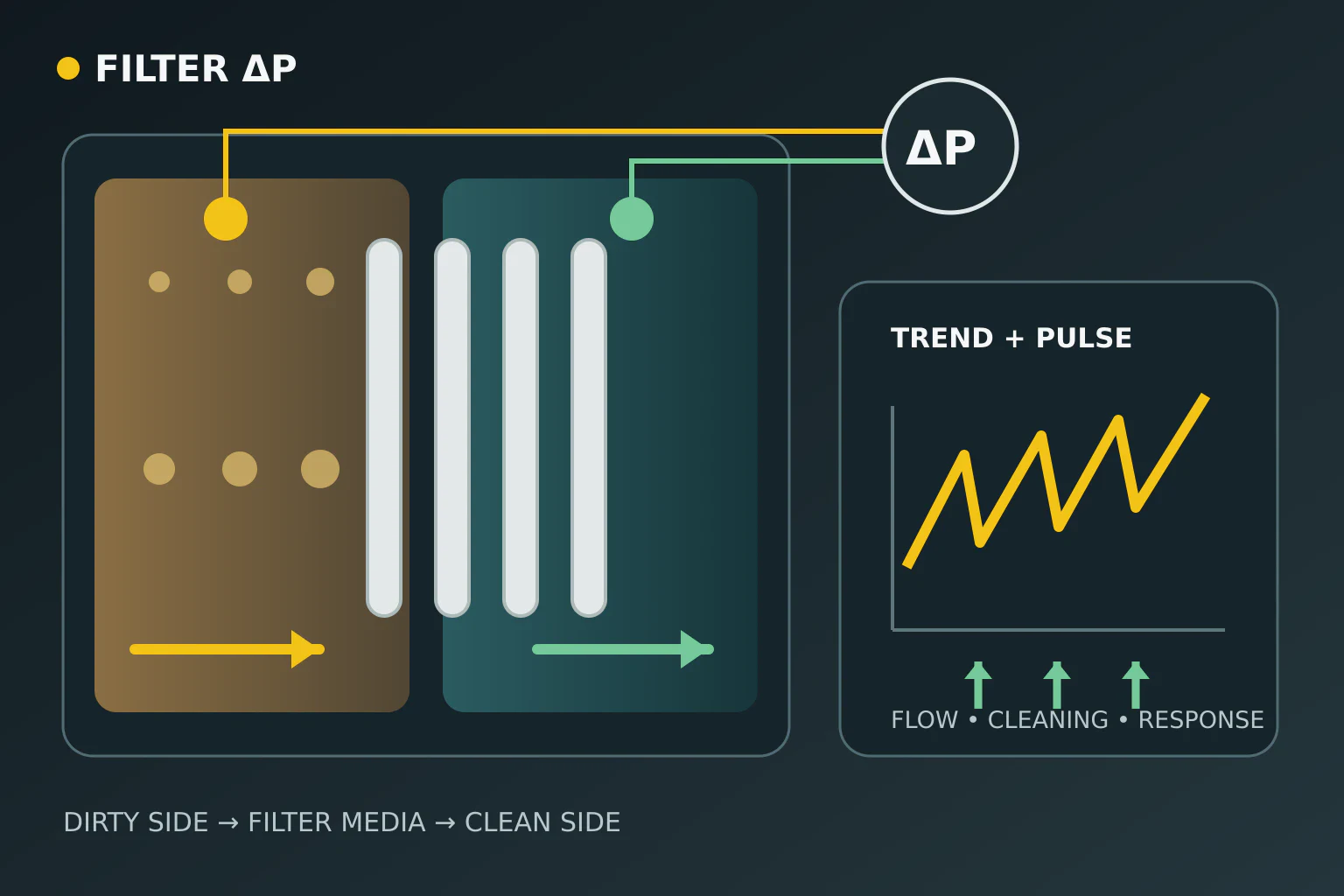
Differential pressure in a pulse-jet filter is the pressure difference between the dirty-air and clean-air plenums. It makes resistance across the filter surface visible, but does not prove bag condition by itself. The same pressure drop means different things at different airflow rates. Diagnosis therefore requires reading its trend together with airflow or fan load, cleaning pulses, inlet temperature and product condition.
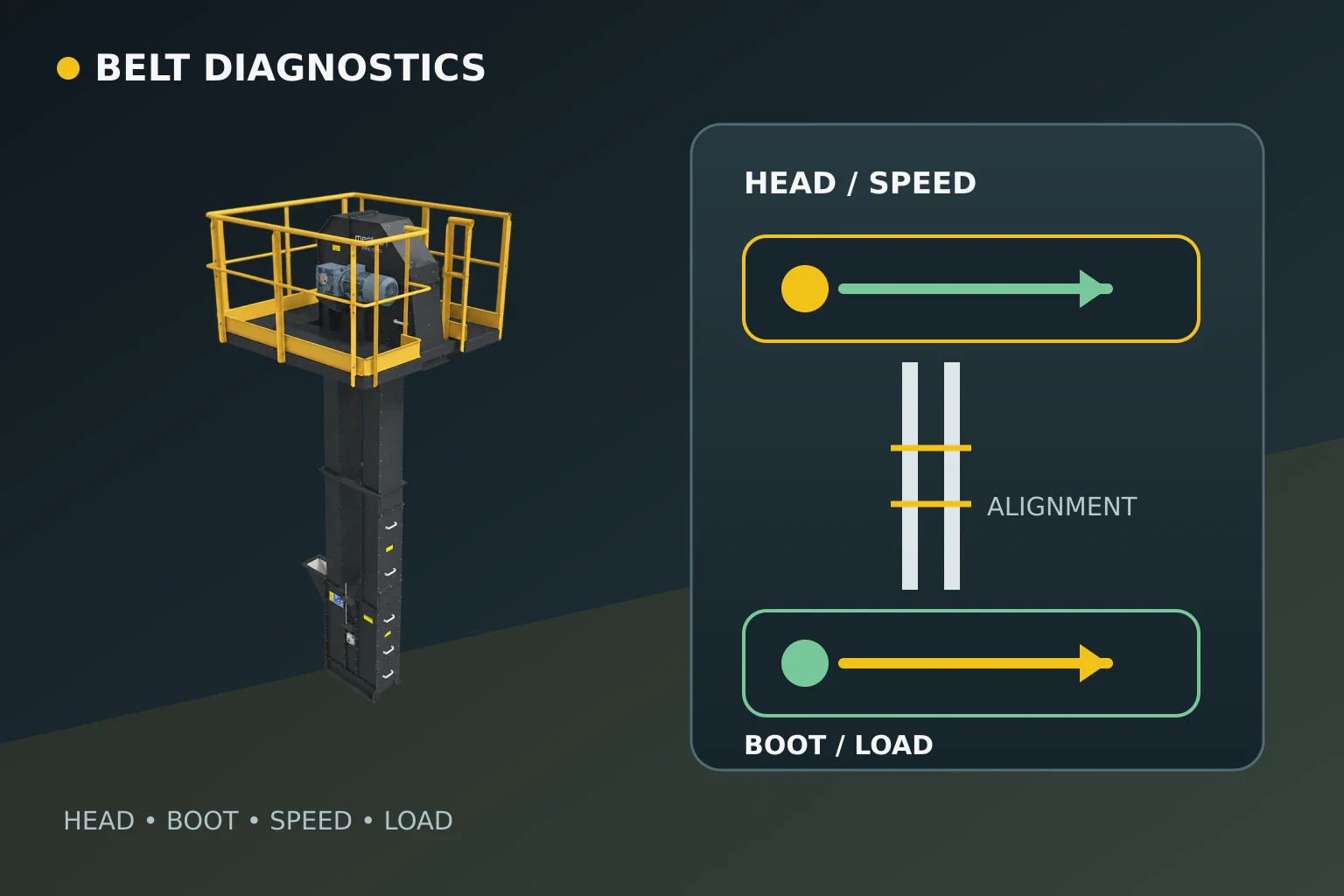
Read the technical articleBelt misalignment and speed loss can occur together in a bucket elevator, but they are not the same fault. Misalignment means that a belt edge approaches a pulley or casing; speed loss can point to slip between drive and belt, overload or a transmission problem. Diagnosis starts by reading head and boot position signals, belt speed, motor load and the operating condition in which the event occurs, rather than relying on one alarm.
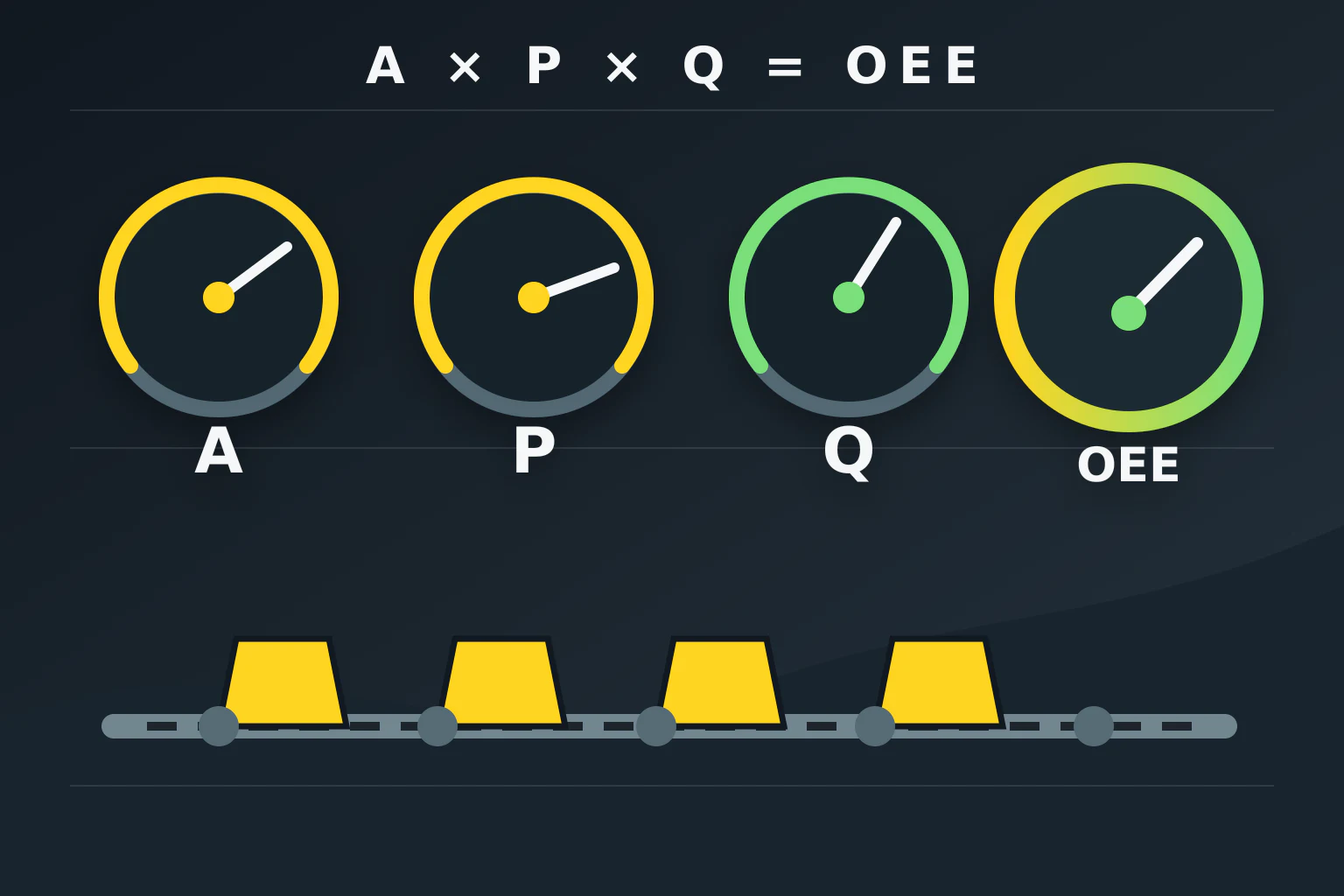
Read the technical articleA packaging line may appear to run throughout a shift, yet waiting, minor stops, reduced speed and rejected bags are different losses. OEE shows how much planned production time becomes good output at the target rate. This guide explains how to define the line boundary, calculate the three factors and interpret the result with automation data.
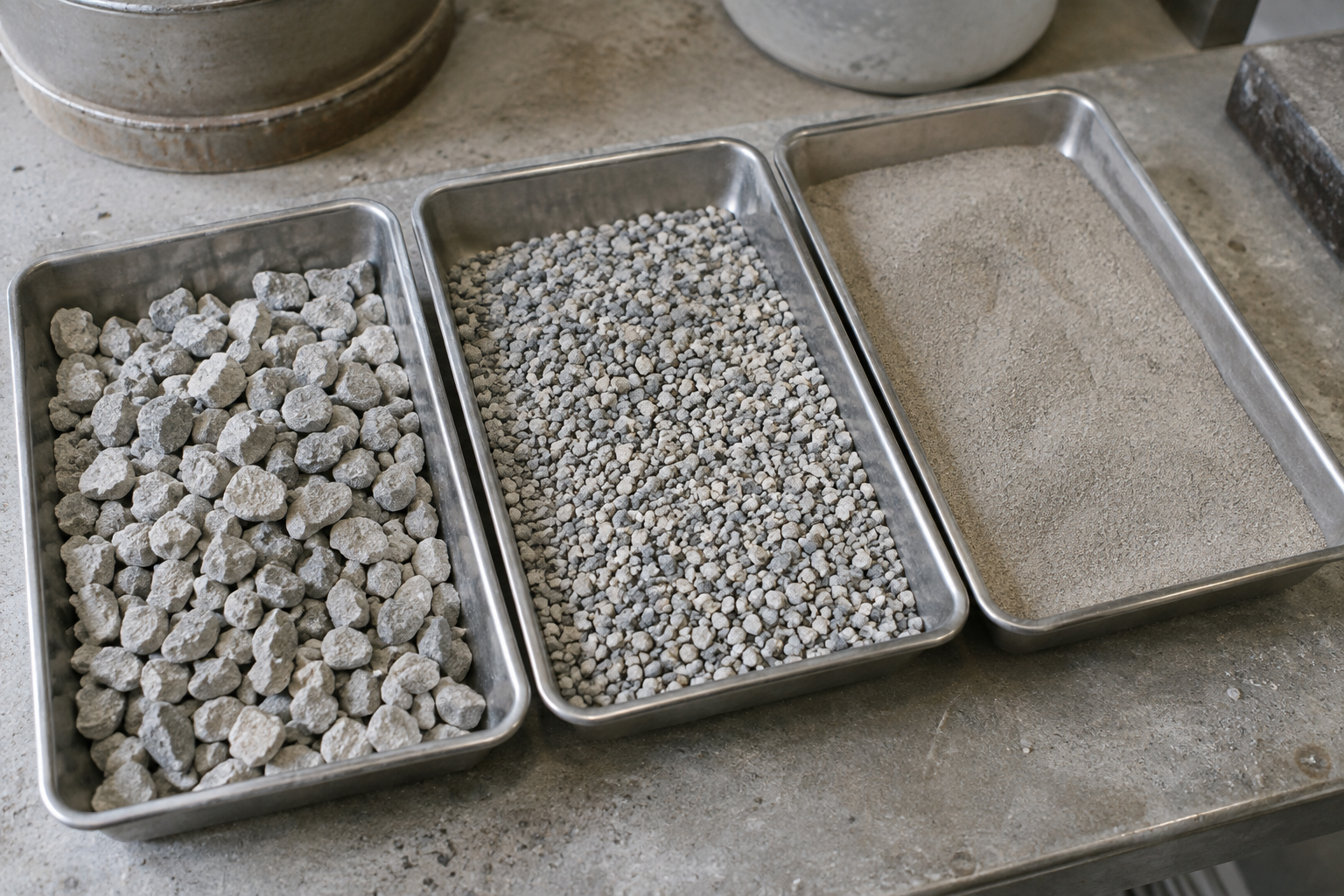
Read the technical articleKnowing a belt conveyor’s width is not enough to state how many tonnes per hour it will carry. For bulk materials such as limestone or aggregate, the real question is: what mass flow results from the safe load cross-section on the belt, the selected speed and the material’s bulk density? This guide explains the theoretical calculation, a worked assumption and a practical check.
Read the technical articleReading robotic palletizing capacity from the catalogue speed of the robot arm alone is misleading. The package rate from the filling line, the number of bags taken by the gripper, the pick-and-place path, layer pattern and pallet change must be assessed together. The right starting point is to calculate the time the line allows the robot and compare it with the actual cell cycle. This guide converts a bags-per-minute target into cycle time and tests average capacity with a simple example.
Read the technical articleIn a dry-mix plant, the actual amount of an ingredient in the mixer can differ even when the recipe display looks correct. A weigh hopper may appear to have reached its target while mechanical stress, vibration, suspended material or product that continues to flow from the feeder changes the result. A sound check considers the target, net weight, discharge and batch repeatability together, not only the kilograms on the screen. This allows mechanical and process causes to be tested separately before the problem is attributed to calibration.
Read the technical articleSoftware and automation are not merely auxiliary support systems for crushing and screening plants. They constitute a fundamental component that governs the plant's production rhythm, maintains coordination between equipment, and enhances operator control. Even if individual units—such as crushers, screens, and conveying equipment—are powerful, the plant cannot achieve its target capacity if these machines do not operate in the correct sequence within the flow. Irregular feeding places undue strain on the crusher. If the crusher produces an unbalanced output, screening efficiency drops. If the conveyor flow is not properly regulated, material begins to accumulate along the line. Therefore, software and automation establish a common language for the entire plant, bringing greater control to the production flow.
Read the technical articleWeight deviation on a bagging line is one of the most critical issues directly affecting production quality, as every bag must meet the same product standard. If the fill quantity varies from bag to bag, quality consistency is compromised, and shipment uniformity suffers. An underfilled bag undermines customer trust, while an overfilled bag increases product loss. Moreover, even minor discrepancies can add up to significant totals by the end of the day. Therefore, weight control on a bagging line should not be viewed solely as the responsibility of the weighing unit; the feeding mechanism, conveyor flow, bag behavior, and palletizing rhythm all collectively determine the outcome. From Metkan Makine’s perspective, line efficiency is shaped not by the power of a single piece of equipment, but by the balance established across the entire system.
Read the technical articleRobotic palletizing systems are a vital component of production continuity in facilities manufacturing construction chemicals, cement, minerals, and dry-mix products. Modern facilities operating at high capacity aim to ensure products are neatly palletized and ready for shipment. However, pallet stacking errors compromise stacking quality, slow down production rates, and incur additional logistics costs. Therefore, stacking issues in robotic palletizing systems should not be viewed merely as visual defects; a stable stack structure is critical for safe conveying and organized warehouse management. By accurately analyzing the root cause of these issues, businesses can both boost production efficiency and enhance shipment safety.
Read the technical article