Software and automation It is not merely an auxiliary support system for crushing and screening plants; rather, it is a fundamental component that manages the plant's production rhythm, ensures coordination between equipment, and enhances operator control. Because crushing, screening, and conveying equipment —even if individually powerful—cannot enable the plant to reach its target capacity if they do not operate in the correct sequence within the same flow. If the feed is irregular, the crusher is strained. If the crusher produces an unbalanced output, screening efficiency drops. If the conveyor flow is not at the right speed, material begins to accumulate along the line. Therefore, software and automation establish a common language for the entire plant, making the production flow more controlled.
Increasing efficiency in crushing and screening plants is not achieved solely by selecting larger machinery. The primary factor boosting efficiency is proper system management. Software support regulates motor operating sequences, monitors load fluctuations, synchronizes equipment, and provides operators with a clearer basis for decision-making. It also makes the causes of downtime visible and enables the early detection of fluctuations in the production flow. Metkan Makine’s crushing, screening, and turnkey plant approach also places great importance on process integrity. This integrity is strengthened through software and automation support. This content examines in technical detail how software and automation efficiency in crushing and screening plantshow it improves performance is examined in detail from a technical perspective.
Contents
- Why are software and automation important for crushing and screening plants?
- What exactly does automation manage in crushing and screening plants?
- How does software support increase production efficiency?
- How do crushers, screens, and conveyors operate synchronously through automation?
- How does automation reduce the risk of breakdowns and downtime?
- How are product quality and capacity balance maintained through software?
- Why are energy management and operator control enhanced by software?
- Why must automation be planned from the outset in turnkey plants?
- The role of software and automation in the Metkan Makine approach
- Frequently Asked Questions
Why are software and automation important for crushing and screening plants?
Crushing and screening plants are multi-stage production lines. In these plants, processes such as feeding, crushing, screening, material routing, and dispatching occur simultaneously. On a line with so many steps, the random operation of equipment leads to significant efficiency losses. Software and automation This is precisely where it comes into play. The system determines the sequence in which the machines operate. It also manages start-up and shutdown scenarios. Consequently, the plant starts up in a more controlled manner, shuts down more safely, and daily production proceeds more consistently.
Automation also reduces human error. When an operator attempts to monitor the entire plant manually, a minor detail overlooked can eventually escalate into a significant loss. However, software-supported systems alleviate this burden. For instance, they detect an overloaded motor at an earlier stage, clearly indicate imbalances in the feed rate, and make flow issues on conveyors or screens visible. Consequently, the operator ceases to be merely someone who intervenes; they become someone who manages the process with greater insight. This directly boosts plant efficiency.
What exactly does automation manage in crushing and screening plants?
The automation system, In the crushing and screening line, it manages the coordinated operation of the machinery. First, it determines the operational sequence of the motors. Conveyors, crushers, screens, and auxiliary equipment are activated in a specific order. This sequence is not arbitrary, as the product flow follows a specific logic; for example, starting a crusher before the discharge line is ready would not yield satisfactory results. Automation maintains this order, ensuring that product flow begins in a safer and more controlled manner.
Furthermore, the system monitors loads. Motor currents, operating times, start-stop frequency, and critical alarm scenarios can be tracked via the software. This monitoring logic does more than just manage the plant's immediate operation; it also reveals production patterns. Operators can identify which equipment is under the most strain, and technical teams can more easily pinpoint sections experiencing recurring disruptions. Thus, automation operates beyond simple on/off logic; instead, it begins to map out the plant's performance profile.
How does software support increase production efficiency?
Software support boosts efficiency by first establishing order. This is because the system ensures the equipment operates in unison. A balance is established between the feed rate and the crusher's capacity. The crusher's output aligns better with the screen's load, and downstream conveyors operate in step with this flow. Maintaining this balance reduces unnecessary downtime along the line and minimizes product accumulation. Operators are spared the need for constant manual adjustments, resulting in more stable daily production.
Furthermore, the software enables data-driven management rather than reliance on snap decisions. Operators can monitor alarm history, operating times, and the load behavior of specific equipment via the screen. This visibility elevates on-site management from an intuitive approach to a professional one. For instance, if a drop in capacity occurs at a specific time, the cause can be analyzed more quickly. If stoppages repeatedly occur at the same point, preventive measures can be taken before the problem recurs. This approach helps the plant operate not only faster but also more intelligently.
How do crushers, screens, and conveyors operate synchronously through automation?
Crushers, screens, and conveyors may appear to be separate, individual machines, but on-site, they are components of a single process chain. Conveyors transport material, crushers reduce its size, and screens classify the product. If synchronization between these three areas is lost, the entire line suffers a drop in efficiency. The automation system therefore ensures these pieces of equipment operate in a unified rhythm. If the product output isn't ready, the feed rate is restricted; if the screen's capacity is being pushed to the limit, the flow is regulated; and if a conveyor is moving slower than expected, the crusher is not subjected to continuous overloading. This balance is the foundation of an efficient plant.
Especially in large-scale crushing and screening lines,starting up or shutting down equipment simultaneously poses significant risks. Automation establishes a safe sequence here. First, the downstream line is prepared to receive the flow. Then, the upstream system supplying the product is activated. This logic operates in reverse during shutdown. Consequently, the product is never left uncontrolled within the line, and the risk of blockages caused by un-discharged material is reduced. Therefore, automation should be viewed not merely as a means of operating equipment, but as a system that ensures the equipment works in harmony.
How does automation reduce the risk of breakdowns and downtime?
The first step in reducing the risk of failure is to observe equipment behavior in real-time. Automation systems provide this visibility. Motor loads, alarm history, unexpected stoppages, and recurring signals offer valuable data to the technical team, allowing issues to be detected before they escalate. For instance, if the same motor frequently triggers an overload warning, the cause might not be purely electrical; it could stem from irregular power supply, increased mechanical resistance, or a load imbalance across the line. The software gathers these indicators, giving the operator the opportunity to intervene at an earlier stage.
Downtime is also reduced as a result, because the team can identify the cause of a stoppage more quickly. While locating the source of a fault can take longer in manual systems, the point of failure is much more visible in automation systems with properly configured alarm logic. Furthermore, safe-stop scenarios reduce the risk of secondary damage, thereby lowering maintenance costs. In short, while automation does not eliminate failures entirely, it significantly limits their escalation, spread, and potential to cause prolonged downtime.
How are product quality and capacity balance maintained through software?
Crushing and screening plantsIncreasing capacity alone does not equate to success. If product classification suffers as capacity rises, quality declines—even if the line appears efficient. Software support helps maintain the balance between capacity and quality by preventing excessive flow rates or uncontrolled strain on equipment. This ensures a more balanced load distribution on the screens and allows the crusher to deliver a more consistent product, ultimately resulting in more uniform final product fractions.
This setup is particularly important for facilities requiring precise separation, as even minor flow variations affect the product size distribution. Automation makes these variations more visible by providing the operator with real-time monitoring capabilities. Furthermore, systematic data tracking clarifies—over time—the conditions that yield higher-quality products. This insight enables more informed adjustments to line settings in the future. Consequently, the facility does not merely produce; it begins to optimize production by analyzing its own data.
Why are energy management and operator control enhanced by software?
Energy cost Crushing and screening plantsis a significant expense item. In particular, the simultaneous and uncontrolled operation of high-power motors leads to unnecessary energy consumption. Software and automation in crushing and screening plants for crushing and screening plants in this regard. The system manages equipment more effectively based on process requirements, reducing the number of unnecessary start-stop cycles and ensuring more controlled load distribution. This leads to more planned energy usage. While site-specific data is required to confirm a direct reduction in costs, more controlled operation certainly contributes to more efficient energy use.
Operator control is also enhanced, as software-supported facilities allow operators to monitor the entire system from a centralized point. They can easily see which motors are running, where alarms have been triggered, and at which points the flow is encountering resistance. This visibility accelerates on-site interventions and improves the quality of decision-making. The operator evolves from someone who merely patrols the site physically into someone who manages the system's overall performance. This is one of the most important components of increasing efficiency in modern plants.
Why must automation be planned from the outset in turnkey plants?
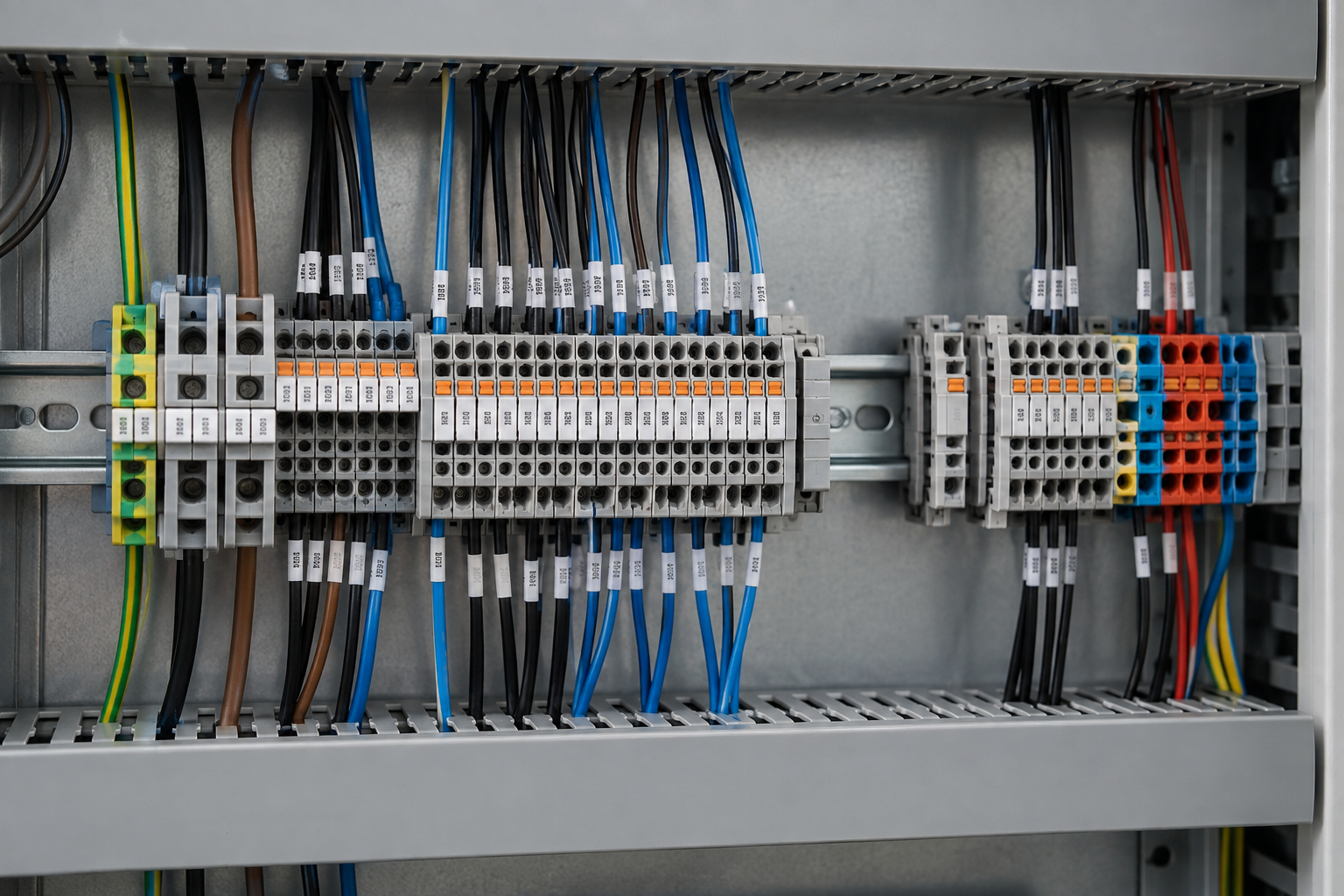
It is possible to add automation to turnkey crushing and screening plants at a later stage;however, the best approach is to plan this structure at the very beginning of the project. This is because automation is not merely a matter of selecting control panels or screens. Cable routing, sensor locations, motor control logic, alarm scenarios, and safety chains must be incorporated into the design from the outset. When this planning is done initially, the system is installed in a cleaner, more organized, and more efficient manner. Retrofitted additions, on the other hand, can sometimes create confusion on-site.
Furthermore, planning automation from the start ensures that all equipment is selected based on a unified logic. The operating characteristics of crushers, screens, and conveyors can be monitored more clearly. Operator screens are designed accordingly, alarm priorities are established more accurately, and safe-stop scenarios are configured more reliably. Metkan Makine‘When considering the turnkey plant approach, this holistic planning becomes even more important. This is because an efficient plant is strengthened not only by mechanical compatibility but also by digital control logic.
The role of software and automation in the Metkan Makine approach
Metkan Makine, Crushing-screening and plant configuration prioritizes process integrity. This integrity is not achieved solely through machine selection; it also gains meaning from how those machines are managed. Therefore, Software and automation for crushing-screening plants, it becomes a core structural element rather than merely a supplement to the production line. When crushers, screens, and conveying systems operate under a unified control logic, the plant runs more smoothly. This orderliness supports both efficiency and site safety.
This approach becomes particularly critical in facilities requiring continuous flow, such as mining and aggregate plants, because any disruption to the production rhythm affects the entire line. This is where the corporate philosophy of Metkan Makine becomes clear: the right plant consists not only of robust machinery but also of a system that is correctly planned and managed. Software and automation in crushing and screening plants represents one of the invisible yet most effective components of this system. For this reason, businesses aiming for efficiency in crushing and screening plantsmust place the decision regarding automation at the heart of their processes.
Frequently Asked Questions
What role do software and automation play in crushing-screening plants?
Software and automation in crushing and screening plants They ensure that the machines within the plant operate in the correct sequence and according to the right operational scenarios. They also help the operator monitor the system more clearly. This strengthens the flow process, reduces intervention times, and increases overall efficiency.
How does automation manage crushers, screens, and conveyors?
The automation system synchronizes this equipment based on a unified flow logic. It prevents new material from being fed before the product output is ready. It manages shutdown and startup sequences in a safe order, resulting in more stable operation along the line.
Does automation actually reduce downtime?
A well-designed system makes the causes of downtime visible more quickly. Thanks to alarm history, load monitoring, and safe-stop sequences, the technical team can identify the source of the problem faster, which helps reduce downtime.
How does automation affect quality in a crushing and screening plant?
Since automation maintains flow balance, the load on crushers and screens moves more consistently. This facilitates more stable product classification, resulting in more consistent final product quality.
Why is software important for energy management?
Software enables more controlled equipment operation. It reduces unnecessary start-stop cycles and optimizes load distribution. This approach contributes to more planned energy management.
When should automation be considered for turnkey plants?
The best approach is to plan for automation at the very beginning of the project. This is because sensor locations, cabling infrastructure, alarm scenarios, and safety logic must be considered alongside the facility design itself. This approach ensures a cleaner and more efficient system installation.
What is the greatest advantage of automation for the operator?
The operator monitors the entire line in a more centralized and transparent manner. They can quickly see which equipment is running, where an alarm has been triggered, and at which point the flow is encountering bottlenecks. This improves the quality of intervention.
Can a facility operate efficiently without automation?
It can; however, as reliance on manual monitoring increases, so do the risks of error and hidden losses. Automation support ensures a more balanced, safe, and predictable production workflow, particularly in large, continuously operating facilities.
Metkan Makine with Software and automation in your crushing and screening plant By properly planning the infrastructure, you can establish a more controlled, efficient, and sustainable production flow. To define the system configuration best suited to your project... contact us