CONVEYING
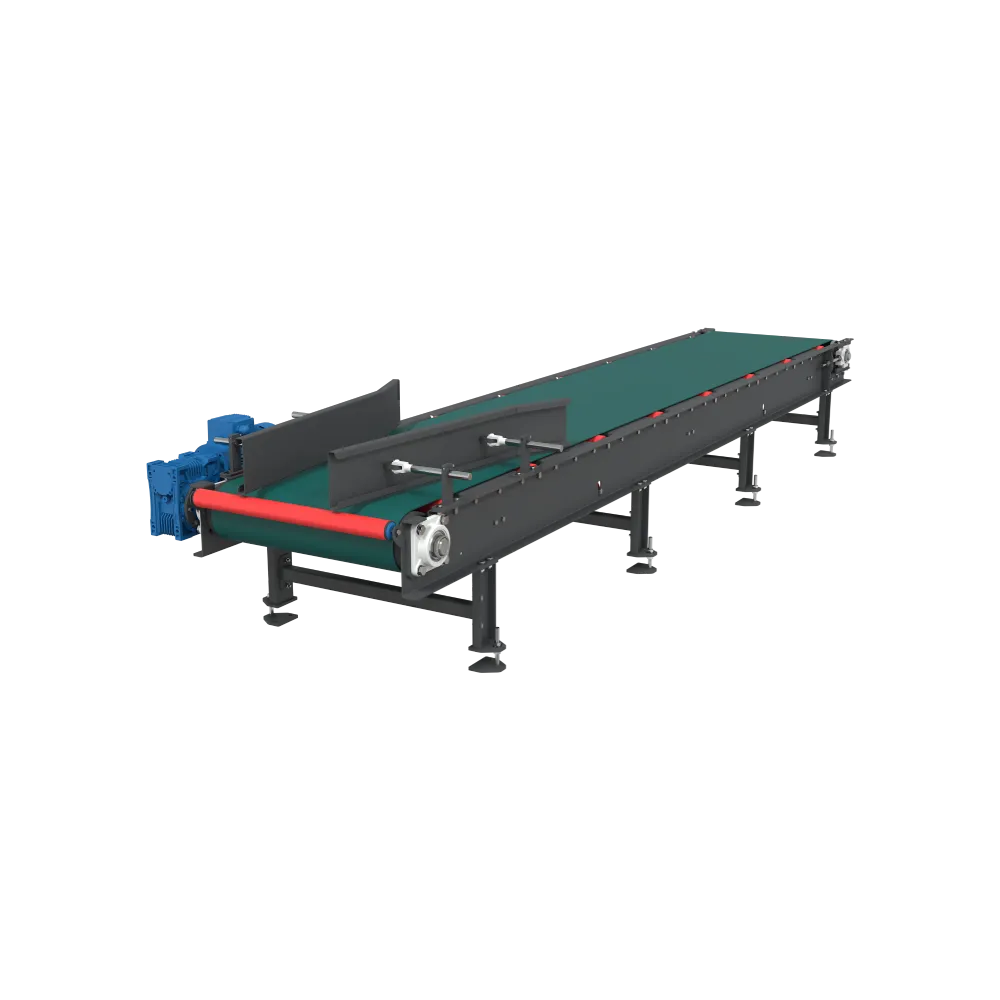
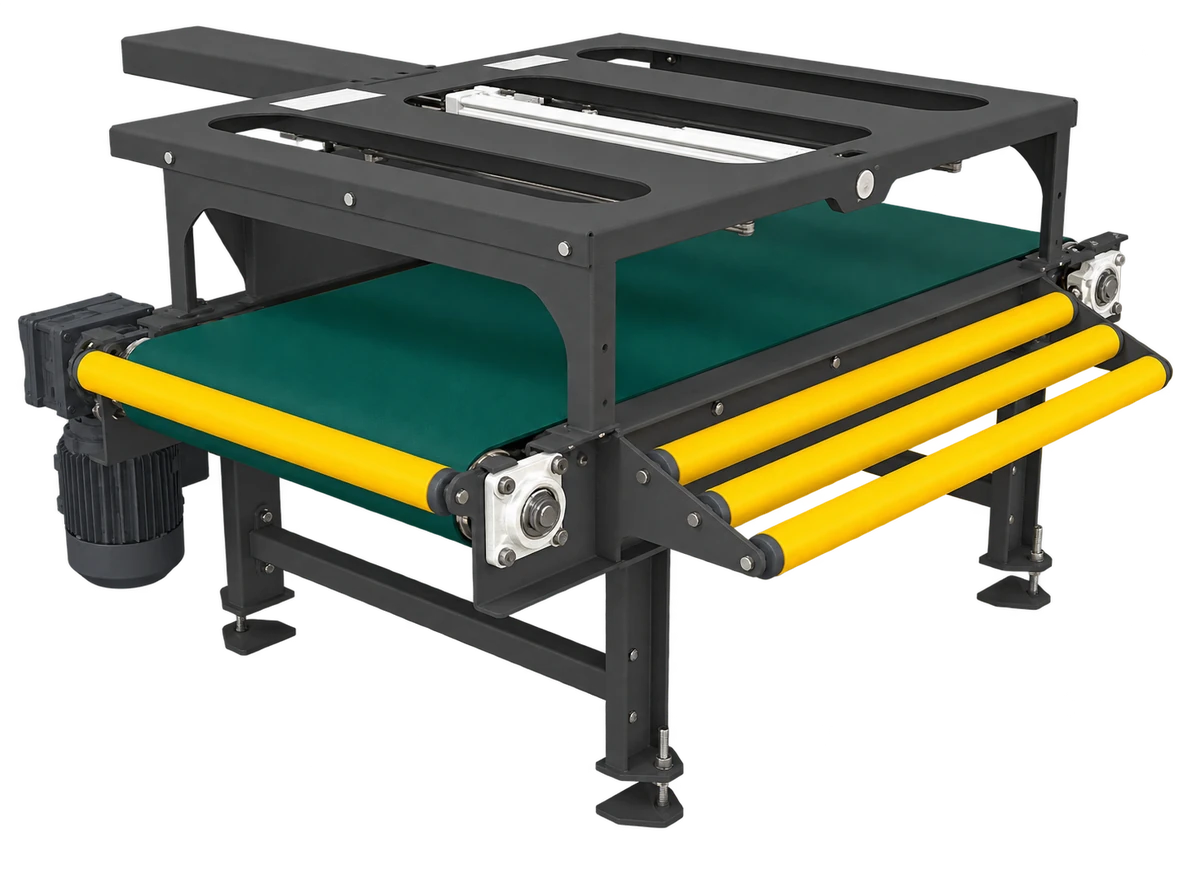
Bag Conveyor
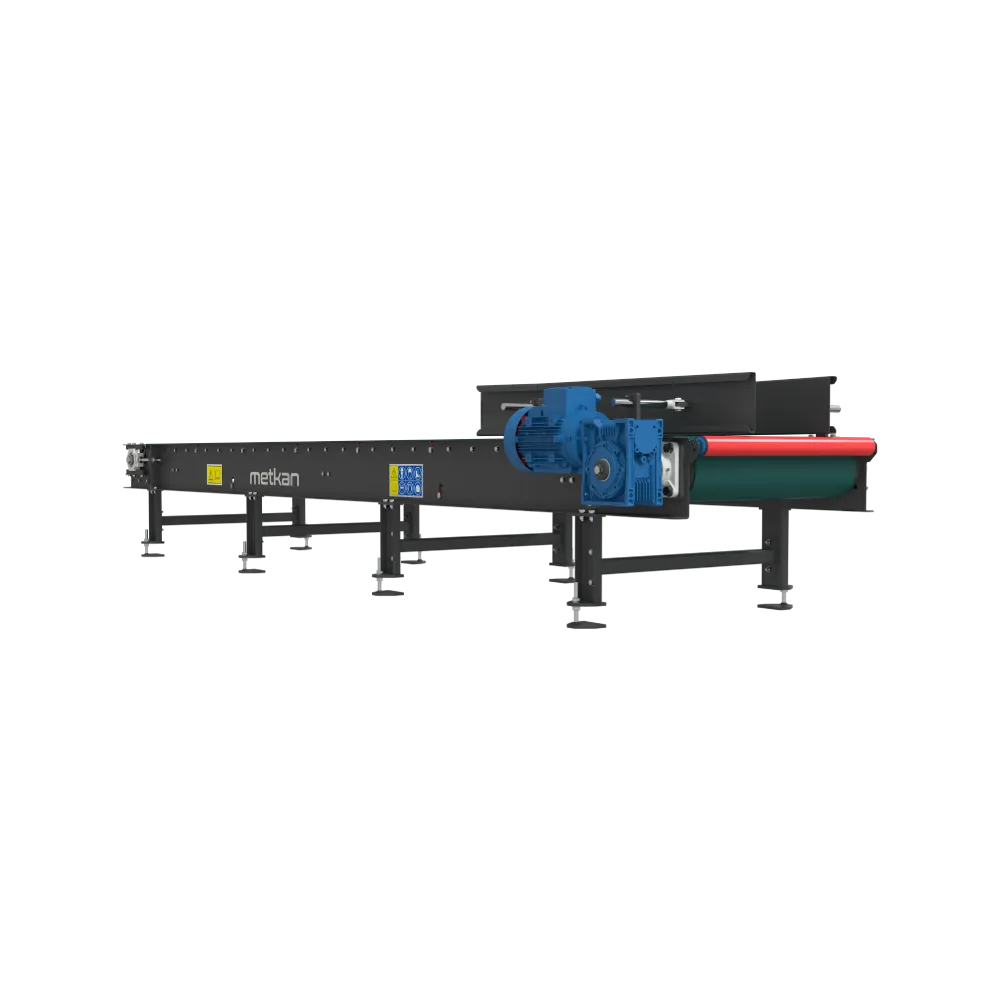
Transfers filled bags from the filling line to weighing, inspection or palletizing stations in a controlled flow.
- Belt width matched to bag dimensions
- Drive matched to line speed
- Length and height suited to the layout
 MACHINERY AND PLANT
One line. Five different tasks.
Transport, flattening, vibration, weighing and rejection. The right conveyor for each step from bag filling to palletizing.
Explore all conveyorsBELT CONVEYOR SOLUTIONS
Planned together around the line layout, bag characteristics and capacity.
CONVEYING
Transfers filled bags from the filling line to weighing, inspection or palletizing stations in a controlled flow.
FLATTENING
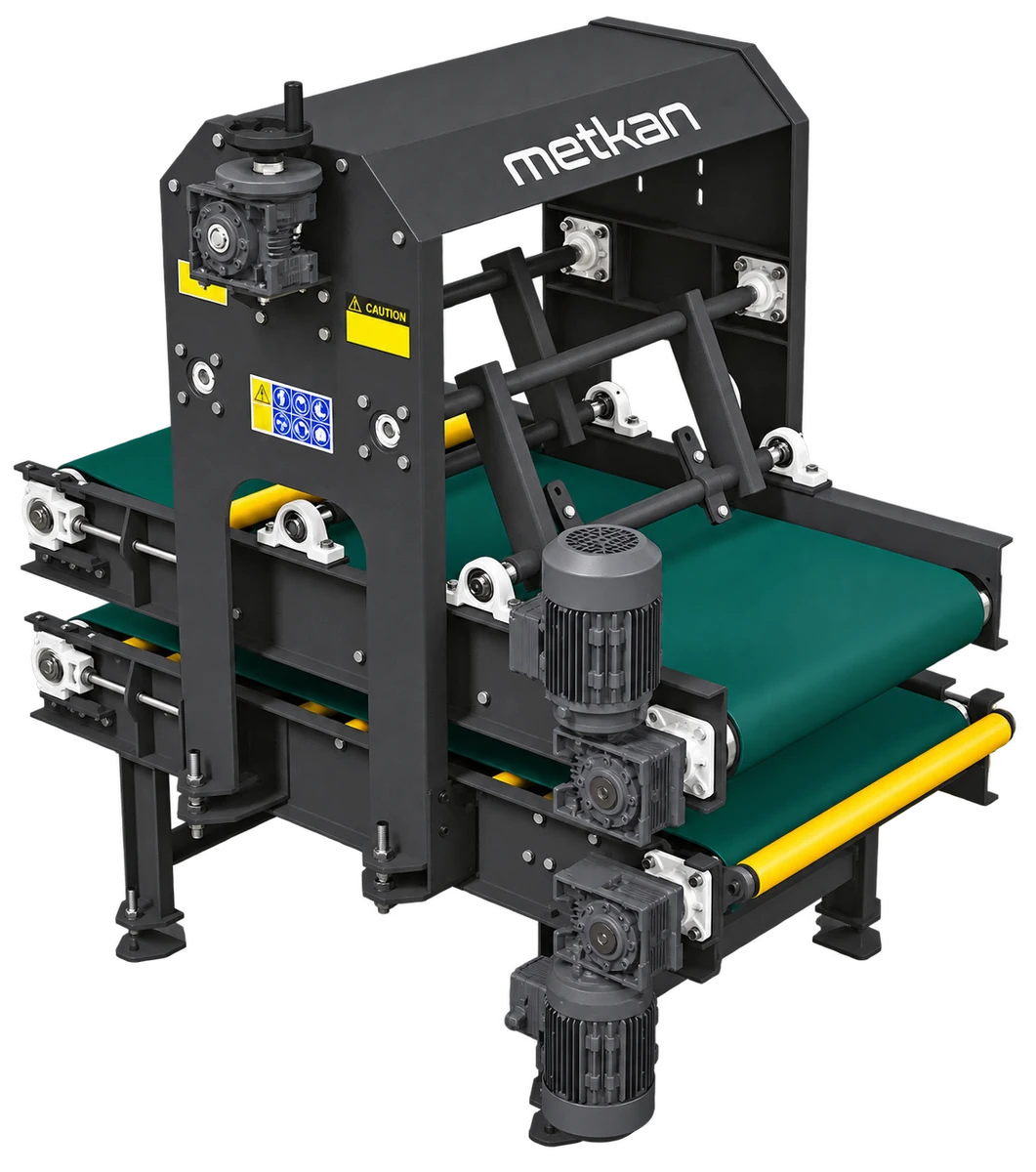
Shapes the bag after filling to prepare a more even and stable package for palletizing.
VIBRATION
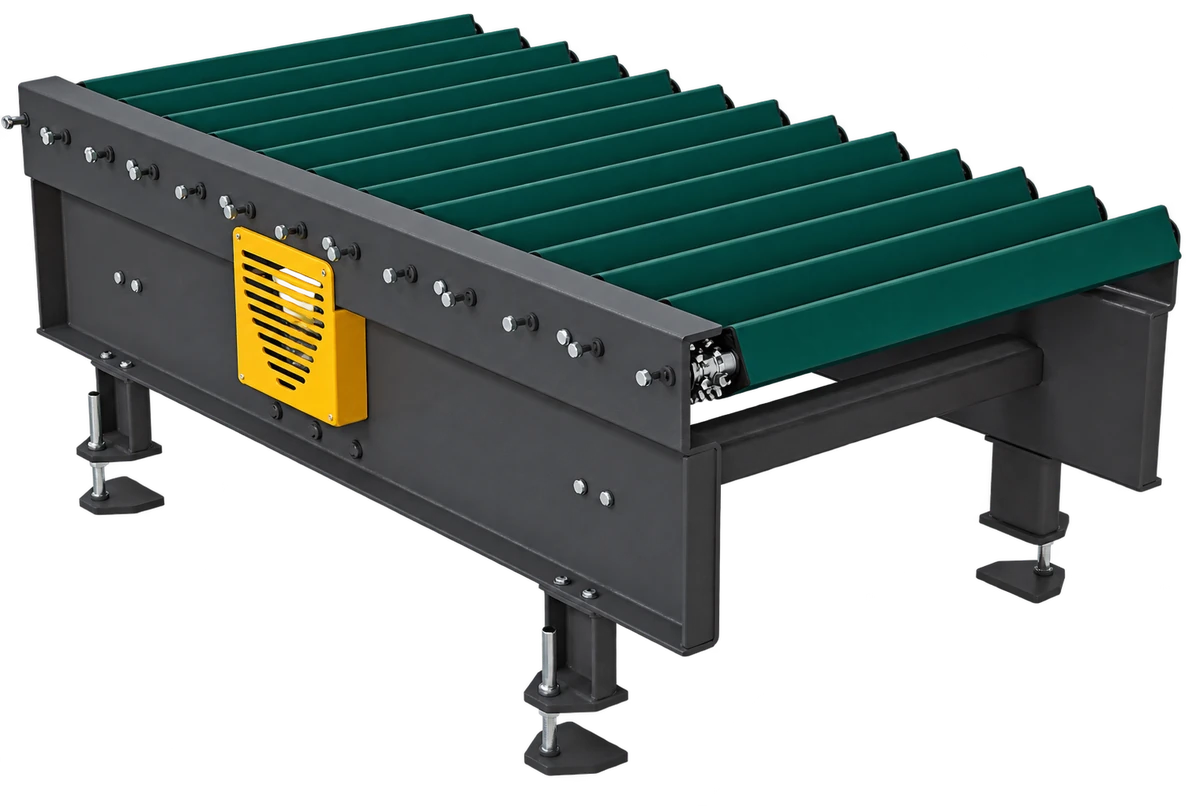
Uses the motion generated by square rollers to help distribute and settle material inside the bag.
WEIGHING
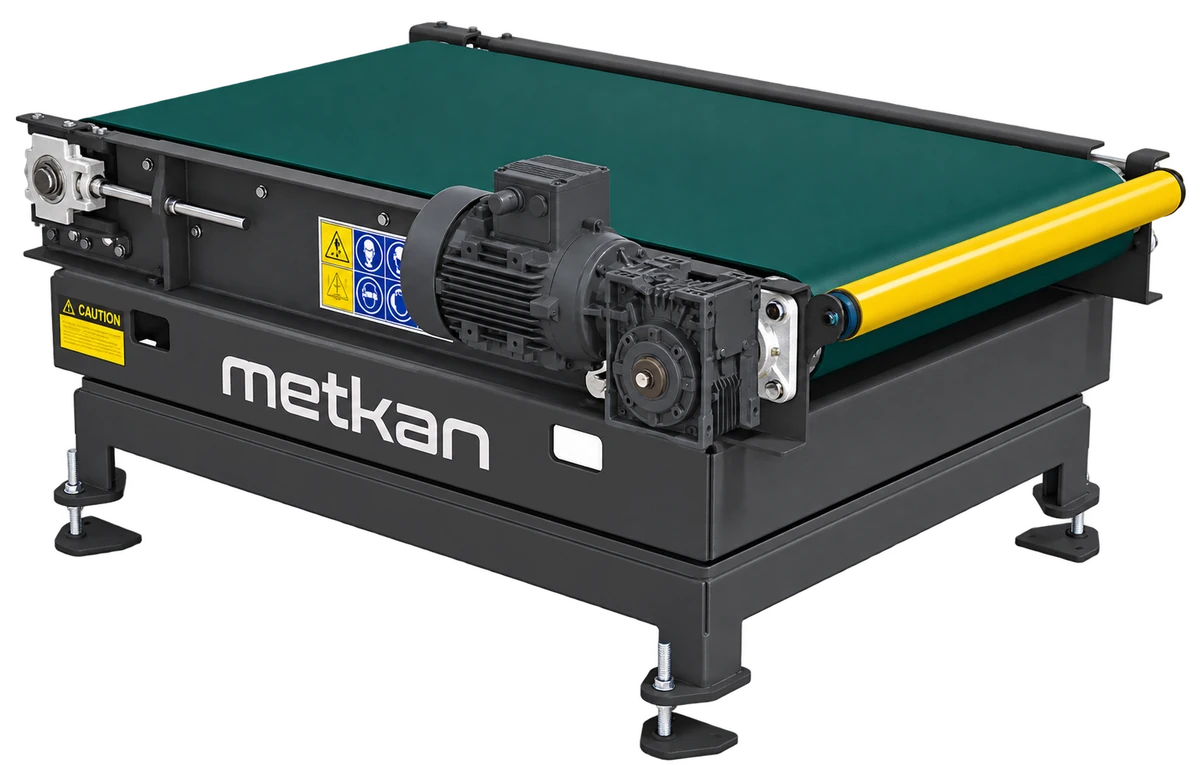
Checks bag weight after filling. The measurement is used by the line control and rejection system.
REJECTION
Diverts bags that fail weight or quality checks away from the main production flow.
SELECTION AND LINE INTEGRATION
Bag weight, dimensions and hourly throughput are the starting points for conveyor selection.
In bag filling and palletizing lines, the conveyor does more than just transport; it corrects the bag's shape, levels the material, verifies the weight, and automatically rejects faulty bags. Metkan belt conveyor solutions... line synchronization, low maintenance requirements, and stable bag flow ...are offered in 5 different types specifically designed for bag lines.
When the following conveyor types are positioned at the right point in the filling–weighing–palletizing chain, downtime decreases, pallet quality improves, and shipping standards are raised.
Bag conveyors ensure the controlled and safe transport of filled bags from the production line to the next process or the palletizing line. Bag conveying systems developed by METKAN offer high durability, minimal maintenance requirements, and a long service life in the construction chemicals, cement, food, and agricultural sectors. Thanks to their in-line synchronization capability, they operate in perfect harmony with filling, weighing, and palletizing machines.
Key Features of Bag Conveyors
Bag flattening conveyors ensure that bags take on a uniform shape after filling and are aligned in the ideal position prior to palletizing. METKAN These systems remove excess air from the bag surface, resulting in a flatter, more stable, and aesthetically pleasing package appearance.
Key Features of Bag Flattening Conveyors
Vibrating conveyors are specialized conveying systems that ensure the material inside the bag is distributed evenly after filling and that the product takes on a uniform shape. METKAN The vibration conveyors generate a vibrating motion via square rollers, ensuring the material is evenly distributed within the bag. This improves product appearance and enhances palletizing stability.
Widely used in the construction chemicals, cement, food, and agricultural sectors, these systems boost filling line efficiency and facilitate more organized, balanced packaging processes.
Key Features of Vibration Conveyors
Weighing conveyors are systems that enable the automatic measurement of product weights while the products are in motion. METKAN Weighing conveyors offer accuracy, speed, and efficiency on production lines through high-precision load cell systems and digital control panels.
Key Features of Weighing Conveyors
Rejection conveyors are systems that automatically remove bags identified as defective during the weighing or quality control stage from the production line. METKAN These systems, developed by..., eliminate the need for operator intervention by enhancing end-of-line reliability.
Key Features of Rejection (Defective Bag Removal) Conveyors
Belt conveyors—used in the food, cement, and chemical industries in compliance with hygiene, durability, and process safety requirements—can operate integrated with automatic weighing, quality control, and palletizing systems.
THE NEXT STEP
Belt conveyors and bag handling conveyors are selected by their role in the line. This family covers filled bag transport, bag flattening, vibration-assisted settling, weight checks and rejected bag removal. Belt width, speed and transfer heights must match the filling and palletizing equipment.
RELATED ARTICLES
Knowing a belt conveyor’s width is not enough to state how many tonnes per hour it will carry. For bulk materials such as limestone or aggregate, the real question is: what mass flow results from the safe load cross-section on the belt, the selected speed and the material’s bulk density? This guide explains the theoretical calculation, a worked assumption and a practical check.
Read the technical articleBelt conveyors transport materials systematically within production facilities. The system ensures a continuous flow of products between the equipment on the production line. However, the conveyor's performance is determined by several technical factors. Foremost among these is the selection of the belt conveyor motor power. If the motor power is insufficient, the conveyor struggles under load. The motor draws higher current, and the belt struggles to reach the target speed. This directly reduces production capacity. Prolonged strain also shortens the service life of the motor and gearbox.
Read the technical articleDetermining the length and width of a belt conveyor is one of the most critical technical decisions for businesses establishing production lines. This is because a belt conveyor does more than just transport products; it dictates the line's rhythm, the product flow pattern, and the operating pace of downstream equipment. An incorrectly sized belt conveyor results in capacity loss, leads to product accumulation, and creates imbalances along the line. Conversely, a correctly sized system balances the flow, ensures safe product transfer, and boosts operational efficiency. Therefore, belt conveyor dimensions are not determined solely by the available space; factors such as the type of product to be transported, capacity targets, line direction, speed, load distribution, and site layout are all evaluated together.
Read the technical articleBelt conveyor line efficiency directly impacts material flow along the production line. Conveyors facilitate the transfer of materials between crushing, screening, mixing, packaging, and palletizing stages. Consequently, even a minor conveying issue can lead to capacity loss across the entire line. Belt misalignment, incorrect speed, irregular loading, or a lack of maintenance quickly disrupts the production flow. Moreover, these issues do not merely reduce tonnage; they also increase energy consumption, cleaning time, and maintenance costs. If the source of the problem is not identified early, unplanned downtime occurs more frequently. Therefore, belt conveyor performance directly influences the overall efficiency of the production facility.
Read the technical article