What Errors Reduce Line Efficiency in Belt Conveyors?
Line efficiency in belt conveyors...directly affects material flow along the production line. Conveyors facilitate the transfer of materials between stages such as crushing, screening, mixing, packaging, and palletizing. Consequently, a minor conveying issue can lead to capacity loss across the entire line. Belt misalignment, incorrect speed, uneven loading, or a lack of maintenance can quickly disrupt the production flow. Moreover, these issues do more than just reduce tonnage. It also increases energy consumption, cleaning time, and maintenance costs. If the operation fails to identify the source of the problem early on, unplanned shutdowns occur more frequently. Consequently, belt conveyor performance directly impacts the overall efficiency of the production facility.
Metkan MakineIn belt conveyor projects, conveying capacity is not evaluated in isolation. Material density, particle size, line inclination, and the discharge point are analyzed together. Furthermore, belt width, speed, pulley design, and motor power are selected based on process requirements. A sound engineering approach ensures the belt conveyor operates reliably over the long term. Conversely, poor project selection and improper operating habits lead to constant breakdowns. In this content, line efficiency in a belt conveyorbelt conveyor line efficiency.
Contents
- Incorrect belt alignment
- Inappropriate belt speed
- Irregular material loading
- Overloading
- Roller and drum problems
- Insufficient belt tension
- Lack of a cleaning system
- Faulty maintenance plan
- Lack of automation
- Metkan Makine belt conveyor solutions
- Frequently Asked Questions
How Does Misalignment Reduce Line Efficiency?
When belt alignment is compromised, the conveyor cannot operate smoothly.The belt drifts to the right or left and makes contact with the frame edges. This contact increases friction. Increased friction raises the motor load and energy consumption. Furthermore, the belt edges wear out quickly. If the operator fails to notice the issue, the risk of tearing also increases. Spillage of material off the belt contaminates the production area. The cleaning team spends more time on cleanup, and the line frequently stops.
Misalignment often does not stem from a single component. Drum adjustment, roller positioning, frame accuracy, and belt tension all play a role. Imbalance at the loading point, in particular, constantly pushes the belt in the same direction. Therefore, the maintenance team should not merely correct the belt's position; they must first identify the root cause of the deviation. Regular alignment checks prevent major breakdowns. Metkan Makine...develops belt conveyors that operate stably over long periods, featuring a rigid frame structure and precise drum positioning.
How Does Improper Belt Speed Affect Production?
Belt speed directly determines conveyor capacity. However, high speed does not always equate to high production. A belt running faster than necessary transports material in an uncontrolled manner. Fine dust and granular products, in particular, may scatter off the edges. Material trajectory is disrupted at the discharge point, preventing downstream equipment from receiving a steady feed. Consequently, crushers, screens, or mixers cannot operate at full capacity.
Low belt speed also creates a significant bottleneck. Even if production equipment prepares a sufficient quantity of product, the conveyor cannot transport it in a timely manner. Material accumulates at the loading point, causing frequent system stoppages. Furthermore, product density on the belt increases, raising the load on rollers and the motor. To determine the correct speed, material density, belt width, and target capacity must be analyzed together. Metkan Makine...analyzes this data during the project phase and even determines the appropriate speed range.
Why Does Uneven Material Loading Cause Problems?
Material must enter the belt centrally and evenly. A load concentrated on one side disrupts the belt's tracking. Additionally, rollers cannot bear the load equally; rollers on one side wear out faster while those on the other operate under a lighter load. This imbalance shortens belt lifespan and increases maintenance costs. When coarse particles accumulate at a single point, the belt surface sustains impact damage, while fine dust becomes airborne and contaminates the work area.
Feed rate is just as important as loading balance. A sudden surge in material flow creates a shock load on the belt; consequently, the motor and gearbox are subjected to high torque demands over a short period. This situation places strain on mechanical components. Controlled hoppers and diverter chutes distribute the material evenly across the belt width, ensuring more balanced conveyor operation. Consistent loading reduces belt drift, lowers energy consumption, and maintains the production flow.
Does Overloading Increase Capacity?
Many operations overload the belt beyond its rated capacity to transport more product. However, this approach does not yield a genuine increase in capacity. Overloading causes the motor to operate continuously under high current. The gearbox faces increased strain, and bearing temperatures rise. The belt surface is also subjected to higher-than-normal tension. These conditions rapidly shorten the equipment's lifespan.
Moreover, excess material spills over the belt edges. The discharge point cannot accept the product quickly enough, leading to frequent system blockages. A short-term increase in tonnage turns into long-term downtime. Therefore, operations must adhere to nominal capacity limits. Load cells, current sensors, and automation infrastructure detect overloads early, allowing the operator to reduce the feed rate in time. Proper capacity managementensures the line operates without interruption for longer periods.
How Do Roller and Pulley Problems Affect Efficiency?
Rollers support the smooth movement of the belt. When a roller seizes, friction occurs on the belt surface, causing the motor to consume more energy. Additionally, a seized roller creates localized heating and wear on the belt. If the operator detects this issue too late, the belt surface may be damaged. A large number of faulty rollers significantly reduces conveyor capacity.
Drums also constitute the system's fundamental motion components. Worn drum lagging causes slippage. Consequently, the belt fails to achieve sufficient traction and moves irregularly. Incorrect drum alignment leads to the belt drifting off-center. The maintenance team must periodically inspect the rollers and drums; changes in noise, vibration, and temperature serve as early warning signs. Metkan Makineaims for long-lasting conveying performance through durable roller assemblies and appropriate drum geometry.
What Problems Arise from Insufficient Belt Tension?
When belt tension is too low, the drive drum cannot generate sufficient traction. The belt slips, and the conveying speed drops; the motor continues to rotate, but the product does not advance. This results in energy loss and causes wear on the drum surface and the underside of the belt. Conversely, if tension is too high, the bearings, frame, and belt connections are subjected to excessive loads.
Proper tension adjustmentensures the system operates in a balanced manner. The maintenance team should not limit adjustments to the initial installation phase alone. Belts stretch over time, and operating conditions change; therefore, periodic measurements are necessary. Automatic tensioning systems respond more rapidly to fluctuating load conditions. Proper adjustment minimizes slippage and extends belt life, while also ensuring the motor operates under a more stable load.
Why Is a Belt Cleaning System Necessary?
Material remaining on the belt surfaceis carried to the pulley after the discharge point. Adhered product creates irregularities in the pulley diameter, which disrupts belt alignment. Additionally, material accumulates on the rollers, increasing rotational resistance. Damp, fine, or sticky products, in particular, tend to leave behind more residue.
An effective scraper system keeps the belt surface consistently clean, thereby reducing product loss and maintaining a tidier workspace. The cleaning system also extends the service life of rollers and pulleys. Operations should not simply install a scraper; they must regularly monitor scraper pressure and wear. A worn cleaner cannot maintain adequate contact with the surface; consequently, the maintenance plan must also encompass cleaning equipment.
Why Does Unplanned Maintenance Lead to Production Loss?
A reactive maintenance approach—addressing issues only after a breakdown occurs—incurs high costs for belt conveyors. A minor noise from a bearing, if left unchecked, can escalate into a motor or pulley failure. An unplanned stoppage does not merely halt the conveyor; it causes other machines on the production line to sit idle as well. Thus, a single malfunction can reduce the capacity of an entire shift.
Planned maintenancecatches problems before they escalate. Daily observations, weekly mechanical checks, and monthly detailed inspections establish a robust maintenance routine. Operators must monitor sound, vibration, belt tracking, and material flow. Meanwhile, the maintenance team should check tension, lubrication, connections, and motor load. Facilities that maintain regular records can more easily identify breakdown trends, allowing them to plan spare parts and service requirements in advance.
How Does a Lack of Automation Limit Line Performance?
Manual controlmay prove inadequate under fluctuating load conditions. An operator might be slow to notice overloading or belt slippage, whereas sensors monitor these changes in real-time. Speed sensors, slip switches, load cells, and current monitoring systems protect the equipment. An automation infrastructure can reduce the feed rate or safely stop the line if a risky situation arises.
Furthermore, automation records production data. Facilities can identify which shifts experience the most downtime. Energy consumption and conveying capacity can be easily compared. This data supports better-informed maintenance decisions. Metkan Makine, It designs belt conveyor systems to be compatible with plant automation. This ensures the conveyor operates synchronously with other production equipment.
Metkan Makine Belt Conveyor Solutions
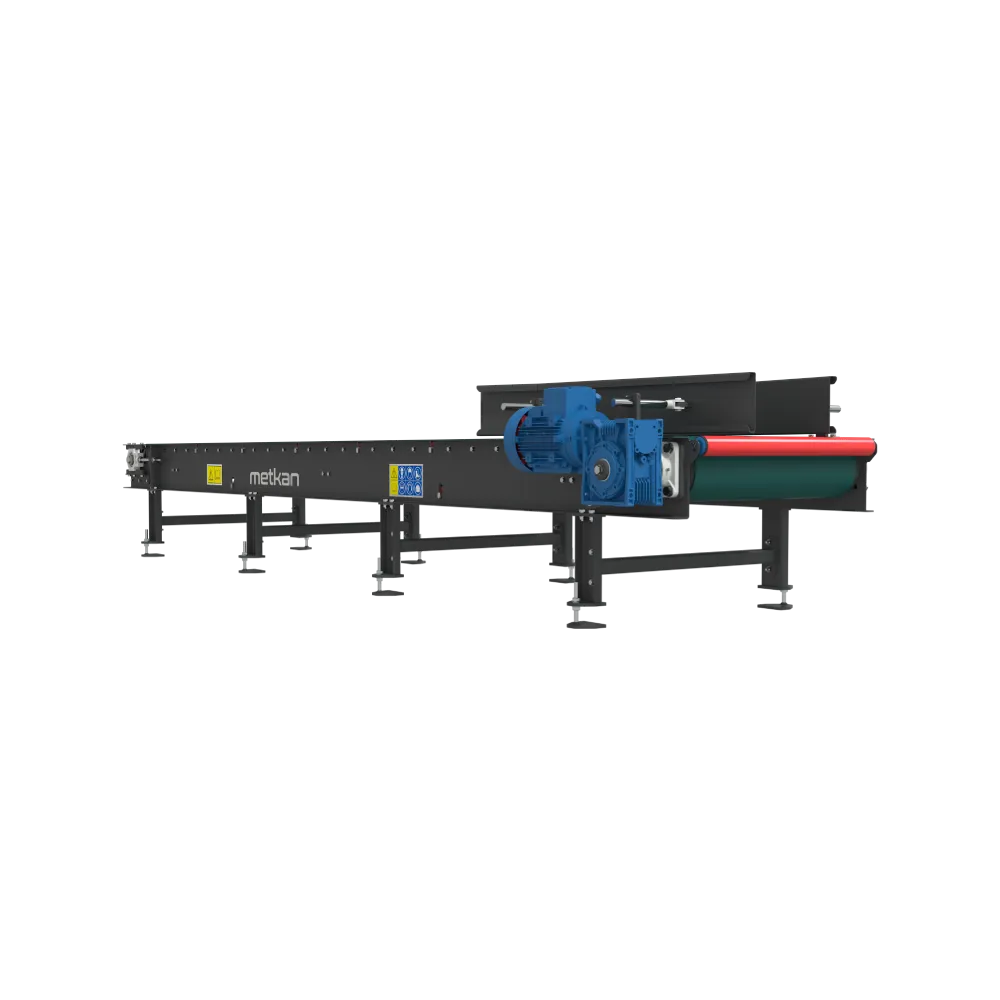
Metkan Makine develops belt conveyor systems tailored to specific material properties and capacity targets. The project team evaluates line length, inclination, product density, and discharge configuration. Subsequently, they determine the belt width, motor power, and speed. This approach creates a process-specific system rather than relying on standard solutions.
The company; Crushing, Screening, Mixing, Bagging and Robotic palletizing offers conveyors compatible with these lines. A robust chassis structure, high-quality roller assemblies, and a precise automation infrastructure support production continuity. Consequently, businesses achieve higher line efficiency with lower maintenance costs.
Frequently Asked Questions
Why does a belt conveyor drift to the right or left?
Incorrect pulley alignment, uneven loading, and worn rollers cause the belt to shift off-center. Improper tension also exacerbates drifting. Regular alignment checks prevent this issue at an early stage.
How can belt conveyor capacity be increased?
Facilities can increase capacity by selecting the correct belt width and appropriate speed. Balanced loading also enhances conveying efficiency. However, applying a load exceeding the system's limits increases the risk of failure.
How can an overload on a belt conveyor be detected?
Motor current rises, belt speed drops, and material spills over the edges. Bearing temperatures may also increase. A sensor-based monitoring system detects overloads early.
Does a roller failure affect belt performance?
Yes. A seized roller increases friction and places a strain on the motor. It also causes wear on the belt surface. Operations personnel must replace the faulty roller promptly.
Is a belt cleaning system necessary?
A cleaning system is crucial, especially when handling fine, moist, or sticky materials. Scrapers remove residue from the belt surface, ensuring that drums and rollers operate more cleanly.
How often should belt tension be checked?
The frequency of checks depends on operating time and load volume. Additionally, high-output facilities should implement daily visual inspections and periodic measurements. The team must make adjustments immediately if belt elongation is observed.
Does automation improve belt conveyor efficiency?
An automation system monitors speed, load, and slippage data in real-time. It alerts the operator to risky conditions. This reduces unplanned downtime and ensures a more stable production flow.
To which types of facilities does Metkan Makine supply belt conveyors?
Metkan Makine; Construction chemicals, mining, mineral processing, cement and various industrial production facilities.The company plans each project based on capacity and material characteristics.
The Right Conveyor for Your Production Line: A Reliable Solution Partner
Line efficiency in belt conveyors...directly affects the flow of the production line. Belt misalignment, incorrect speed, overloading, and a lack of maintenance quickly reduce production capacity. Conversely, proper design and regular inspections support stable line operation. To determine the belt conveyor solution best suited to your facility... Metkan Makine with their experts..