SCREW STRUCTURE
Controlled material flow
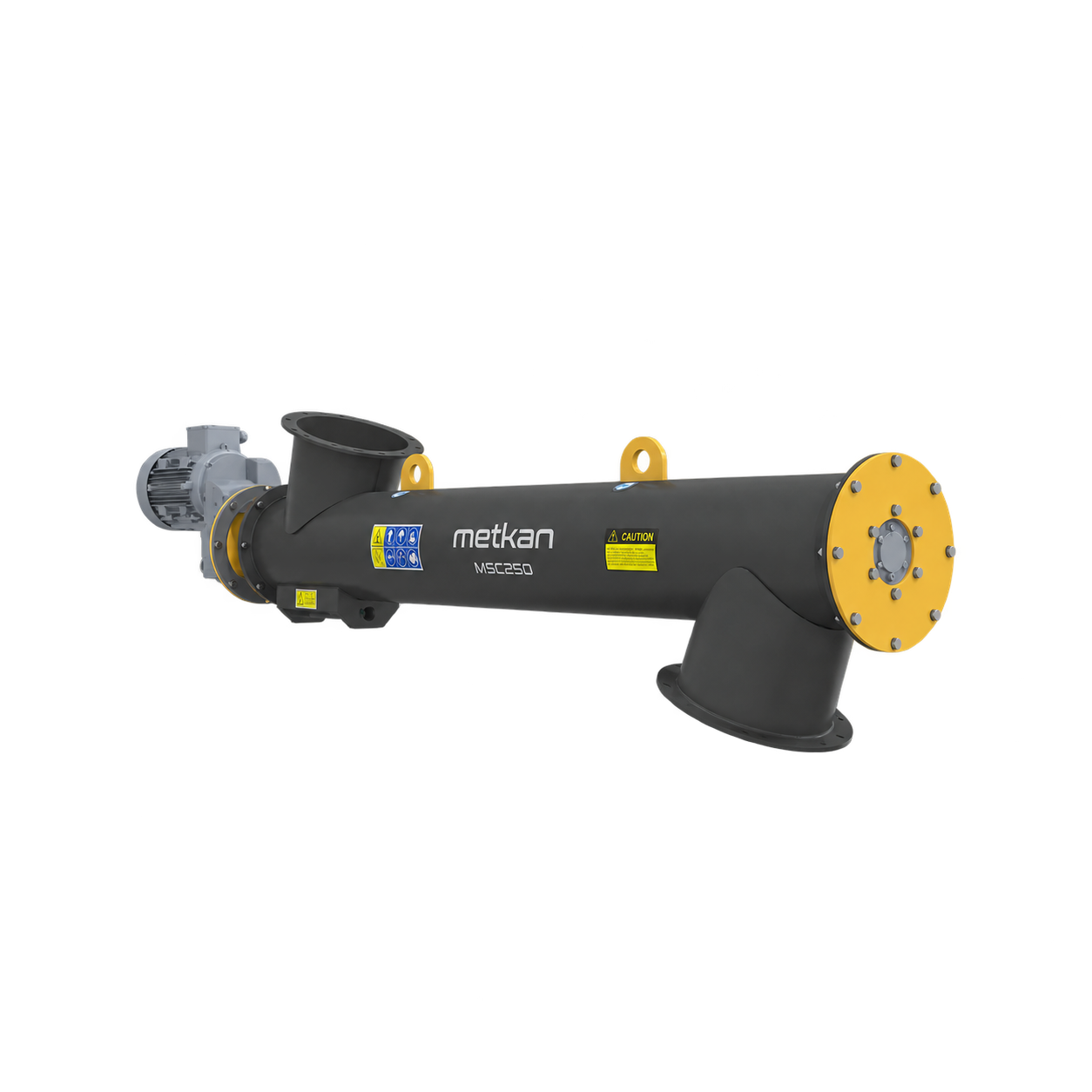
Diameter, pitch, and rotational speed are evaluated in conjunction with fill level and material behavior.
 MACHINERY AND PLANT
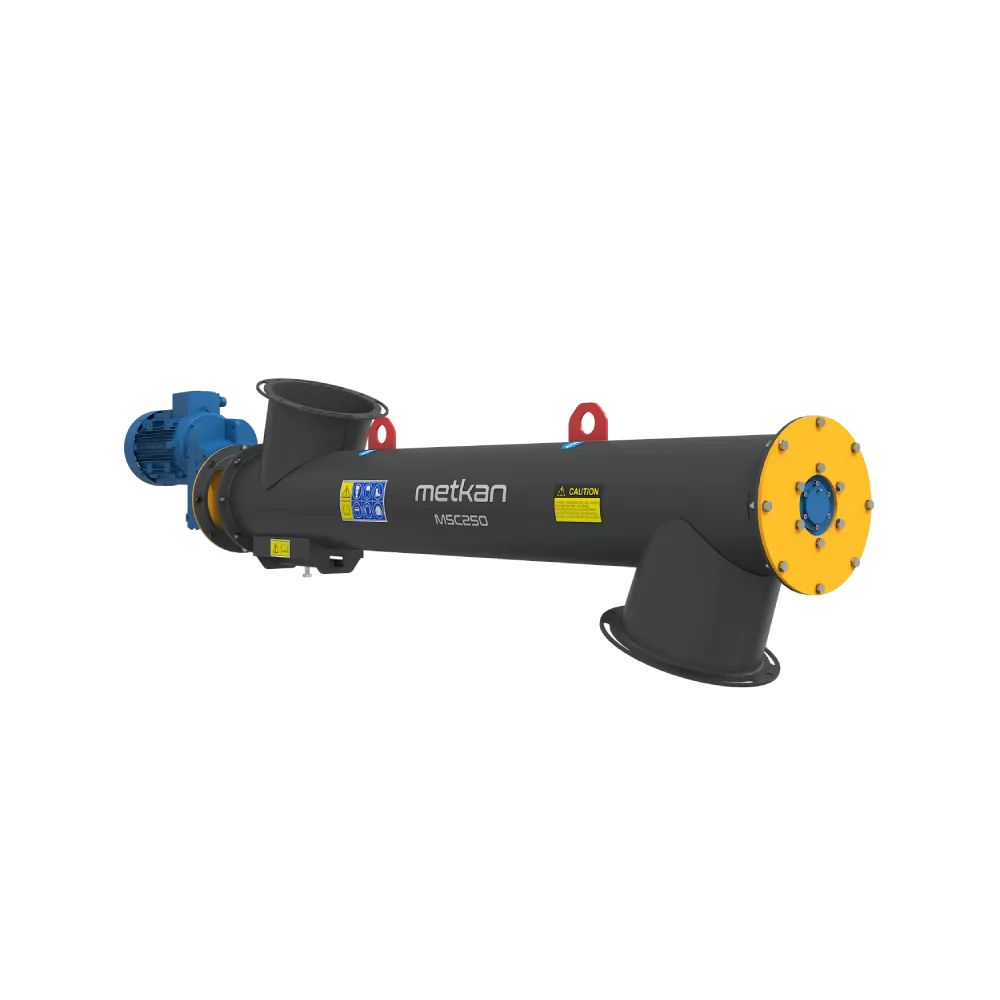
Screw conveying for powder, granulated, and fine-grained materials. A design suited to the line length, incline, and material behavior.
Explore up closeMETKAN / Screw structure
Diameter, pitch, and rotational speed are evaluated in conjunction with fill level and material behavior.
SCREW STRUCTURE
Diameter, pitch, and rotational speed are evaluated in conjunction with fill level and material behavior.
Consider capacity, structure, and dimensions together.
Your material determines the right choice.
| Technical specification | MSC-160 | MSC-200 | MSC-250 | MSC-300 | MSC-350 | MSC-400 |
|---|---|---|---|---|---|---|
| Screw diametermm | 160 | 200 | 250 | 300 | 350 | 400 |
| Screw pitchmm | 160 | 200 | 250 | 300 | 350 | 400 |
| Tube / U-trough section | Ø168 tube / 170 U-trough | Ø219 tube / 220 U-trough | Ø273 tube / 275 U-trough | Ø324 tube / 325 U-trough | Ø377 tube / 380 U-trough | Ø426 tube / 430 U-trough |
| Motor powerkW | 2,2 | 3 | 4 | 5,5 | 7,5 | 11 |
| Rotational speedrpm | 90 | 90 | 90 | 90 | 90 | 70 |
| Theoretical capacitym³/h | 6 | 10 | 18 | 28 | 40 | 50 |
| Wall thicknessmm | 4 | 4 | 5 | 5 | 6 | 6 |
| Total weight*kg | 180 | 230 | 310 | 420 | 520 | 650 |
| Selection for your project | Request a quote ↗ | Request a quote ↗ | Request a quote ↗ | Request a quote ↗ | Request a quote ↗ | Request a quote ↗ |
Technical values should be considered alongside material specifications and operating conditions.
*Weight: Based on a length of ~6 m, standard gear-motor drive, and dual-end bearing support.
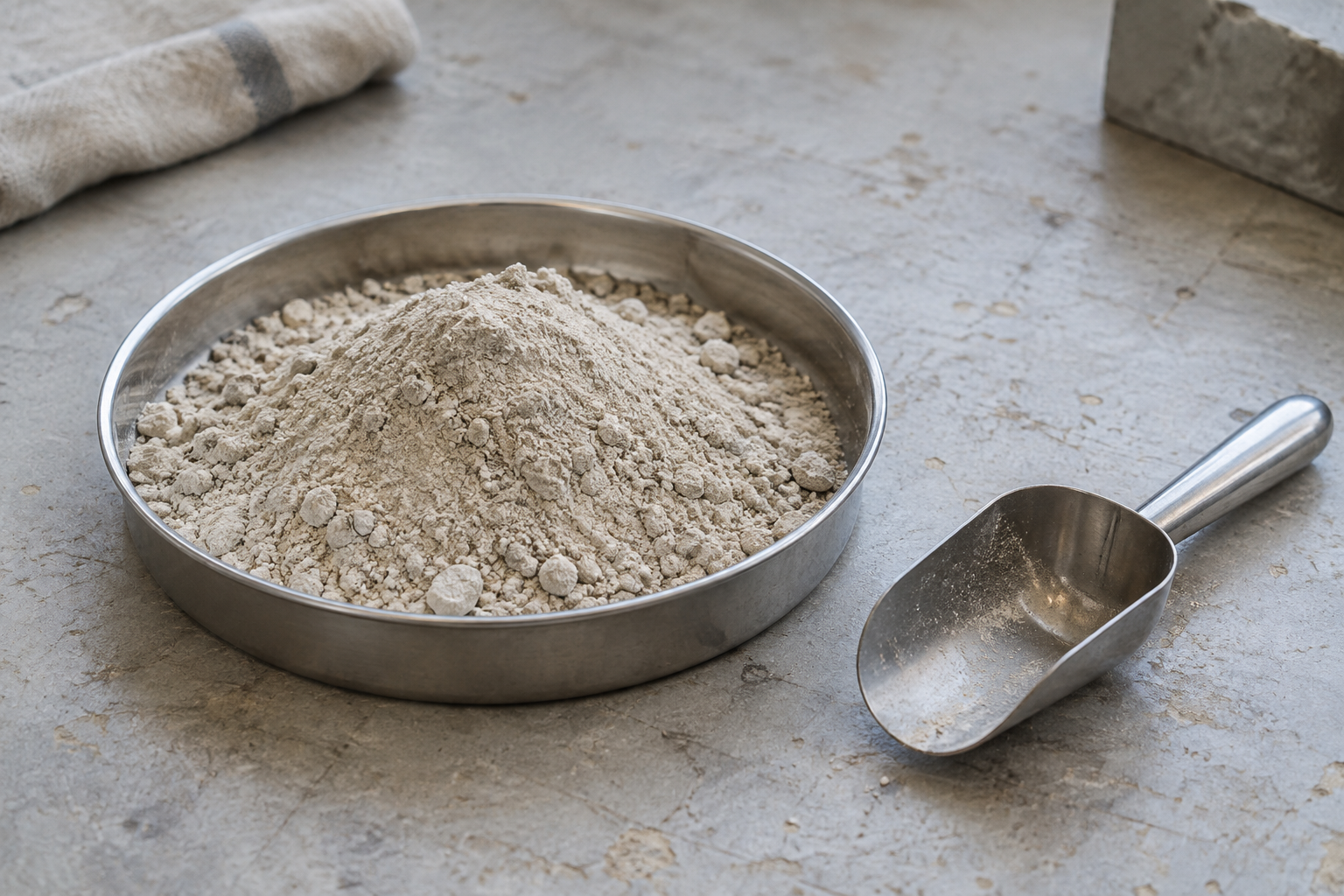
Calculations are based on calcite (CaCO₃) with a density of 1.6 tons/m³.
The stated capacity values are theoretical; actual conveying capacity may vary depending on material particle size and distribution, moisture content, fill rate, screw speed (rpm), pitch-to-diameter ratio, inclination angle, conveying length, wear condition, and surface roughness.
Material, capacity, and line layout. Selecting the right machine begins with understanding the entire production process.
Let's assess your needsControlled conveying within an enclosed housing.
Selection suited to flow and abrasion characteristics.
Feeding arrangement compatible with the control system.
TECHNICAL LIBRARY
PDF / Technical document SELECTION AND MAINTENANCE
Screw conveyors are industrial conveying systems developed for the controlled, safe, and continuous transport are industrial conveying systems developed for this purpose. Their compact design occupies minimal space in production plants, while the enclosed, sealed housing provides a clean and orderly working environment.
Constant flow, stable production.
The screw conveying principle ensures the material advances continuously at a set flow rate. This maintains flow continuity across production lines and allows for precise control over feeding and dosing operations.
Maximum efficiency in confined spaces.
Easily adapts to various facility layouts thanks to horizontal, inclined, or vertical configuration options. Its modular housing structure allows for rapid integration into existing production lines.
Dust-free conveying, safe environment.
The enclosed housing design prevents dust dispersion during conveying, thereby avoiding product loss and creating a work environment that meets environmental and occupational safety standards.
Long service life, low operating costs.
Wear-resistant screw, housing, and liner options ensure long-term use even with challenging materials. Maintenance and cleaning operations can be performed quickly and effortlessly.
METKAN The screw conveyors are designed to meet the continuous production needs of various industries.
Screw conveyors are reliably used for conveying, feeding, and dosing applications in the construction chemicals, cement, food, animal feed, and chemical industries.
*Weight: Based on a length of ~6 m, standard gear-motor drive, and dual-end bearing support.
Calculations are based on calcite (CaCO₃) with a density of 1.6 tons/m³.
The stated capacity values are theoretical; actual conveying capacity may vary depending on material particle size and distribution, moisture content, fill rate, screw speed (rpm), pitch-to-diameter ratio, inclination angle, conveying length, wear condition, and surface roughness.
THE NEXT STEP
Tell us about your material and target capacity.
Let's choose the right machine for your process together.
A screw conveyor, sometimes called an auger conveyor, transfers bulk material inside an enclosed casing. Cement, mineral powders and dry mortar ingredients require assessment of screw diameter, speed, filling, flow properties and inclination.
RELATED ARTICLES
Screw conveyor capacity cannot be selected from screw diameter alone. The same casing can carry very different flow rates as pitch, speed, fill and bulk density change. A sound preliminary calculation starts with geometric volume and then tests that value against the material and operating conditions. This guide shows how to calculate theoretical capacity and verify the result in the field.
Read the technical articleWhat is a screw conveyor? It transports powdered and granular materials along a production line in a controlled manner. This system does more than just transfer material; it maintains a consistent feed pattern, balances the dosing flow, and supports process continuity. A steady flow of raw materials is crucial, particularly in the construction chemicals, cement, animal feed, food, and chemical industries, as production lines operate efficiently only with stable feeding. Therefore, selecting a screw conveyor requires careful consideration of material properties, conveying angle, and line integration, just as much as capacity and conveying distance.
Read the technical articleProduction continuity in powder and granule conveying lines depends on the steady flow of material. The screw conveyor constitutes a key component of this flow. The process proceeds smoothly when the system conveys material at the specified capacity; however, flow issues arise when feed rates, material properties, or equipment settings change. Screw conveyor blockages directly reduce production capacity. A blockage increases motor load, places strain on the gearbox, and halts material flow. Furthermore, recurring issues lead to increased unplanned downtime. Operations suffer significant time losses when operators must repeatedly stop the line to clear blockages.
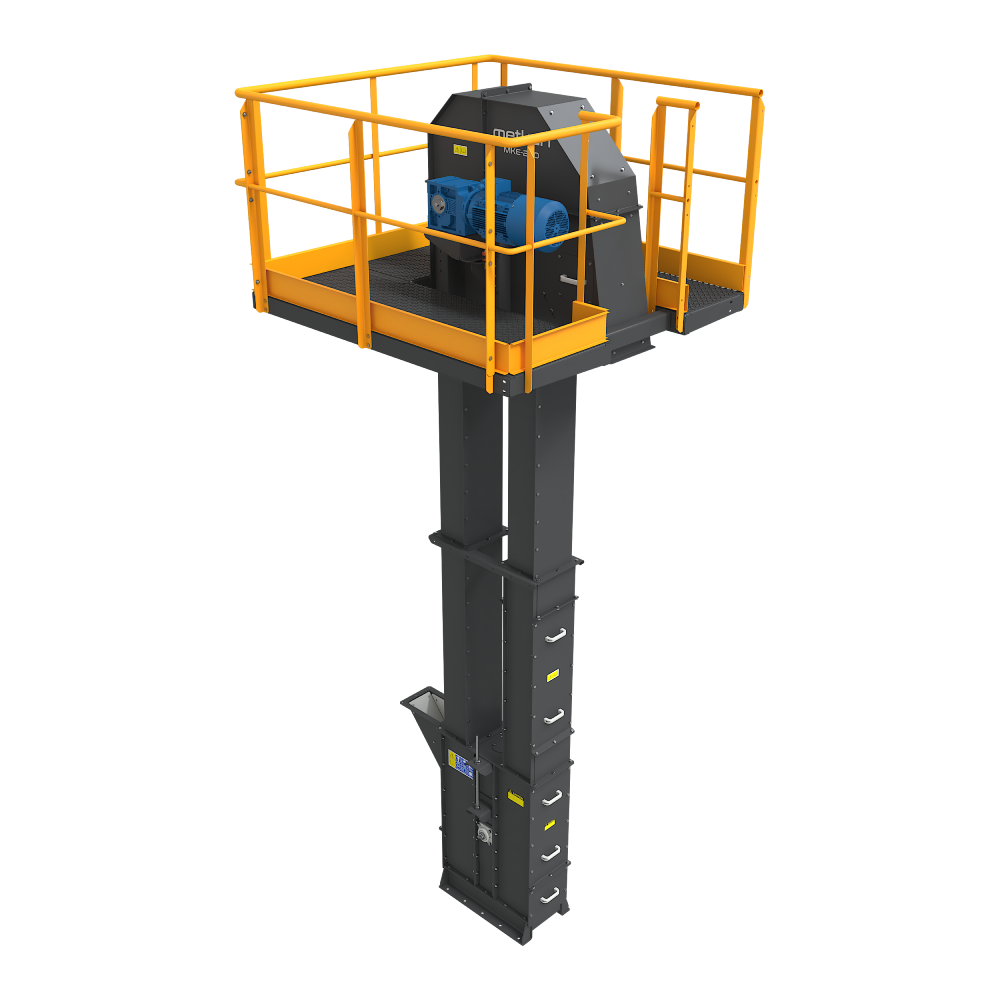
Read the technical articleChoosing between a bucket elevator and a screw conveyor is one of the most critical decisions for businesses planning a production line. While both systems transport material, they do not operate with the same flow direction, product characteristics, or process configuration. Screw conveyors deliver strong performance in controlled, enclosed conveying lines, whereas bucket elevators yield better results in processes requiring vertical transport. Therefore, the right choice is not based solely on the machine type; factors such as the nature of the product, flow direction, capacity targets, line layout, and operational practices are all considered together. For Metkan Makine, this decision is not merely about equipment selection but is a strategic process decision that determines production efficiency.
Read the technical article