Bucket elevator vs. screw conveyor ...represents one of the most critical decisions for businesses planning a production line. This is because, while both systems transport material, they do not operate with the same flow direction, product structure, or process configuration. Screw conveyor...delivers strong performance in controlled, enclosed conveying lines. Bucket elevator ...yields better results in processes requiring vertical conveying. Therefore, the right choice is not based solely on the machine type; factors such as the nature of the product to be transported, process direction, capacity targets, line layout, and operational practices are all considered together. Metkan Makine ...this decision is not merely about equipment selection; it is a strategic process decision that determines production efficiency.
Using the wrong conveying system leads to irregular product flow, accumulation along the line, and inconsistent feeding to downstream equipment. Conversely, the right system enhances process rhythm, improves space utilization, and allows for more controlled maintenance planning. This distinction is particularly evident in facilities handling construction chemicals, powdered products, and granular materials, or those requiring vertical feeding. In this article, ...bucket elevators and screw conveyors ...we examine the differences, application areas, and process-based selection criteria for bucket elevators and screw conveyors in detail.
Contents
- What is the fundamental difference between a bucket elevator and a screw conveyor?
- In which processes do screw conveyors excel?
- In which processes are bucket elevators preferred?
- Which system is used for vertical conveying needs?
- How is the selection made for powders, granules, and fine products?
- How do capacity, space, and line layout influence the choice?
- What does each system offer in terms of maintenance and operation?
- How is the right choice determined for construction chemicals plants?
- Why is a process-oriented approach important for Metkan Makine?
- Frequently Asked Questions
What is the fundamental difference between a bucket elevator and a screw conveyor?
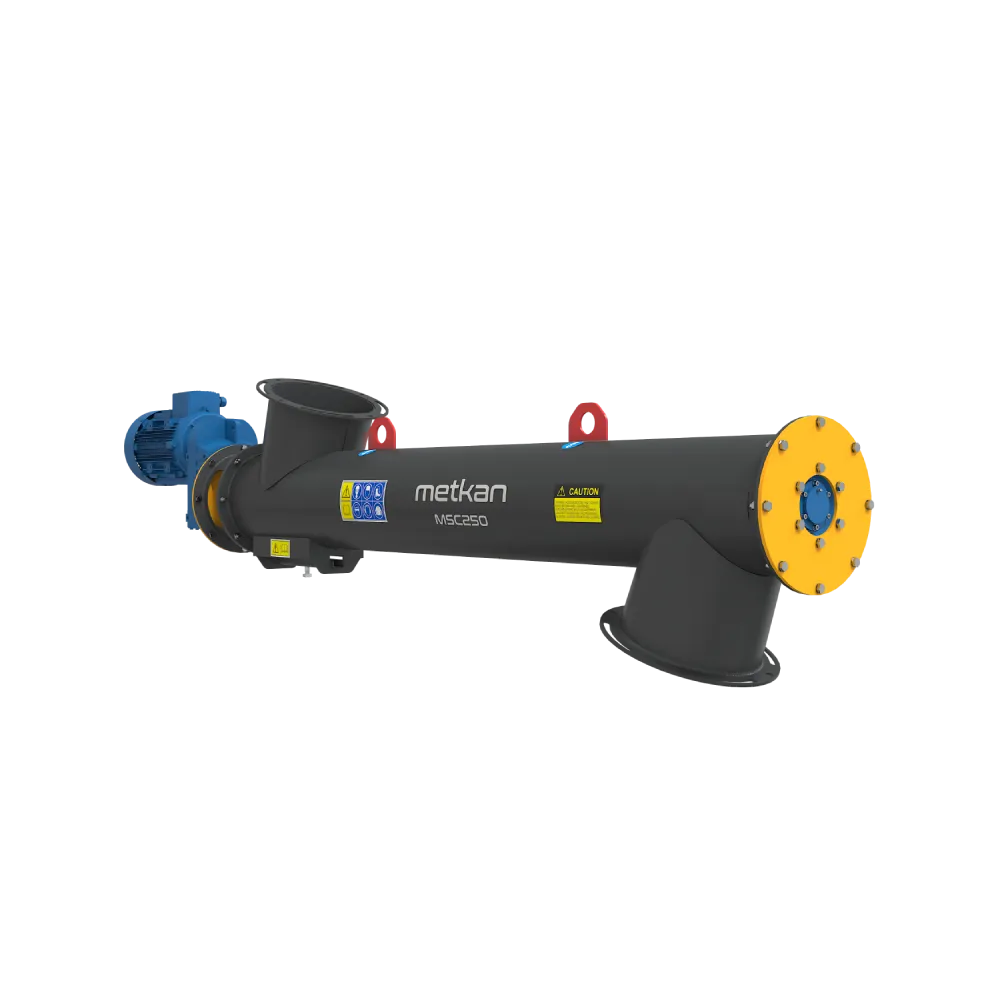
Bucket elevator vs. screw conveyor The fundamental difference lies in the conveying direction and the conveying logic. Screw conveyor...enables the product to move along a horizontal or slightly inclined line using a screw structure inside the casing. Bucket elevator ...picks up the product from a lower level and transports it to an upper level using buckets. Therefore, the two systems do not perform the same function; the correct equipment changes when the process direction changes.
The difference is not limited to direction alone. Screw conveyor ...offers controlled feeding and an enclosed conveying arrangement. Bucket elevator ...provides a space advantage where vertical transfer is required. If the product needs to be transported vertically to a mixer inlet, bunker level, or silo line, bucket elevator ...becomes the preferred option. If the product is to move within the process via horizontal flow, at a controlled rate, and within an enclosed system, ...the screw conveyor...is preferred. Therefore, the right decision is derived from the process flow, not from a product catalog.
In which processes do screw conveyors excel?
Screw conveyorstands out particularly for products such as powders, fine granules, and materials requiring controlled flow. This is because the system conveys the product within an enclosed housing, offering more consistent in-process feeding. This configuration yields excellent results for construction chemical raw materials, dry mixes, fine mineral products, and similar materials. It is also widely preferred for production lines screw conveyor is widely preferred.
This system offers significant advantages when a constant flow rate is required, as product flow is more controlled and exposure to the external environment is minimized. However, if the product consists of very large particles, is extremely fragile, or has an irregular granular structure, the selection is made based on specific process conditions. Metkan Makine From this perspective, screw conveyoris not merely conveying equipment; it is a key piece of machinery that establishes flow balance within the process. Therefore, when utilized with the appropriate product type and at the correct point in the line, screw conveyor significantly enhances efficiency.
In which processes are bucket elevators preferred?
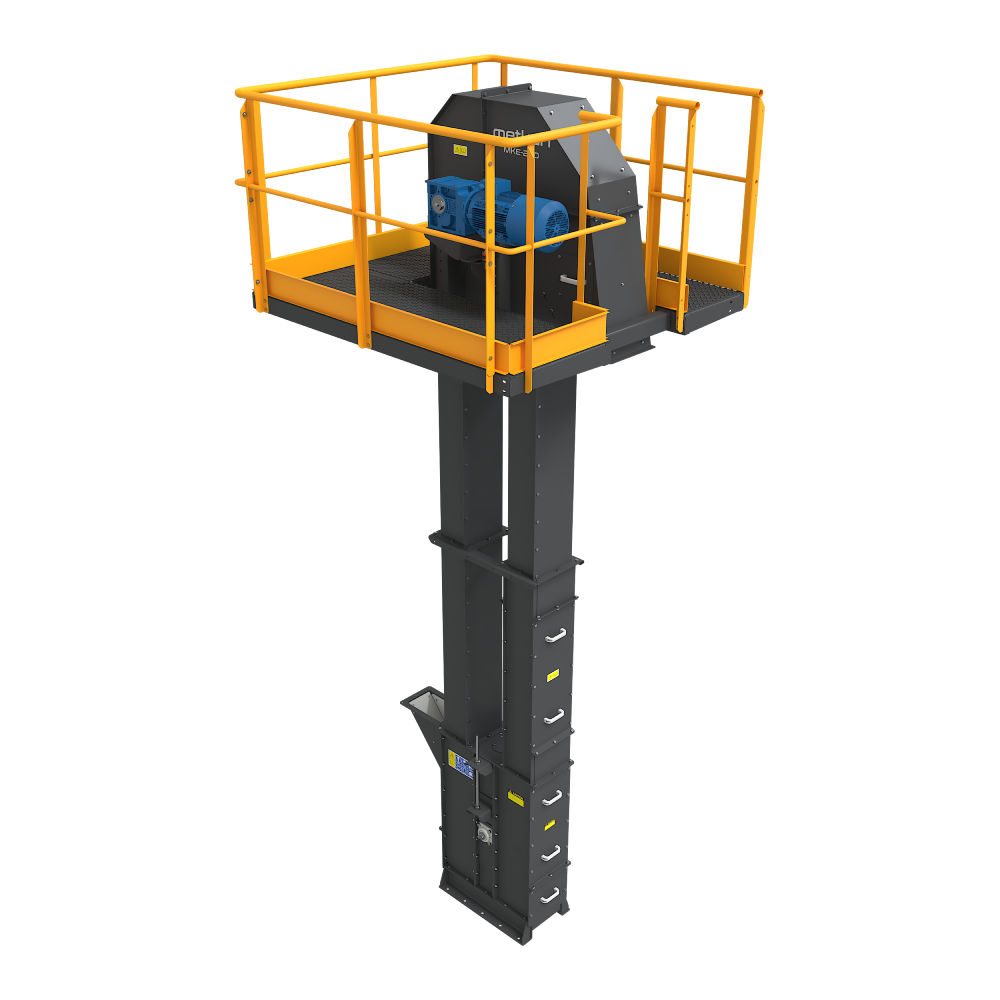
Bucket elevatoris preferred for processes where the product is transported from a lower level to a higher level. It yields strong results, particularly in facilities requiring silo feeding, transfer to elevated bunkers, vertical conveying prior to mixing, and product transfer between floors. This is because the system conveys material steadily using buckets and utilizes space more efficiently during vertical flow. If the line layout involves a significant elevation difference, screw conveyor does not provide the same level of space efficiency. In this instance, bucket elevator offers a more suitable solution.
It also operates effectively for bucket elevator granules, small-grained materials, and products requiring controlled transport. Naturally, factors such as product density, abrasiveness, and fragility are also taken into account. A properly designed system both maintains capacity and simplifies the vertical conveying process. It offers significant layout advantages, bucket elevator especially in facilities with limited floor space. Therefore, when vertical transfer is required and the product must be moved to equipment at a higher level, the bucket elevator is considered the primary option.
Which system is used for vertical conveying needs?
The primary solution when the need for vertical conveying becomes apparent bucket elevator ...is the case, because this system was developed specifically for vertical flow. Screw conveyor Although it can transport products at certain inclines, conveying efficiency and flow stability change as the angle increases. Furthermore, the product structure becomes more sensitive in this context. In facilities that require a distinct elevation change, steady feeding to equipment located at a higher level, and efficient use of space, bucket elevator it is the preferred choice.
For certain short-distance transfers with limited inclines, screw conveyor it can also be utilized. However, in processes requiring a significant vertical lift, bucket elevator it yields more consistent results. The decision-making process involves more than just considering the height; factors such as the nature of the product, hourly throughput, the discharge point, and the requirements of the downstream equipment are all taken into account. A proper process analysis clearly indicates the right equipment. Therefore, decisions regarding vertical conveying are based on technical requirements rather than general habit.
How is the selection made for powders, granules, and fine products?
When selecting equipment for powders and fine products, the product's flow characteristics are examined first. If the product flows freely, a constant flow rate is required, and controlled conveying within a closed line is the goal, screw conveyor yields more accurate results. This is because this configuration minimizes the product's contact with the external environment and enhances feeding consistency. Particularly in processes involving construction chemicals and similar powders, this advantage translates directly into production quality.
For granules and small-grained products, the direction of the process becomes the deciding factor. If the product is to be moved along a horizontal line, screw conveyor is preferred. If the product needs to be transported to a higher level, a bucket elevator offers a more suitable configuration. With fine products, factors such as dust movement, product loss, and cleaning requirements also influence the selection. Therefore, decisions are not based solely on capacity; product behavior and process direction are considered together. Metkan Makine’s process-oriented approach proves its value precisely at this point.
How do capacity, space, and line layout influence the choice?
Capacity targets are among the most critical considerations when selecting a conveying system. A facility engaged in high-volume continuous production cannot be planned using the same logic as a low-capacity line. Screw conveyor offers steady and controlled conveying within specific capacity ranges. Bucket elevator provides a significant advantage in maintaining capacity, especially during vertical conveying. Consequently, the hourly product volume is clearly defined, and the selection is made based on this data.
Space utilization also directly influences the decision. If floor space is limited and vertical layout is required to save space, bucket elevator stands out as the preferred option. If a horizontal and compact in-line flow is required, screw conveyor it offers a simpler layout. Additionally, connections to mixers, hoppers, silos, bagging units, or other process equipment are taken into account. A conveying system that is incompatible with the line layout eventually creates bottlenecks. Therefore, capacity calculations and site layout are considered together, and decisions are made accordingly.
What does each system offer in terms of maintenance and operation?
Ease of maintenance and operation directly impacts equipment performance in the long run. Screw conveyor Its enclosed and compact structure offers a simpler operational setup for specific processes. Cleaning and monitoring are carried out more systematically, particularly on short lines and at controlled feed points. However, if the conveyed product is sticky or prone to clumping, the maintenance plan must be adjusted accordingly. Therefore, the maintenance advantage is evaluated based not only on the machine type but also on the nature of the product.
With bucket elevators, the control logic differs. The bucket structure, the chain or belt arrangement, and the upper and lower turnaround zones require regular monitoring. Nevertheless, a correctly designed system delivers high operational efficiency on lines requiring vertical conveying—especially when access points, service areas, and maintenance schedules are properly configured. bucket elevator It facilitates disciplined on-site operations. The key issue here is not simply which machine requires less maintenance, but rather which machine performs most effectively within the specific process. An incorrect system choice creates more problems from the very start.
How is the right choice determined for construction chemicals plants?
Construction chemicals plantsThe right choice is determined by the required conveying direction at specific points in the process. If the objective is to transport raw material horizontally—in a controlled manner—to a mixer, intermediate hopper, or dosing point, screw conveyor it is the preferred option, as the system offers steady flow and enclosed conveying. However, if the same product needs to be transported to a silo or another feed point located at a higher elevation, a bucket elevator yields better results.
For this reason, both systems are often used together within a single facility. Indeed, across many construction chemicals lines, screw conveyor while one unit handles in-process feeding, bucket elevator another performs vertical conveying. To make the right decision, factors such as product type, process direction, capacity, space utilization, and the requirements of downstream equipment are evaluated holistically. Metkan Makine This is the optimal approach, as a successful plant configuration relies not on highlighting a single machine, but on positioning the right machine within the right line.
Why is a process-oriented approach important for Metkan Makine?
Metkan Makine Selecting conveying equipment for an application is not simply a matter of choosing a machine from a product list. The main objective is to evaluate the entire production line as a whole and place the right equipment in the right process, because —such as screw conveyors versus bucket elevators— is not merely a matter of picking a machine from a catalog; it is not a case of one being a direct alternative to the other, but rather two distinct solutions developed for different tasks. The most suitable system can only be determined by clearly analyzing the process flow.
This approach directly impacts production efficiency. A conveying system positioned incorrectly disrupts flow, increases product loss, and limits the performance of downstream equipment. Conversely, a correctly selected system enhances line rhythm, improves space utilization, and facilitates maintenance routines. Metkan MakineThis is where the company's corporate strength becomes evident. Recommendations for the right machinery are based not only on product knowledge but also on process expertise. This results in a more balanced, efficient, and sustainable production line for the facility.
Frequently Asked Questions
What is the fundamental difference between a bucket elevator and a screw conveyor?
Bucket elevator vs. screw conveyor The fundamental difference lies in the direction and logic of the conveying process. Screw conveyor transports the product along a horizontal or slightly inclined line. Bucket elevator transports the product vertically upwards. Consequently, the two systems serve different process requirements.
For which products does the screw conveyor yield better results?
For powders, fine granules, and products requiring controlled flow, screw conveyor it delivers superior results. It performs particularly well in processes requiring constant-rate feeding within an enclosed line. Raw materials for construction chemicals are prime examples of products suited to this system.
In which situations is the bucket elevator preferred?
It is preferred when the product needs to be transported bucket elevator from a lower level to a higher level. Silo feeding, transferring material to elevated bunkers, and vertical process transitions are areas where this system excels. It also offers significant advantages for facilities looking to save space.
Is a screw conveyor used for vertical conveying?
It is used at specific inclines; however, efficiency and flow stability change as the height increases. It serves in short transitions with limited inclines. In processes requiring distinct vertical conveying... bucket elevator it is the preferred choice.
Which system yields better results for powdered products?
The answer to this question depends on the direction of the process. If horizontal, enclosed, and controlled flow is required... screw conveyor ...it stands out. If the same powdered product needs to be transported to a higher level... bucket elevator ...it yields better results.
Are both systems used together in construction chemicals facilities?
Yes, they are very frequently used together. Screw conveyor ...provides horizontal in-process feeding. Bucket elevator ...handles vertical conveying. The correct setup is achieved by having the two systems complement each other on the same line.
Which system takes up less space?
In terms of floor space, the vertically operating system... bucket elevator ...is more advantageous. Where horizontal and compact conveying is required... screw conveyor ...it offers a simpler layout. Therefore, space utilization is evaluated in conjunction with the process direction.
What is the first criterion considered when making the right choice?
First, the destination and direction of product transport are determined. Subsequently, material characteristics, capacity targets, space constraints, and the requirements of downstream equipment are examined together. The correct choice becomes clear when all these factors are evaluated together.
Metkan Makine To determine the most suitable conveying system for your production line bucket elevator and screw conveyor and to correctly plan the selection based on your specific process contact us.