SCREENING SURFACE
The surface that determines the fraction
The screen aperture and screening surface are selected according to the target particle size and material properties.
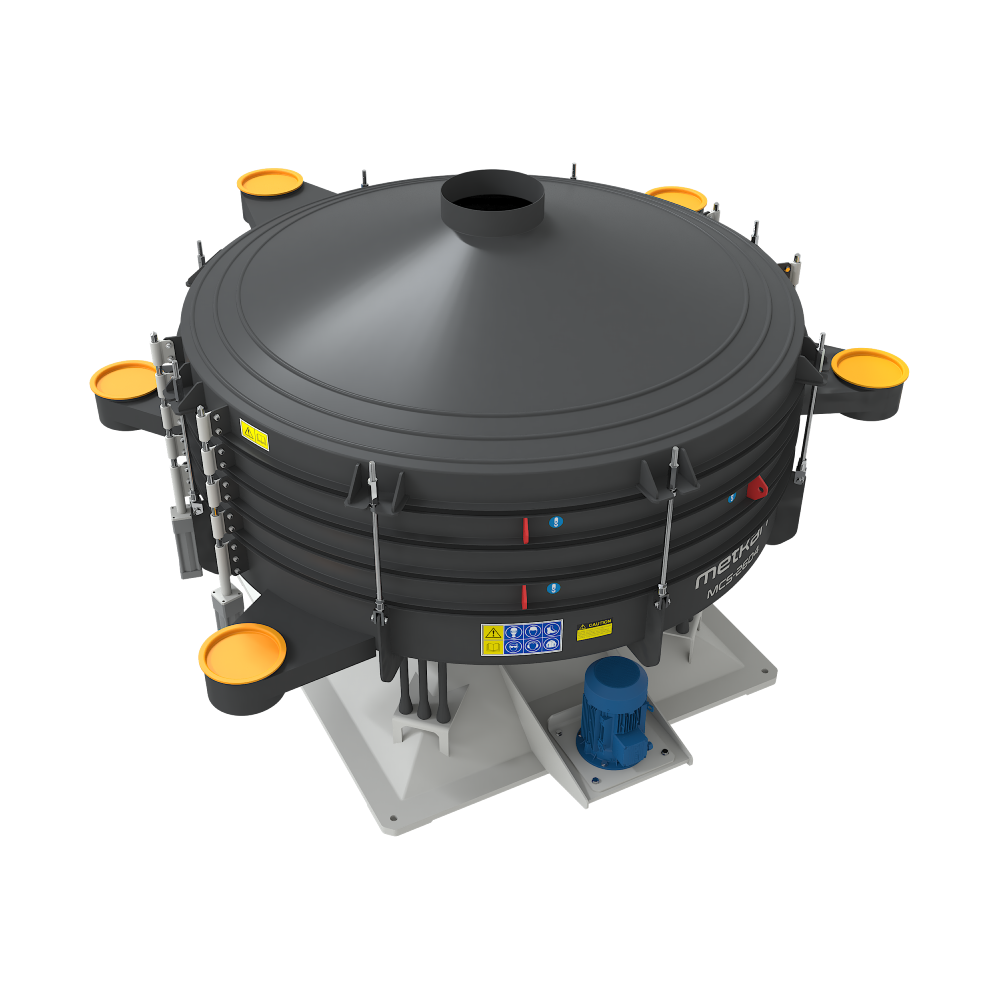
 MACHINERY AND PLANT
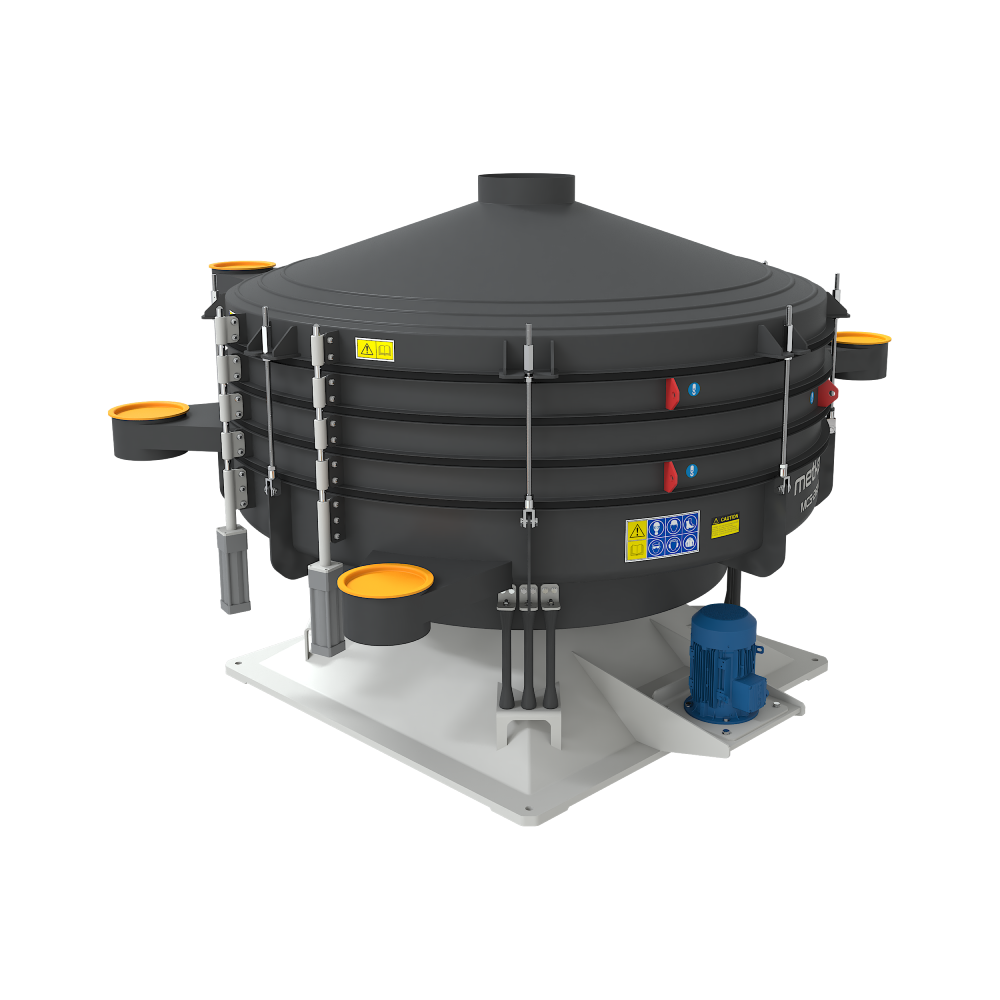
Three-dimensional tumbling motion for classifying powders and granules. Select the screening area and number of decks of the tumbler screen to suit your process.
Explore up closeMETKAN / Screening surface
The screen aperture and screening surface are selected according to the target particle size and material properties.
SCREENING SURFACE
The screen aperture and screening surface are selected according to the target particle size and material properties.
DRIVE
Tumbling motion, feed distribution and screening surface work together. Connections and bearings are checked during maintenance.
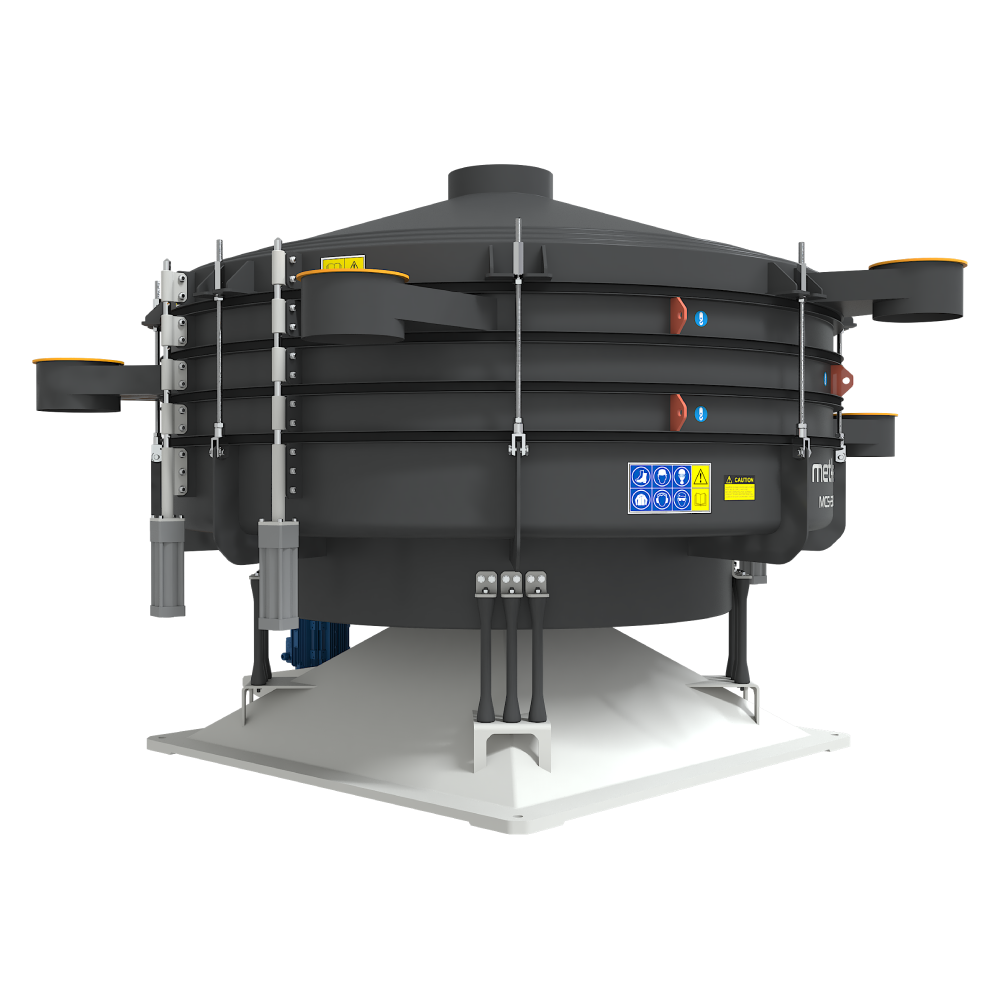
Consider capacity, structure, and dimensions together.
Your material determines the right choice.
| Technical specification | MCS-1600 | MCS-2000 | MCS-2600 |
|---|---|---|---|
| Screen diameter | 1580 mm | 1880 mm | 2580 mm |
| Screening area (per deck) | 1.8 m² | 2.6 m² | 5.3 m² |
| Required floor area | 2.5 m² | 3.6 m² | 6.8 m² |
| Power | 4 kW | 4 kW | 5.5 kW |
| Dimensions | Height / Weight | Height / Weight | Height / Weight |
| 1 deck | 1450 mm / 840 kg | 1470 mm / 950 kg | 1500 mm / 1550 kg |
| 2 decks | 1630 mm / 920 kg | 1650 mm / 1030 kg | 1680 mm / 1680 kg |
| 3 decks | 1810 mm / 980 kg | 1830 mm / 1090 kg | 1860 mm / 1840 kg |
| 4 decks | 1990 mm / 1050 kg | 2010 mm / 1150 kg | 2040 mm / 2000 kg |
| 5 decks | 2170 mm / 1170 kg | 2190 mm / 1270 kg | 2220 mm / 2150 kg |
| Selection for your project | Request a quote ↗ | Request a quote ↗ | Request a quote ↗ |
Technical values should be considered alongside material specifications and operating conditions.
All information in this table is for informational purposes only; it is non-binding and subject to change without prior notice.
Material, capacity, and line layout. Selecting the right machine begins with understanding the entire production process.
Let's assess your needsClassification into the target particle size ranges.
Selection of screen media and decks to suit the particle size distribution.
Coordinated planning of feed, screening and recirculation.
TECHNICAL LIBRARY
PDF / Technical document SELECTION AND MAINTENANCE
The Metkan MCS circular screen belongs to the tumbler screening machine family. Also known in Turkey as Alger elek or dansöz elek, this system separates powders and granules into fractions according to the screen openings.
Three-dimensional tumbling motion distributes and moves material across the screening surface. Feed distribution, moisture, fines content and target cut size are assessed together to define the screening conditions.
When screening calcite, quartz sand and suitable mineral powders, capacity depends on material properties, screen openings and the number of decks. Selection is based on target fractions and material trials where needed.
THE NEXT STEP
Tell us about your material and target capacity.
Let's choose the right machine for your process together.
The Metkan MCS circular screen uses a three-dimensional tumbling motion. Known in Turkey as Alger elek or dansöz elek, this tumbler screen family separates powders, granules and suitable mineral materials. Screen openings, deck count, feed distribution and moisture are assessed together for the required fractions.
RELATED ARTICLES
The question of how to select a circular vibrating screen is among the most frequently researched technical topics for businesses establishing crushing and screening plants. This is because a circular vibrating screen is not merely a machine that separates material; it is also a critical piece of equipment that directly influences product quality, capacity balance, and production line efficiency. If material discharged from the crusher is not classified correctly, product fractions become mixed, the circulating load increases, and the plant's overall flow is compromised. Therefore, the selection of a circular vibrating screen should not be treated as a secondary concern during the investment process. The right model, screening surface, and deck configuration ensure production stability.
Read the technical articleThe circular vibrating screen is a vital piece of screening equipment that separates materials—such as granules, powders, minerals, aggregates, construction chemicals, and various bulk materials—based on particle size. A properly functioning circular vibrating screen on the production line improves product quality, balances capacity, and ensures the stability of subsequent processes. However, when blinding (clogging) occurs on the screen surface, production efficiency drops rapidly. Material fails to pass through the screen apertures and accumulates on top; the feed flow is disrupted, and the facility fails to meet its target capacity. Therefore, the issue of clogging in a circular vibrating screen is not merely a minor maintenance problem; it represents a technical loss of efficiency that impacts the entire production line.
Read the technical articleThe production of micronized products requires robust dust management due to the very fine particle sizes involved. Stages such as grinding, crushing, screening, conveying, silo storage, and packaging can release fine particles into the air. Failure to control these particles reduces visibility in the production area. Furthermore, it compromises worker comfort, leads to the fouling of equipment surfaces, and increases product loss. Heavy dust accumulation also makes it difficult for maintenance teams to detect malfunctions early. Therefore, facilities should not view dust control merely as a cleaning task. Effective dust management encompasses a combination of process design, filtration, enclosed conveying, proper air balance, and a disciplined maintenance routine.
Read the technical article