GRIPPER
Gripping tailored to the package
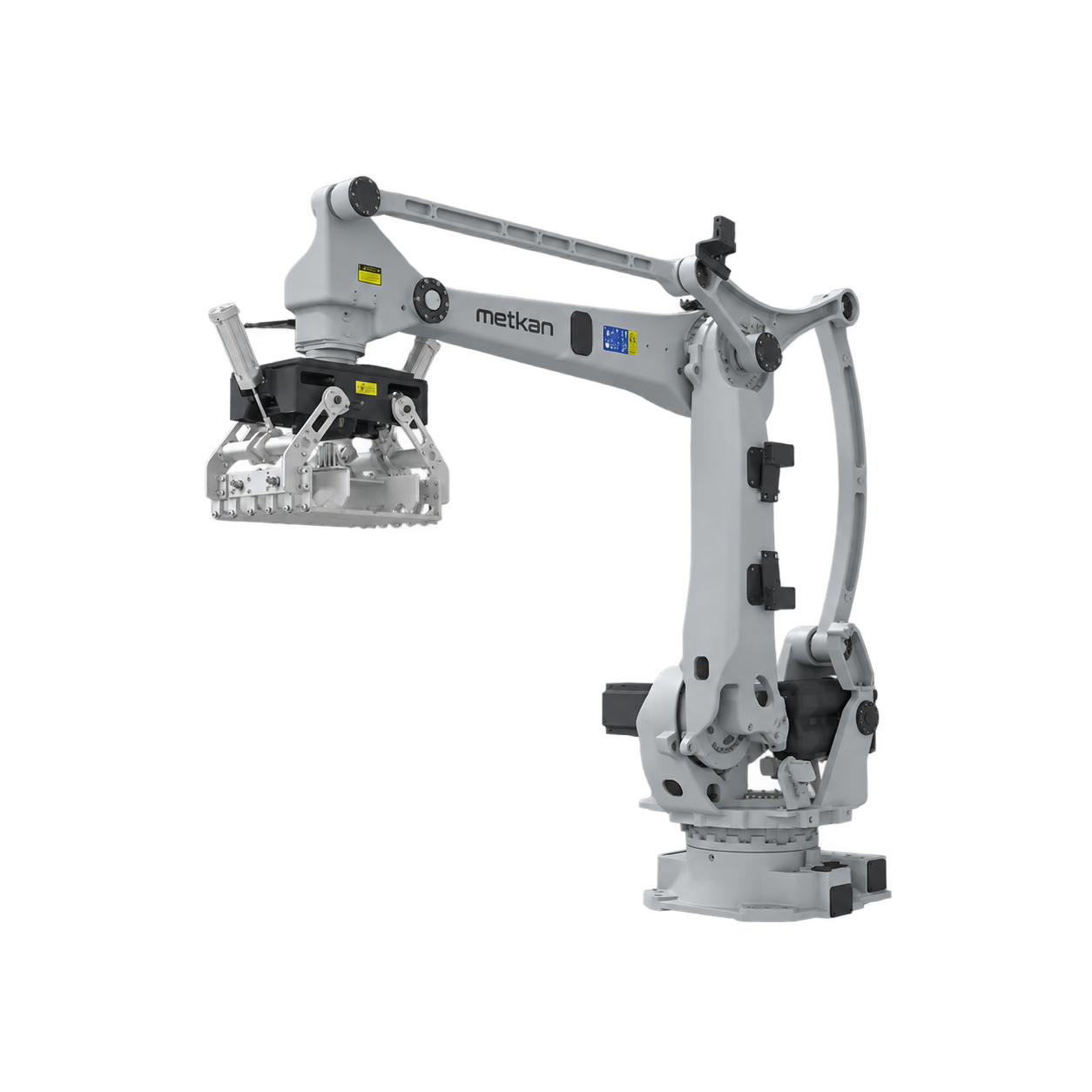
Package weight, dimensions, and surface characteristics are key inputs for gripper selection.
 MACHINERY AND PLANT
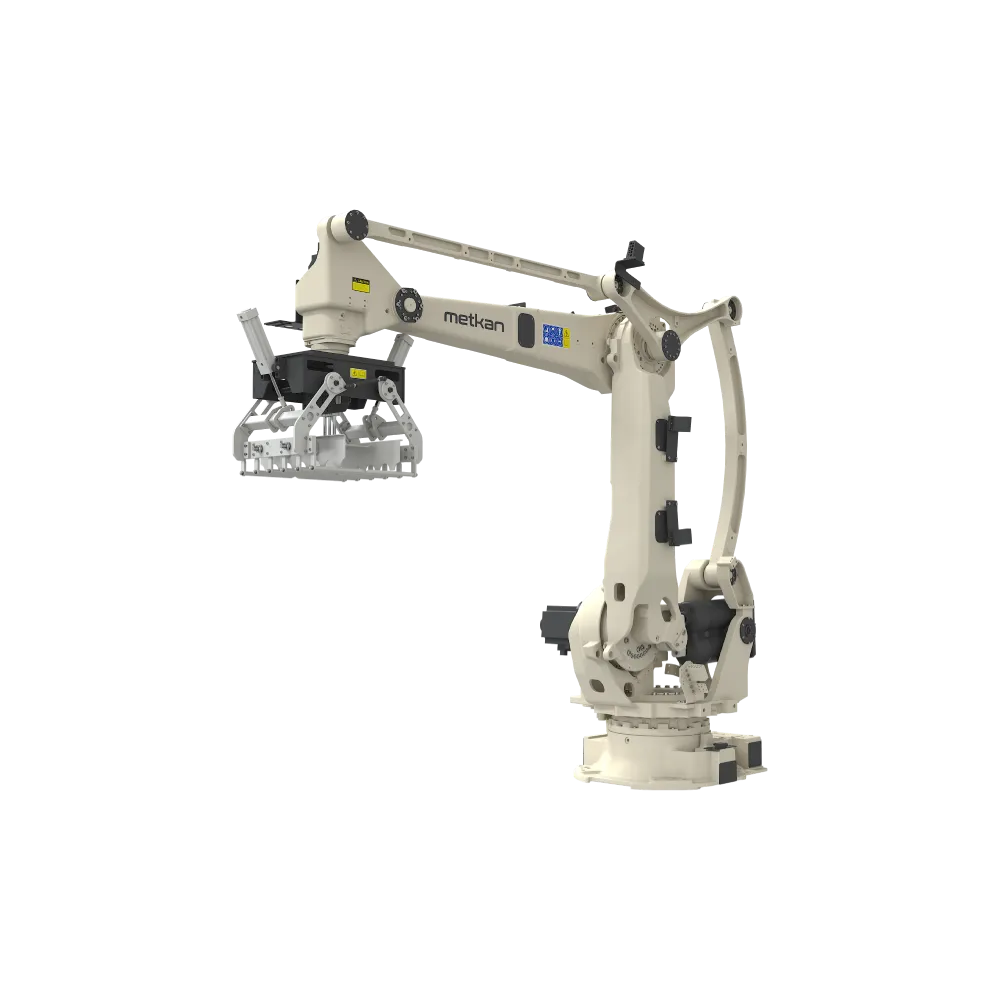
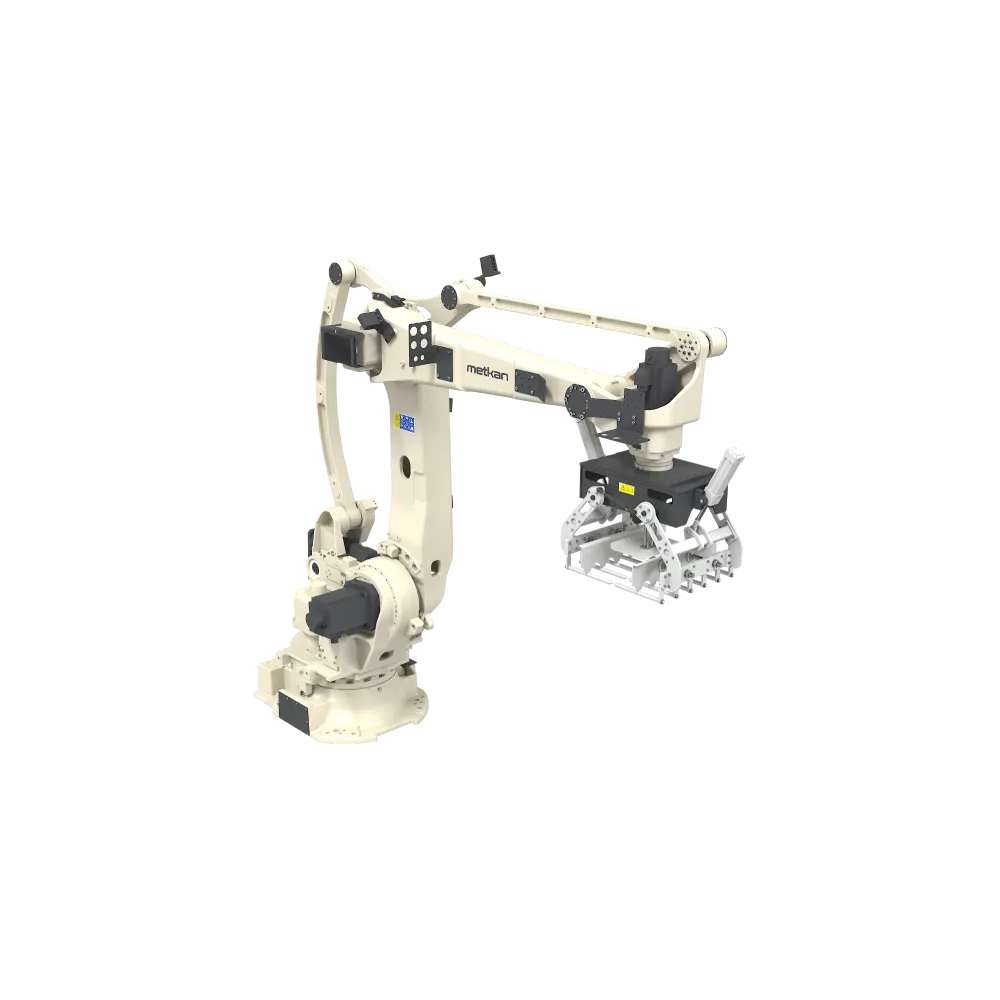
Robotic palletizing planned around package specifications, line speed, and pallet arrangement. A controlled transition from the production line to dispatch.
Explore up closeMETKAN / Gripper
Package weight, dimensions, and surface characteristics are key inputs for gripper selection.
GRIPPER
Package weight, dimensions, and surface characteristics are key inputs for gripper selection.
LINE INTEGRATION
Conveyor flow, robot reach, and the working area are evaluated within a unified layout.
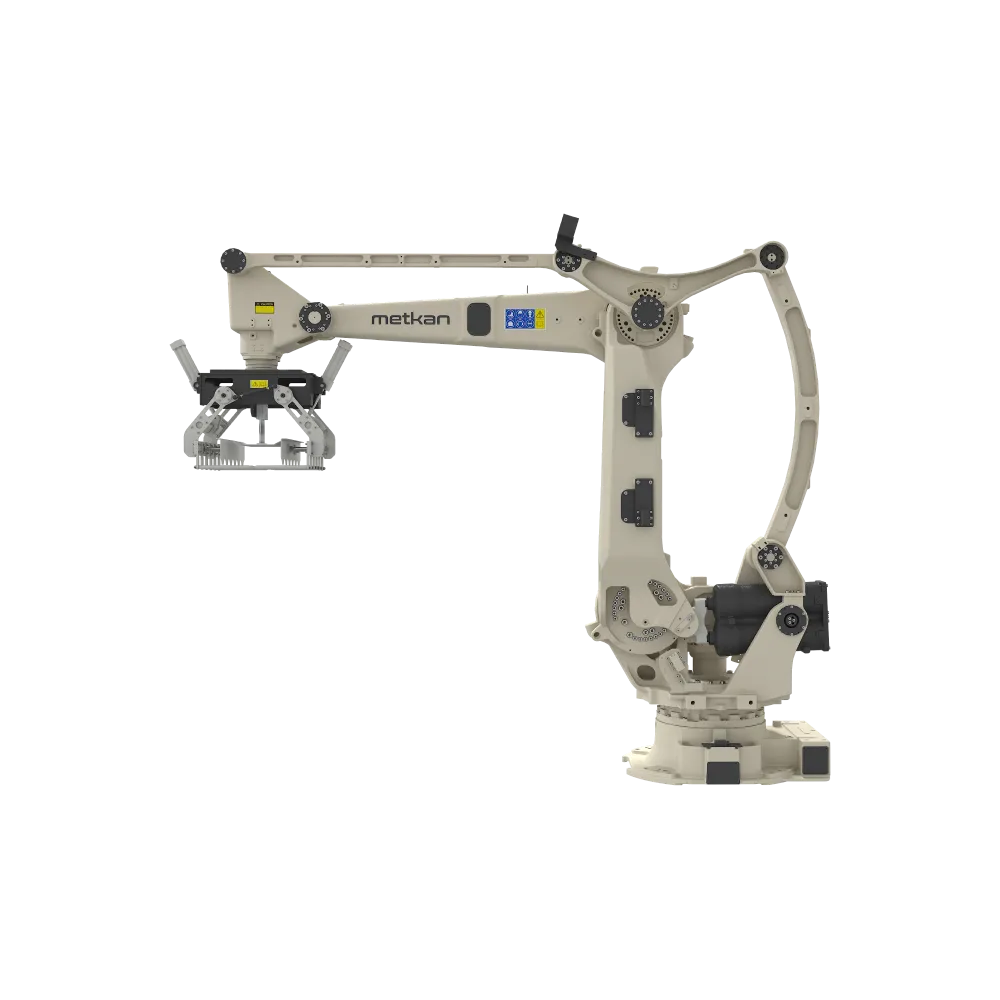
Consider capacity, structure, and dimensions together.
Your material determines the right choice.
| Technical specification | MRP-01 | MRP-02 |
|---|---|---|
| Gripper type | Single gripper | Double gripper |
| Payloadkg | ≤ 50 | Project-specific |
| Cycle Times | 5-7 | 7–9 |
| Palletising ratebags/h | 600-800 | 800-1000 |
| Reachmm | 2400 | 2600 |
| Pallet type | Euro / ISO | Euro / ISO |
| Layer pattern | Column / Interlocking | Column / Interlocking |
| Selection for your project | Request a quote ↗ | Request a quote ↗ |
Technical values should be considered alongside material specifications and operating conditions.
Equipped with state-of-the-art robot arms from global manufacturers like KUKA, ABB, FANUC, and NACHI, METKAN palletizing robots deliver high speed, precision, and long-lasting operation. They ensure uninterrupted performance in high-intensity industrial production environments, making palletizing processes reliable and stable.
The specified capacities and cycle times are theoretical and approximate values; actual performance may vary depending on parameters such as bag weight and fill rate, bag type and surface structure (kraft, PP, valved, open-mouth), product flowability and bag shape stability, line feed speed, conveyor layout and line geometry, robot reach, pallet pattern type, number of layers and layer pressing requirements, and gripper type (vacuum/mechanical).
Material, capacity, and line layout. Selecting the right machine begins with understanding the entire production process.
Let's assess your needsGripper and stacking pattern tailored to package specifications.
Assessment based on dimensions, weight, and pallet pattern.
Integrated planning of conveyor and palletizing processes.
TECHNICAL LIBRARY
PDF / Technical document SELECTION AND MAINTENANCE
Palletizing robots are advanced automation solutions that enable the rapid, orderly, and error-free stacking of products onto pallets at the end of filling and packaging processes. Developed by METKAN, these palletizing robot systems handle bags, boxes, and packaged products with high speed and precision, accommodating various palletizing scenarios. They elevate product and shipment safety to the highest level while reducing labor requirements in high-volume sectors such as construction chemicals, food, cement, and the chemical industry.
Performance Powered by World-Leading Robots
Equipped with state-of-the-art robot arms from global manufacturers like KUKA, ABB, FANUC, and NACHI, METKAN palletizing robots deliver high speed, precision, and long-lasting operation. They ensure uninterrupted performance in high-intensity industrial production environments, making palletizing processes reliable and stable.
The Right Stack, Maximum Order for Every Product
Capable of accommodating various bag, box, and package dimensions, METKAN palletizing robots easily adapt to the product diversity found on production lines. Customizable palletizing patterns optimize stacking arrangements, making shipping and storage processes more efficient.
Automation Fully Compatible with Your Production Line
METKAN palletizing robots operate in synchronization with filling, conveying, weighing, and labeling systems, ensuring seamless automation across the entire production process. By minimizing manual intervention, they reduce error rates and boost both production speed and operational efficiency.
Compact Footprint, High Efficiency
With their compact and modular design, METKAN palletizing robots can be easily implemented even in facilities with limited space. Their user-friendly control interface enables rapid programming, ease of use, and a safe working environment, thereby reducing reliance on operators.
METKAN palletizing solutions integrate with globally proven robot arm brands such as KUKA, NACHI, ABB, and FANUC, and operate in full compatibility with existing conveyor, filling, and labeling lines.
Robotic palletizing systems are used at the end of filling and packaging lines to ensure the orderly, rapid, and safe stacking of bags, boxes, and packaged products.
The specified capacities and cycle times are theoretical and approximate values; actual performance may vary depending on parameters such as bag weight and fill rate, bag type and surface structure (kraft, PP, valved, open-mouth), product flowability and bag shape stability, line feed speed, conveyor layout and line geometry, robot reach, pallet pattern type, number of layers and layer pressing requirements, and gripper type (vacuum/mechanical).
** The performance values shown do not include the pallet feeding system, slip sheet placement unit, layer pressing system, stretch wrapping line, or in-line transfer conveyors.
THE NEXT STEP
Tell us about your material and target capacity.
Let's choose the right machine for your process together.
A palletizing robot or robotic bag palletizer places packaged products onto a pallet. The cell is planned together with the gripper, infeed conveyor, bag flattening and pallet pattern. Package weight, bag shape and hourly bag count determine the practical requirements.
RELATED ARTICLES
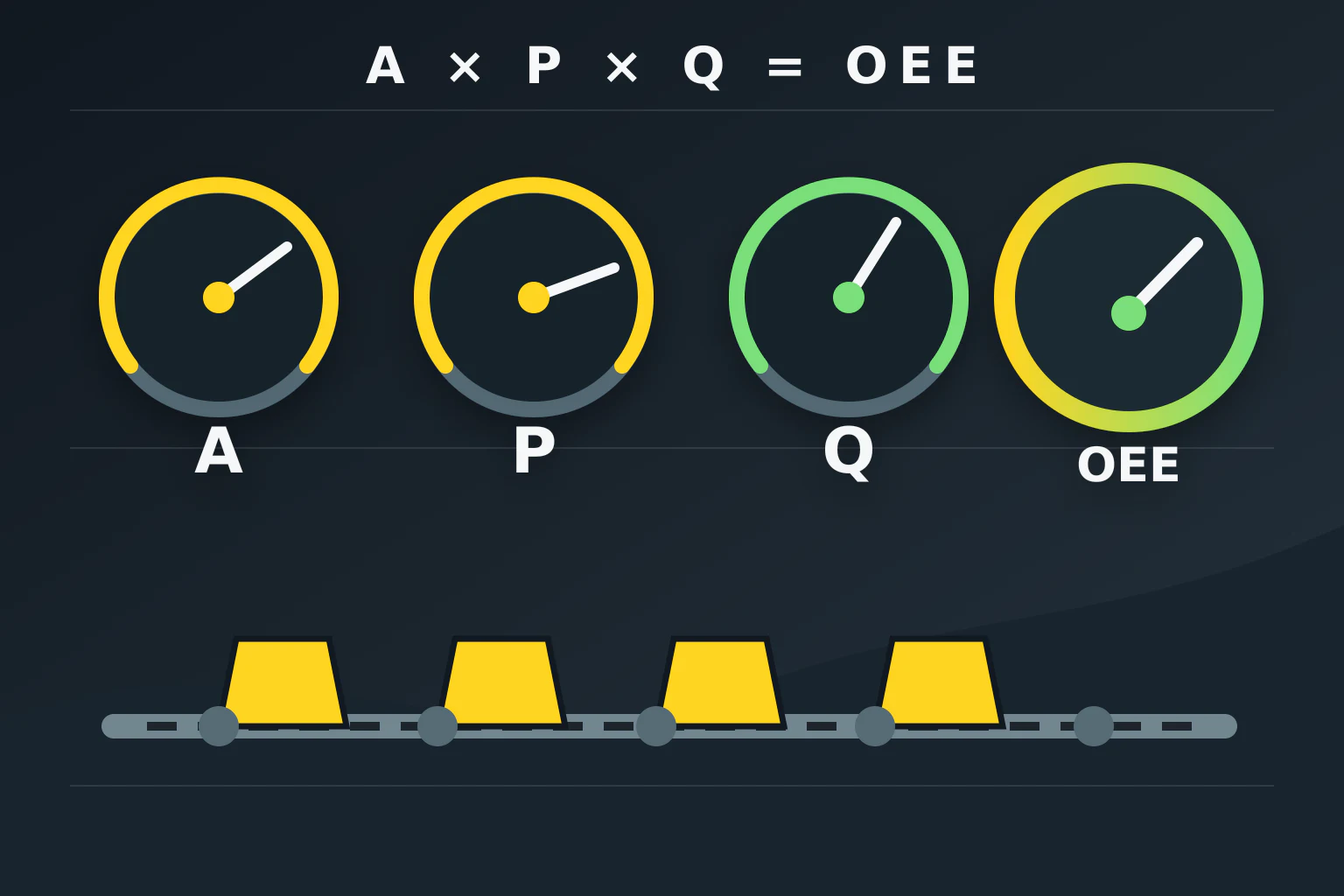
A packaging line may appear to run throughout a shift, yet waiting, minor stops, reduced speed and rejected bags are different losses. OEE shows how much planned production time becomes good output at the target rate. This guide explains how to define the line boundary, calculate the three factors and interpret the result with automation data.
Read the technical articleReading robotic palletizing capacity from the catalogue speed of the robot arm alone is misleading. The package rate from the filling line, the number of bags taken by the gripper, the pick-and-place path, layer pattern and pallet change must be assessed together. The right starting point is to calculate the time the line allows the robot and compare it with the actual cell cycle. This guide converts a bags-per-minute target into cycle time and tests average capacity with a simple example.
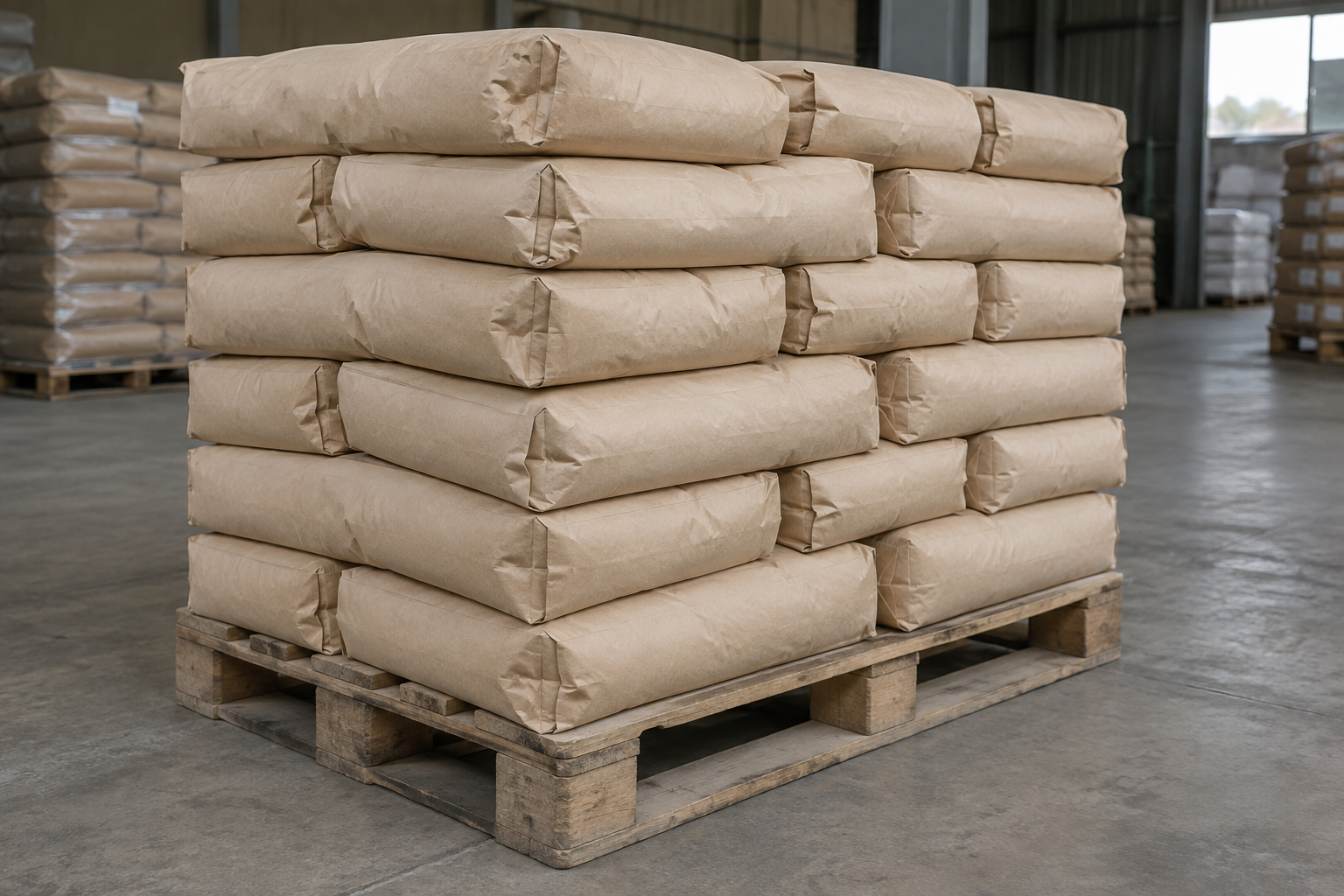
Read the technical articleRobotic palletizing systems ensure speed and order at the final stage of the production line. These systems stack bags, boxes, and packaged products onto pallets in a uniform pattern, resulting in a more controlled end-of-line flow. Additionally, shipment preparation is completed faster. This organization is crucial, especially in high-volume production facilities, as any slowdown at the end of the line impacts the entire production pace. Orderly palletizing simplifies warehouse management and enhances product safety.
Read the technical articleRobotic palletizing systems are a vital component of production continuity in facilities manufacturing construction chemicals, cement, minerals, and dry-mix products. Modern facilities operating at high capacity aim to ensure products are neatly palletized and ready for shipment. However, pallet stacking errors compromise stacking quality, slow down production rates, and incur additional logistics costs. Therefore, stacking issues in robotic palletizing systems should not be viewed merely as visual defects; a stable stack structure is critical for safe conveying and organized warehouse management. By accurately analyzing the root cause of these issues, businesses can both boost production efficiency and enhance shipment safety.
Read the technical articlethe price of a palletizing robot is one of the most frequently researched topics for businesses looking to invest in end-of-line automation. This is because businesses want to see the true investment cost of the entire system, not just the price of the robotic arm. The most common mistake made at this stage is evaluating the price based solely on the robot body. However, a palletizing robot only makes sense when considered alongside the robotic arm, gripper system, product infeed line, conveyor structure, safety enclosure, automation infrastructure, and palletizing scenario. Therefore, a sound price analysis must be conducted based on the system as a whole, rather than treating it as a single machine. For Metkan Makine, too, the right investment plan is shaped not merely by equipment selection, but by an approach that considers the entire end-of-line flow.
Read the technical article