What Causes Pallet Stacking Errors in Robotic Palletizing? Factors Compromising Stacking Quality
Construction chemicals, cement, mining and dry-mix production facilities Robotic palletizing systems form a vital part of production continuity. Modern facilities operating at high capacity aim to palletize products neatly and prepare them for shipment. However, when pallet stacking errors occur, stacking quality suffers, production pace slows, and additional costs arise in logistics processes. Therefore, stacking problems in robotic palletizing systems should not be viewed merely as visual defects. A solid stack structure is critical for safe conveying and organized warehouse management. By accurately analyzing the source of the problem, businesses can both increase production efficiency and strengthen shipment safety.
Metkan Makine, robotic palletizing systems alongside bagging lines, conveyor solutions and automation infrastructure. This is because a robotic arm alone does not create a flawless stack; product flow, bag form, conveyor speed, the vacuum system, and software coordination must all function correctly in unison. If any of these elements loses balance, gaps, shifting, or alignment issues occur on the pallet. Especially in high-tonnage construction chemicals facilities, even minor stacking errors can escalate into significant logistics risks.
Contents
- What is a pallet stacking error in robotic palletizing?
- How do pallet stacking errors affect production efficiency?
- Why does irregular product infeed compromise stacking quality?
- What problems arise from incorrect pallet dimensions?
- Why do robot programming errors occur?
- How do vacuum and gripper system issues affect the stack?
- Why is the compatibility between the conveyor system and the robot important?
- How does a lack of maintenance reduce palletizing performance?
- How can stacking errors be prevented in robotic palletizing?
- Metkan Makine robotic palletizing solutions
What Is a Pallet Stacking Error in Robotic Palletizing?
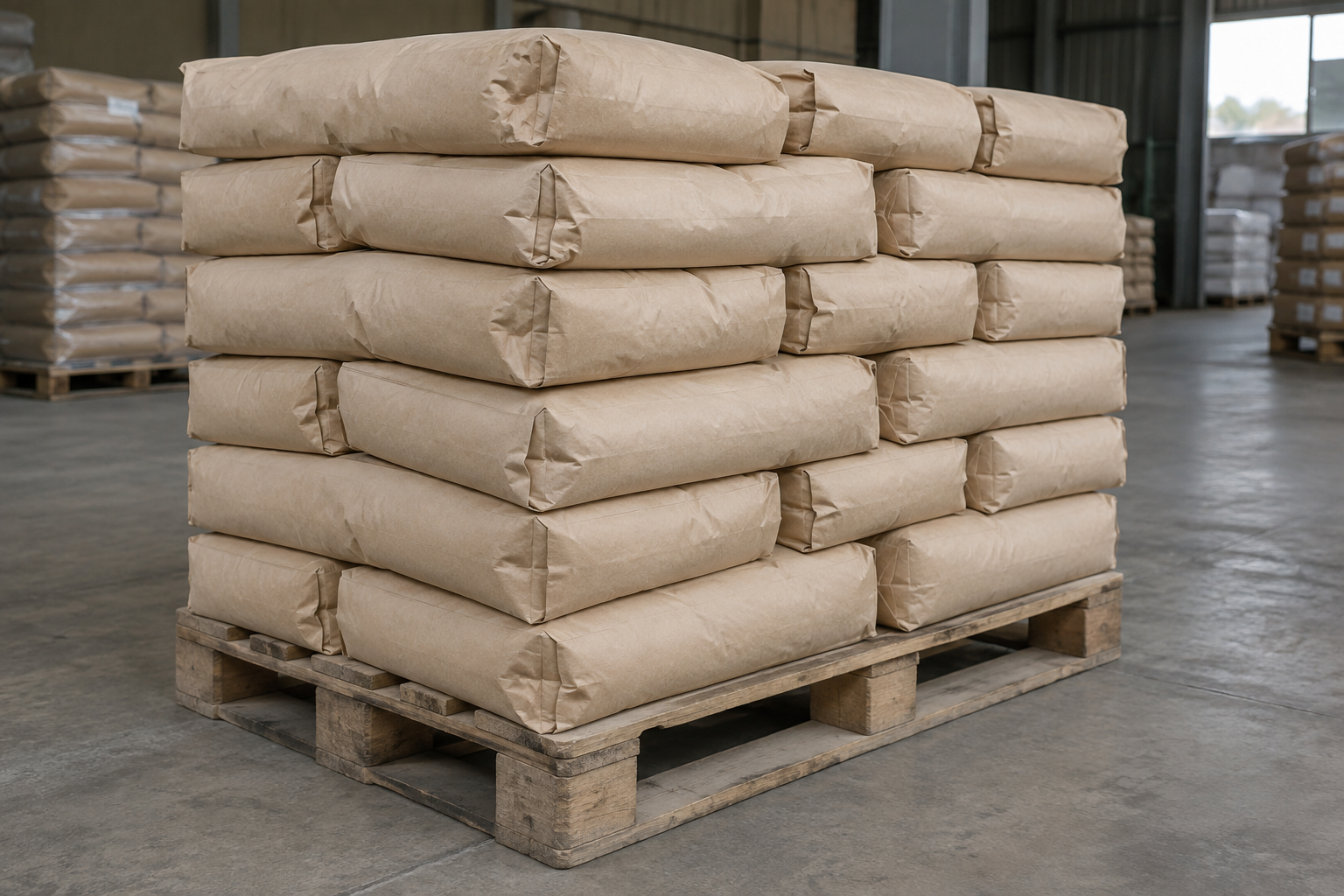
Pallet stacking error in robotic palletizing...occurs when products are not positioned according to the designated stacking plan. If bags or boxes do not sit stably upon one another, the safety of the pallet load is compromised. When gaps form between products, the center of gravity shifts, increasing the risk of tipping during shipment. Even if the production line operates at high speed, a decline in stacking quality leads to additional logistics costs for the business. Therefore, the palletizing process should not be viewed merely as a final step. A robust stack structure is a natural extension of production quality and directly supports the safety of the product reaching the customer.
Robot systems place each product according to specified coordinates. Irregularities in product flow or mechanical issues disrupt this coordination. In some cases, operators must intervene constantly, slowing down the production pace. In other facilities, errors are only detected during shipment. This leads to both wasted time and customer dissatisfaction. A properly functioning robotic palletizing systemmaintains a consistent layout across all layers and ensures every pallet meets the same standard. To maintain this standard, businesses must evaluate equipment selection, maintenance processes, and automation infrastructure holistically.
How Do Palletizing Errors Affect Production Efficiency?
Palletizing errors directly result in a loss of capacity on the production line. Robot systems It operates with specific cycle times and executes every movement based on predefined coordinates. When products arrive in the wrong position, the robot is forced to perform corrective movements. In some cases, an operator must intervene in the system, slowing down the production flow. Consequently, the target pallet count is not met by the end of the day. This situation negatively impacts the business's delivery times, particularly during periods of high order volume. While a stable stacking structure supports production speed, irregular pallets create bottlenecks. Therefore, palletizing quality is considered a key indicator of production performance.
Logistics processes are also directly affected by this situation. Irregularly positioned products can shift during conveyance, potentially causing deformation to the packaging. Increased product loss results in both financial losses and negative consequences for brand reliability. A robust palletizing system facilitates warehouse organization and secures the shipping process. When planning production, businesses should not focus solely on bagging capacity; Robotic palletizing they must also consider performance and stacking quality.
Why Does Irregular Product Feeding Compromise Stacking Quality?
Robotic palletizing systems deliver peak performance when handling products that arrive with consistent dimensions and positioning. If bags slide on the conveyor or advance at varying angles, the robot struggles to identify the correct gripping point. This leads to product misalignment on the pallet. Particularly on high-speed construction chemicals lines, even minor angular deviations can cause significant stacking issues in the upper layers. A reliable infeed system ensures that every bag advances in the same position, stabilizing the robot's movements. Businesses aiming to maintain production line balance must keep the infeed process under constant control.
Filling quality also directly impacts product infeed. Unevenly filled bags shift orientation on the conveyor, disrupting the robot's operating rhythm. Some bags may tilt forward while others slide sideways, creating gaps in the stack and shifting the center of gravity. A more stable product flow is achieved when conveyor speed, sensor placement, and filling systems are evaluated in conjunction. Metkan Makine, bagging lines Robotic palletizing ...plans in integration with [the] systems. Thus, products reach the palletizing point in a standard position, and stacking quality improves.
What Problems Do Incorrect Pallet Dimensions Cause?
Pallet size Robotic palletizing is among the key factors determining performance. Pallets that do not match product dimensions create unnecessary gaps in the stacking arrangement. While oversized pallets cause uneven distribution among products, undersized pallets can lead to product overhang. In both cases, shipment safety is compromised. Since robotic systems are programmed based on specific dimensions, non-standard pallets give rise to coordination issues. Therefore, businesses must evaluate pallet selection in conjunction with production capacity and product characteristics. The correct pallet size forms the foundation of a robust and stable stacking structure.
Storage processes are also affected by pallet standards. The use of incorrect pallets can lead to inefficient use of warehouse space. Logistics operations slow down when products are not positioned correctly within racking systems. Furthermore, safety risks may increase during forklift maneuvers. Facilities operating with standard dimensions both simplify warehouse management and execute shipment plans more efficiently. Metkan Makine, Robotic palletizing evaluates product dimensions, bag structures, and logistics requirements holistically in its projects. Thanks to this approach, businesses achieve more organized stacking and safer conveying processes.
Why Do Robot Programming Errors Occur?
Robot programming processes are fundamental to palletizing quality. If changes in product dimensions or new packaging types are not correctly defined within the system, the stacking pattern can be compromised. When the robot moves to incorrect coordinates, products do not seat properly upon one another, resulting in gaps between layers. Software updates are particularly crucial in facilities where different product groups are processed on the same line. Businesses that regularly monitor the programming process reduce error rates and make the production flow more reliable. Therefore, automation infrastructure should not be viewed merely as an initial investment but rather as a process subject to continuous improvement.
Data from sensors also directly impacts robot programming. Even minor errors in sensor placement can lead to the misidentification of product positions. Because the robot accepts incorrect information as accurate, alignment issues arise on the pallet. Coordinated collaboration between the software team and maintenance personnel significantly mitigates these problems. Metkan Makine develops its automation solutions integrated with robot systems and supports more stable production processes. This approach enhances stacking quality while making it easier for the business to meet its daily capacity targets.
How Do Vacuum and Gripper System Problems Affect Stacking?
Vacuum and gripper systems robot palletizing are among the most critical components of the line. When the robotic arm grips the bag or carton at the correct point, the stacking pattern is maintained, and each layer is positioned with consistent precision. However, if vacuum power drops or mechanical grippers wear out, the product may shift position during movement. This leads to misalignment on the pallet. Especially with construction chemical bags weighing 25 kg or more, even minor shifts can cause serious stability issues in the upper layers. A robust gripper system transports the product along a consistent path from the initial pickup point to the final placement location, thereby preserving stacking quality.
Product variety also plays a significant role in the selection of a gripper system. Paper bags, plastic packaging, and cartoned products exhibit different gripping characteristics. A single vacuum system may not deliver high efficiency for every product type. Therefore, businesses should review their gripper equipment when introducing new product groups into production. Regular maintenance prevents vacuum leaks and preserves the operational precision of mechanical components. Metkan Makine, Robotic palletizing ...creates more stable and reliable stacking structures by developing gripper solutions tailored to specific product characteristics for its projects.
Why Is Robot-Conveyor System Compatibility Important?
Conveyor systems...must deliver products to the robot's workspace at the correct speed and position. Speed mismatches between the conveyor and the robot can cause products to overlap or advance at skewed angles. This extends the robot's gripping time and negatively impacts the stacking pattern. A well-functioning line ensures that every bag moves at a consistent rhythm, allowing the robotic arm to operate without requiring extra corrective movements. As production capacity increases, the error rate decreases. When planning investments in robotics, businesses should evaluate conveyor systems using the same engineering approach.
Transfer points are also of great importance. Height differences or sudden changes in direction between conveyors can cause bags to shift. Such issues become particularly pronounced in high-speed construction chemicals facilities. Proper sensor positioning and regular monitoring of speed synchronization enhance stacking quality. Metkan Makina...bagging, conveyor, and robotic palletizing systems as a single, integrated process. Thanks to this approach, products arrive at the robotic zone in a standardized position, ensuring every pallet is completed to the same quality standard.
How Does a Lack of Maintenance Reduce Palletizing Performance?
Systems that do not undergo regular maintenance... Robotic palletizing systems ...experiences a loss of performance over time. Backlash in robot axes, leaks in the vacuum system, or sensor contamination reduce product placement precision. Deviations that appear minor initially can escalate into major stacking problems later on. Even if the production line continues to operate, pallet quality declines and shipment security is compromised. Daily maintenance routines significantly mitigate these risks. Businesses should establish regular inspection schedules rather than intervening only when a breakdown occurs. This approach both extends equipment lifespan and supports production continuity.
In addition to mechanical equipment, the software infrastructure is also part of the maintenance process. Robot programs, sensor calibrations, and automation parameters must be reviewed at regular intervals. Systems that are not updated may struggle to adapt to new products. Likewise, conveyor motors, bearings, and mechanical connections require periodic inspection. Metkan Makine regards maintenance processes as an integral element of production performance. Thanks to a planned maintenance approach, Robotic palletizing systems ...it continues to operate with high stacking quality for many years.
How Can Stacking Errors Be Prevented in Robotic Palletizing?
To prevent stacking errors in robotic palletizing, ...the product flow must first be standardized. The bagging line, conveyor system, and robot workspace must operate in alignment with the same capacity targets. When products reach the robot at a consistent angle and speed, gripping precision improves. This arrangement creates stable layers on the pallet and enhances shipment safety. Businesses must re-verify software parameters whenever products change. Using standard pallet dimensions also helps maintain the integrity of the stacking pattern, ensuring that every production batch meets the same quality standard.
Maintenance and automation processes also play a crucial role in preventing stacking errors. Regular inspections of vacuum systems, sensors, and robot axes reduce error rates. Synchronized conveyor speeds balance product flow and maintain the robot's operating rhythm. Operator training further supports the success of the process. Metkan Makine Robotic palletizing considers all these factors in its solutions. Thanks to this holistic approach, businesses achieve more organized stacking, lower labor costs, and safer logistics operations.
Metkan Makine Robotic Palletizing Solutions
Metkan Makine construction chemicals facilities —particularly in various sectors— Robotic palletizing systemsdevelops bagging lines conveyor solutions and automation applications. The company does not view palletizing merely as a product placement operation; it regards it as the final quality control stage of the production line. This approach improves stacking quality and strengthens shipment safety. Product type, bag dimensions, capacity targets, and logistics requirements are analyzed in conjunction. Consequently, each business obtains solutions tailored to its specific production structure and maximizes investment efficiency.
Metkan Makinedesigns robot systems in full harmony with the bagging and conveyor infrastructure. Thanks to robust automation integration, production processes become more measurable. Businesses can track daily performance, detect potential issues early, and manage maintenance schedules more effectively. In the long run, this approach offers cost advantages and supports production continuity. Robotic palletizing If you are experiencing palletizing issues on your line or planning a new investment, Metkan Makine you can contact us to request engineering solutions tailored to your facility.
Frequently Asked Questions
What Causes Pallet Stacking Errors in Robotic Palletizing?
Irregular product feeding, incorrect pallet dimensions, vacuum issues, software errors, and a lack of maintenance lead to palletizing problems. Businesses develop more lasting solutions when they address these factors comprehensively.
Why is it important to use standard pallets in robotic palletizing systems?
Standardized pallets ensure more stable operation of robot programs. Since products are positioned according to consistent dimensions, stacking stability is enhanced and shipment safety is improved.
How do problems in the vacuum system affect stacking quality?
When vacuum power drops, the robot cannot fully control the product. The bag may shift position during movement, leading to alignment issues on the pallet. Regular maintenance mitigates this risk.
Do conveyor systems affect robot performance?
Conveyor speeds and transfer points directly influence the robot's operating pace. Systems that operate in harmony ensure a more balanced product flow and enhance stacking quality.
How often should robot programs be checked?
Robot programs should be reviewed during product changeovers and scheduled maintenance periods. Up-to-date software delivers more reliable palletizing performance.
Does regular maintenance increase palletizing capacity?
Planned maintenance processes ensure that mechanical and electronic components operate at peak performance. This approach reduces error rates and supports production capacity.
What robotic palletizing solutions does Metkan Makine offer?
Metkan Makine; Robotic palletizing systemsprovides specialized engineering services for construction chemicals and industrial manufacturing facilities, including bagging lines, conveyor solutions, and automation infrastructures.
Achieve Flawless Stacking Quality on Your Robotic Palletizing Line
Pallet stacking errors reduce production capacity, compromise shipment safety, and increase operating costs. You can largely eliminate these issues through proper robot integration, balanced product flow, and regular maintenance processes.
Metkan Makine Robotic palletizing systems...optimizes your production processes with bagging lines, conveyor solutions, and automation applications. You can leverage Metkan Makine’s expertise to enhance stacking quality and strengthen production continuity through engineering solutions tailored to your business needs.
Robotic palletizing For maximum efficiency and safe shipment in your systems... Metkan Makine with contact us...let us improve your production line together.