Reading robotic palletizing capacity from the catalogue speed of the robot arm alone is misleading. The package rate from the filling line, the number of bags taken by the gripper, the pick-and-place path, layer pattern and pallet change must be assessed together. The right starting point is to calculate the time the line allows the robot and compare it with the actual cell cycle. This guide converts a bags-per-minute target into cycle time and tests average capacity with a simple example.
Separate line takt from robot cycle
If the filling line produces R bags per minute, the available line takt per bag is t = 60 / R seconds. At 12 bags per minute, a new bag arrives every 5 seconds. With a single-bag pick, the sustainable cell cycle must therefore not exceed 5 seconds. If the gripper takes k bags per cycle, theoretical robot capacity is C = 3600 × k / tc, where tc is the complete pick, travel and place cycle. A double pick with an eight-second cycle gives 3600 × 2 / 8 = 900 bags per hour theoretically. This figure does not yet include pallet change, brief stops or gaps in feeding.
Include pallet change in average capacity
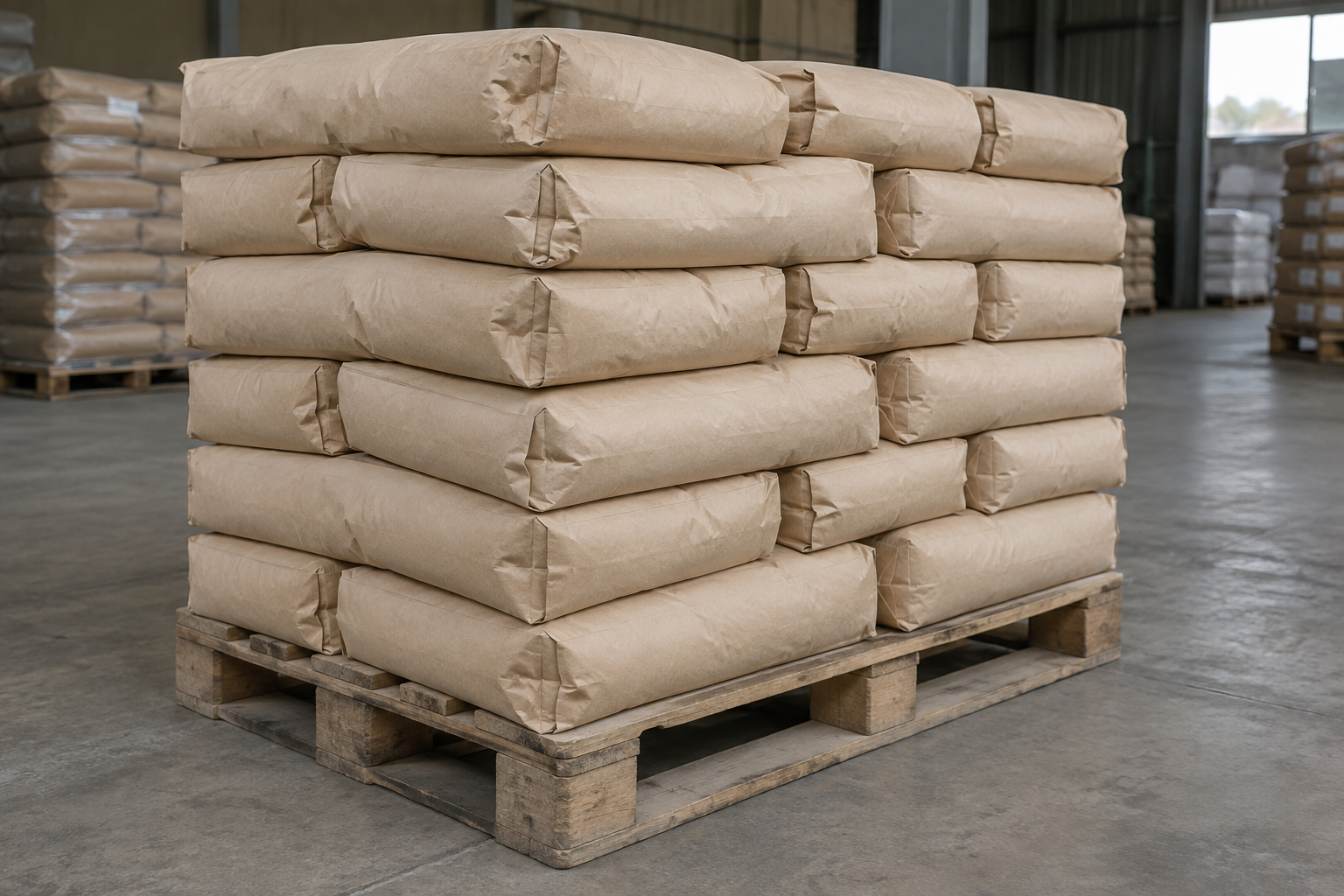
If a pallet holds N bags, each cycle picks k bags and pallet change takes tp seconds, total pallet time is T = (N / k) × tc + tp. In an illustrative example, assume 50 bags per pallet, a double gripper, an 8-second cycle and a 40-second pallet change. The robot works for 200 seconds over 25 cycles; with the change, 50 bags are completed in 240 seconds. Average capacity is 50 / 240 × 3600 = 750 bags per hour. If the filling line requires 12 bags per minute, or 720 per hour, the difference is only 30 bags per hour. That roughly 4-percent difference is not a reliable performance allowance for real stops; the example only demonstrates the method.
Measure the steps that make up cycle time
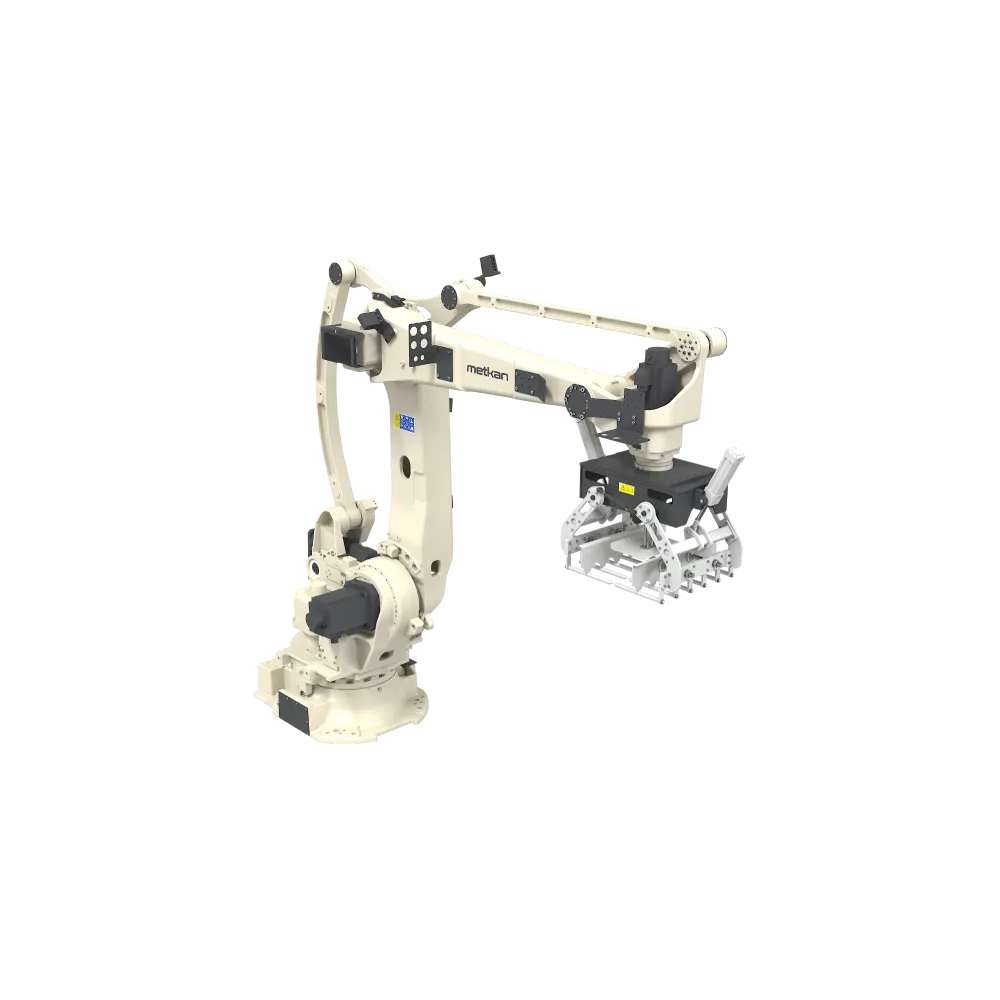
tc is not just robot motion time. Bag arrival at the pick position, position confirmation, gripper closing, lifting, travel to the pallet, any required reorientation, controlled release and return all belong to the cycle. At a layer change, target height and path can change, so upper-layer cycles may differ from lower ones. ISO 9283 addresses robot performance characteristics under defined test conditions; actual cell capacity is the combined result of robot, gripper, conveyor, pallet supply and control logic. Time every cycle for a complete pallet rather than one fast cycle, and record the slowest repeat as well as the median.
Accumulation manages short-term mismatch
If the filling line continues during pallet change, the produced bags need safe accumulation space. The theoretical accumulation requirement in bags is B = R × tp / 60. At 12 bags per minute and a 40-second change, B = 12 × 40 / 60 = 8 bags. This is only a time-based result; physical conveyor length, bag spacing, conditioning equipment and release rate must also be verified. If accumulation is too small, the filling machine waits even when average hourly robot capacity appears sufficient. Conversely, a long conveyor does not fix inadequate robot capacity; it only delays overflow.
Do not base single- or double-gripper choice on speed alone
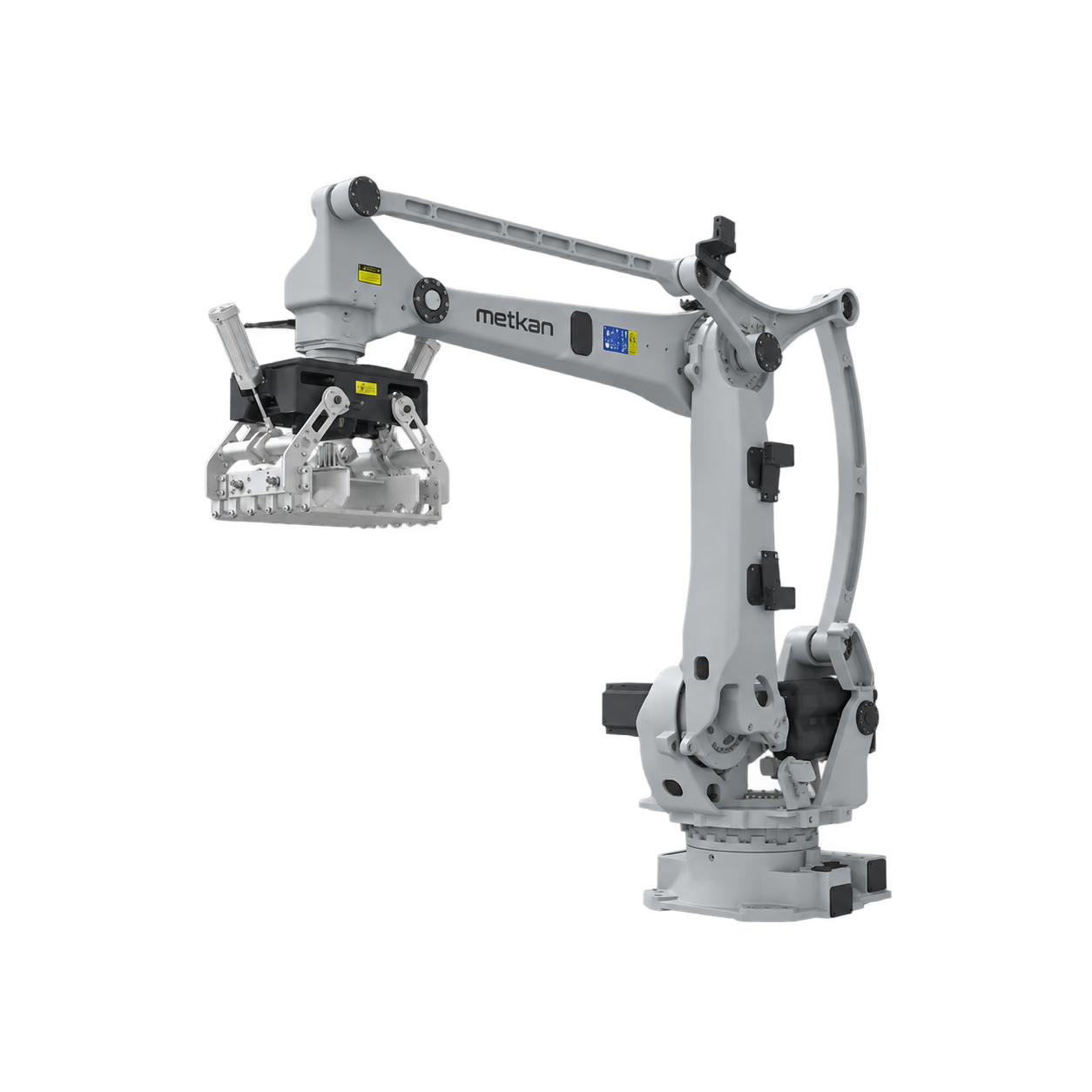
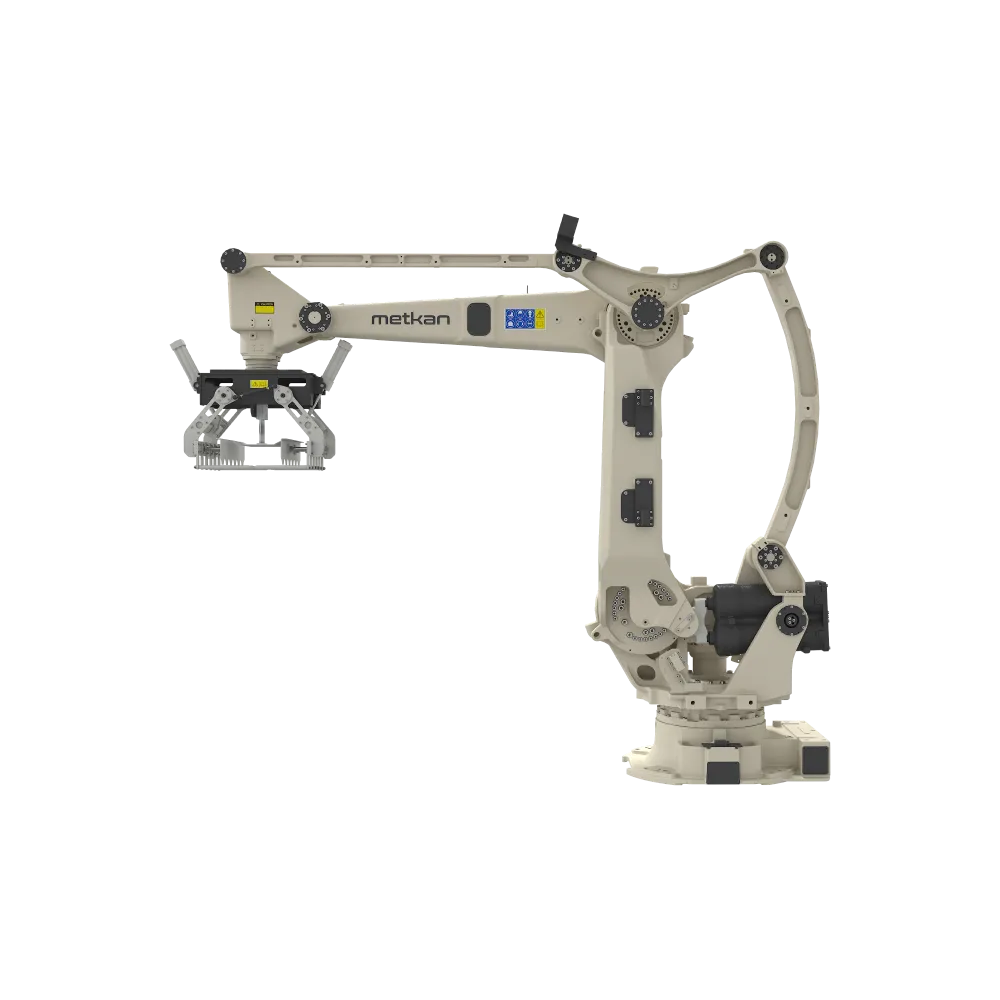
A double gripper can move more bags per cycle, but total load, inertia, bag shape and stable simultaneous gripping constrain the motion profile. If the pallet pattern does not allow double placement at every position, some cycles may still be single. A larger gripper also affects robot reach and the collision-free path. Research on palletizing shows that efficiency depends not only on motion speed but also on task sequence and waiting times. Selection should therefore be based on a sustainable cycle verified with the actual bag, pattern and layout, not the shortest simulated cycle.
Which data is needed for a proposal and field verification?
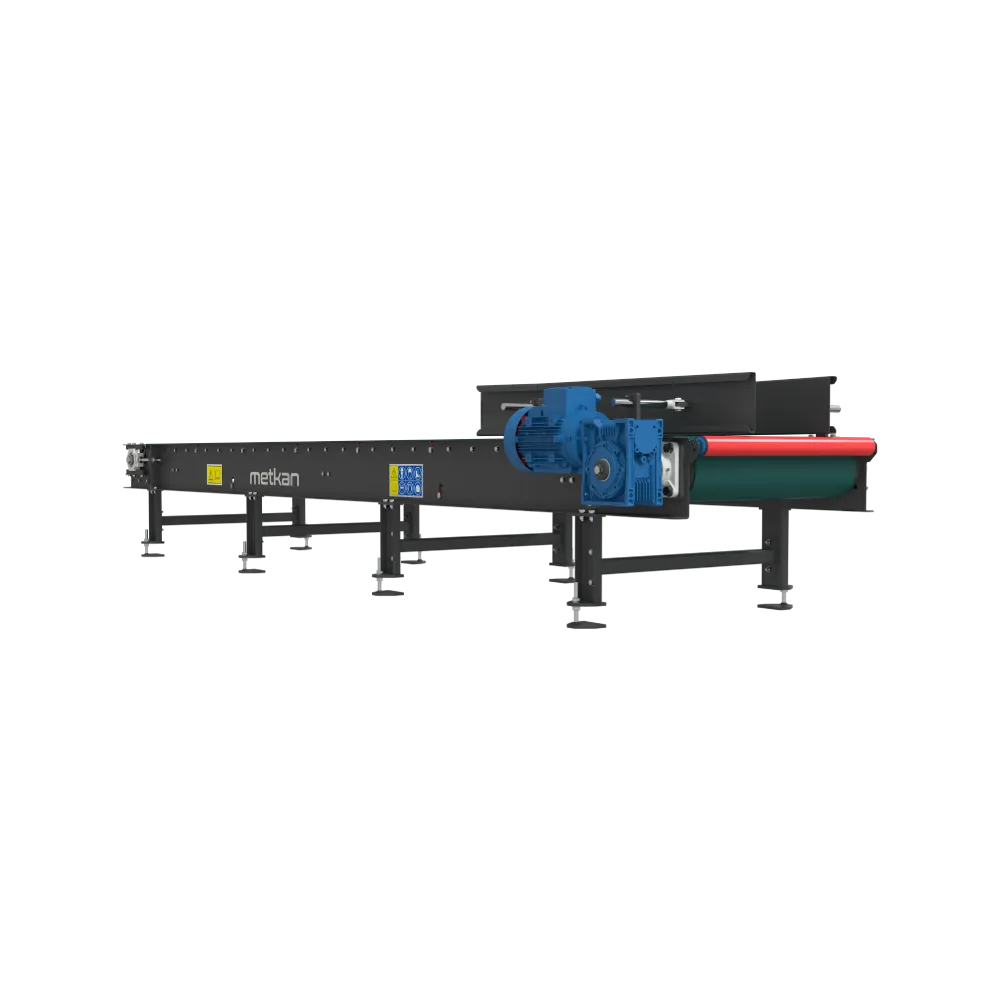
For robotic palletizer selection, provide bag or box dimensions, weight, surface, nominal and short-term peak filling-line rate, pallet size, units per pallet, layer pattern and target pallet height together. Infeed conveyor, package orientation, available area, empty and full pallet flow and shift pattern also change the cycle calculation. During commissioning, record cycles for at least three complete pallets, pallet-change time, accumulation level and filling-line wait count. ISO 10218-2 treats an industrial robot application as an integrated cell; safety design and validation must be handled separately within an authorized risk assessment.
Sources and calculation note
The calculation only demonstrates the method and the effect of its variables. It cannot be used as a capacity or performance guarantee until the actual package, gripper, path, pallet supply, conveyor and control logic are verified.
- Metkan — Robotic palletizing technical product page
- ISO 9283:1998 — Industrial robot performance criteria and test methods
- ISO 10218-2:2025 — Safety requirements for industrial robot applications and cells
- Wozniak et al. — Scheduling cycle and waiting times in robotic palletizing
- Comprehensive review of robot trajectory planning in automated palletizing