Knowing a belt conveyor’s width is not enough to state how many tonnes per hour it will carry. For bulk materials such as limestone or aggregate, the real question is: what mass flow results from the safe load cross-section on the belt, the selected speed and the material’s bulk density? This guide explains the theoretical calculation, a worked assumption and a practical check.
Define four quantities before calculating
The first quantity, A, is the cross-sectional area of material on the belt in m². It does not depend on belt width alone: carrying-idler arrangement, trough angle, edge clearance and the material’s surcharge angle in motion all change the section. A flat belt and a three-roll troughed belt of equal width can therefore have different A values. Use an applicable design table or verified geometry.
The other quantities are belt speed v (m/s), loose bulk density ρ (t/m³), and factor K representing the effect of inclination. K may be 1 for a horizontal example; an inclined conveyor needs a project-specific value because the stable load section can decrease. The theoretical relation is C = 3600 × ρ × A × v × K. The factor 3600 converts seconds to hours.
A worked capacity example
Assume a horizontal conveyor with safe load area A = 0.03 m², belt speed v = 1.20 m/s and loose bulk density ρ = 1.50 t/m³. With K = 1.00, C = 3600 × 1.50 × 0.03 × 1.20 × 1.00 = 194.4 t/h. These values only demonstrate the method; they are not the capacity of a specific Metkan conveyor.
| Variable | Assumption | Role in calculation |
|---|---|---|
| Load area A | 0.03 m² | Design geometry |
| Belt speed v | 1.20 m/s | Volumetric flow |
| Bulk density ρ | 1.50 t/m³ | Volume-to-mass conversion |
| Incline factor K | 1.00 (horizontal) | Incline correction |
| Theoretical result C | 194.4 t/h | Not a capacity guarantee |
Doubling speed doubles the mathematical result, but it does not prove mechanical or process suitability. If the loading chute cannot centre the material, large lumps consume edge clearance, or the discharge point cannot accept the new speed, the theoretical increase may return as spillage, dust and irregular feed. Speed, belt width and load cross-section are not independent purchasing values.
Compare theoretical capacity with measured flow
In the same example, suppose 30.0 tonnes are measured over a comparable ten-minute period. The hourly equivalent is 30.0 × 6 = 180 t/h, about 7.4% below the theoretical 194.4 t/h. This difference alone does not prove a fault; it can show that the ideal section was not continuously filled, density differed, or speed and inclination assumptions did not fully represent site conditions.
Use the same material, similar moisture and size distribution, stable feed and a sufficient measuring period. If belt speed is derived from drive-pulley rpm, record the actual pulley diameter and slip; if mass comes from a belt scale, record zero and calibration status. Measuring loose bulk density in a container is not equivalent to using the density of compacted material.
Investigate a difference in the right order
First observe whether the feeder places material centrally and continuously. Then check whether the loaded section approaches the design A value, and inspect edge clearance and spillage. Next verify actual belt speed, bulk density and inclination. This order prevents conclusions based only on motor current: current indicates loading, but it does not directly measure tonnes per hour.
Keep capacity and drive-power calculations separate. The first estimates how much material can be carried; the second evaluates traction arising from the belt, idlers, loading zone, inclination, friction and starting conditions. ISO 5048 covers operating power and tensile forces. A motor rating or gearbox ratio therefore cannot be derived directly from the 194.4 t/h result.
Do not send only tonnes per hour for a proposal
For belt-conveyor selection, provide normal and peak capacity, material, loose bulk density, moisture, size distribution and maximum lump size. Line length, elevation change, loading and discharge arrangement are also needed. The IS 11592 approach supports checking belt width for both capacity and lump size; the governing requirement controls the design. The applicable edition of any standard must be defined separately in the project specification.
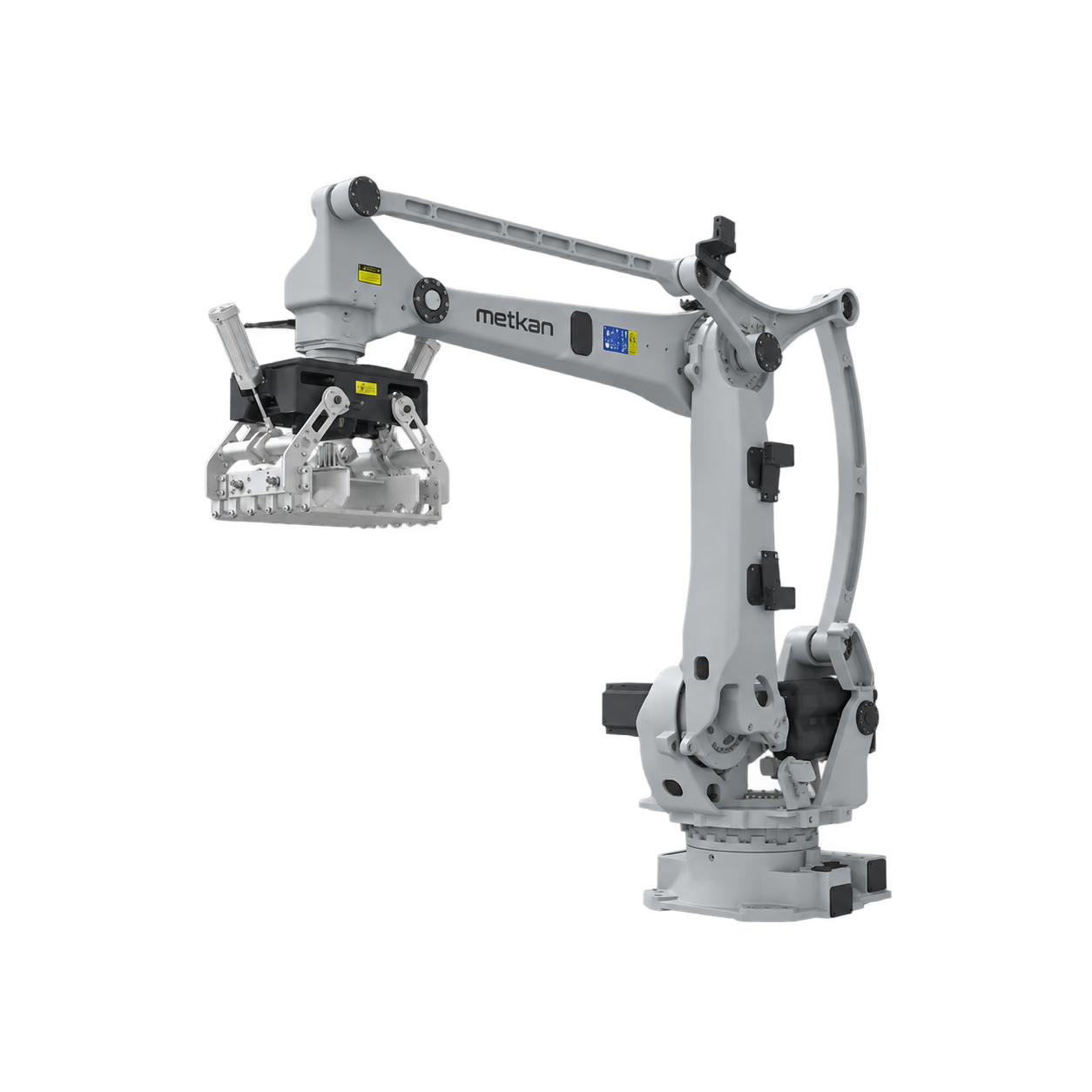
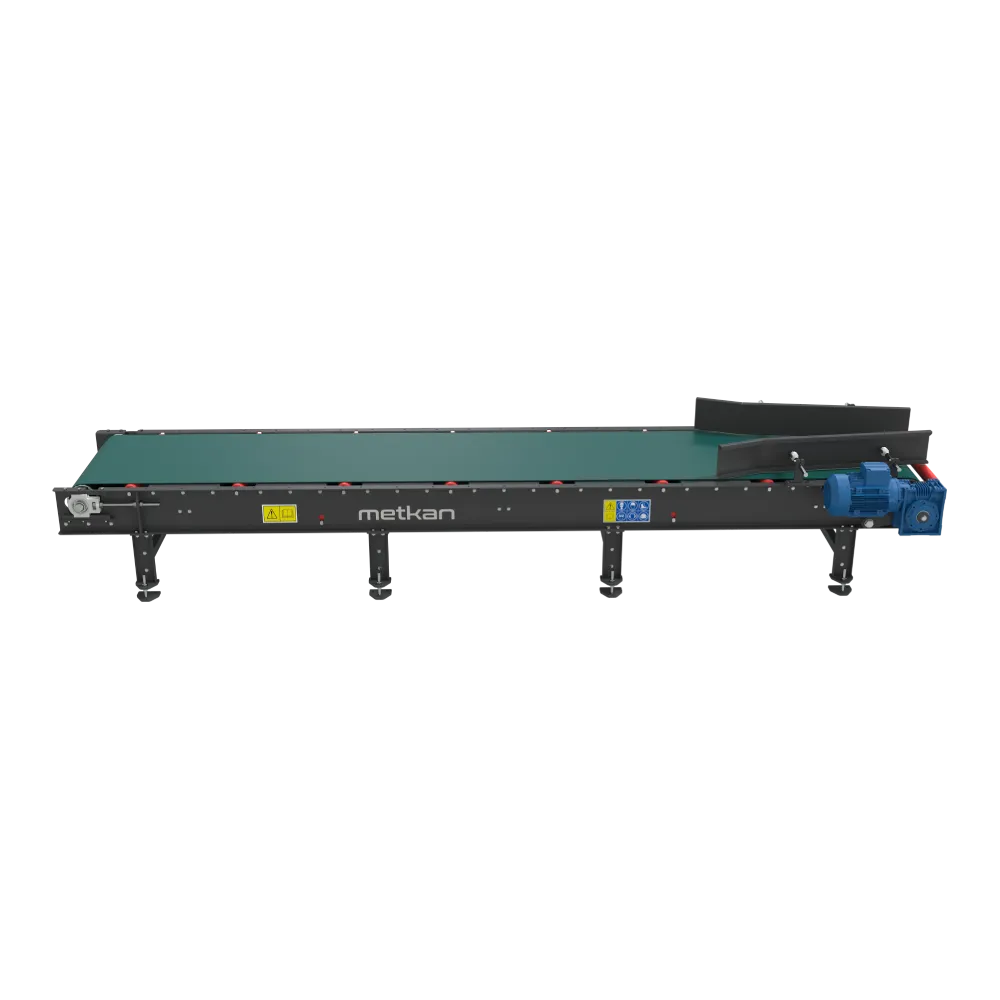
When reviewing the application with Metkan, send these data together with the current layout and, where possible, a short measurement record from stable operation. The conveyor, automation and contact pages below help define the proposal scope. The machine in the cover is an actual Metkan product rendering; the aggregate detail is an editorial composition. It does not show a customer site, measured capacity or a specific project result.
Sources and calculation limits
Sources checked on 22 October 2026. Official scope and design principles are summarized; no full standard text, conformity assessment or project-specific engineering calculation is provided. Numerical examples are hypothetical.