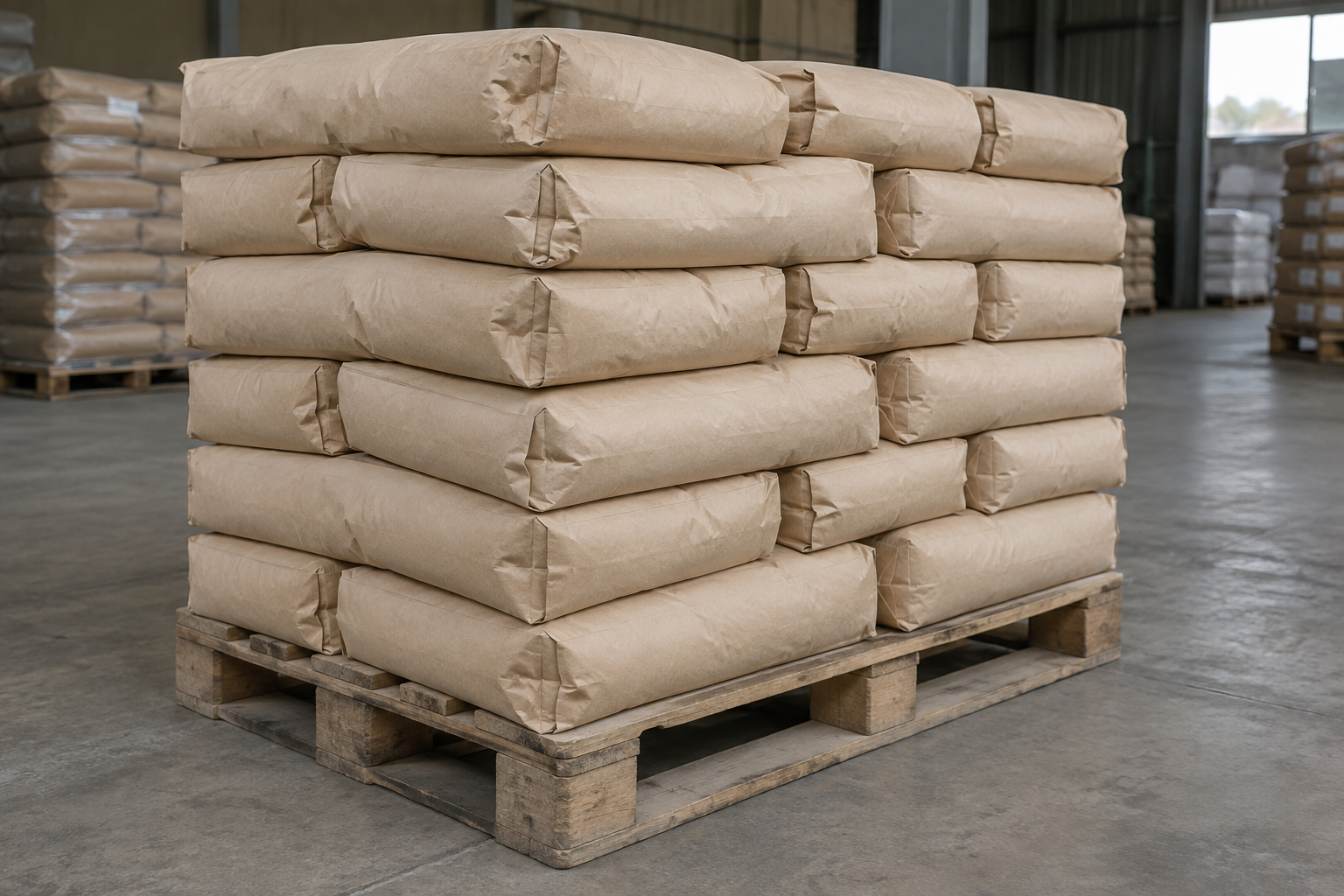
A dry-mortar sample taken at the mixer may be satisfactory while the first and last bags differ in composition. Increasing mixing time at this point is an intervention made before locating the problem. Dry-blend segregation, meaning the separation of previously mixed components, can develop during downstream handling. This guide offers a diagnostic approach from mixer discharge to bagging to identify where the blend changes.
Separate poor mixing from segregation during transfer
First map the path of a single batch: mixer discharge gate, intermediate conveyor, holding hopper and bagger feed. Correct total ingredient additions do not prove that every bag has the same composition. Likewise, a sample taken only from the upper surface inside the mixer may not represent the batch. Dosing records, distribution within the blend and distribution in the finished product answer different questions; success in one does not establish the other two.
If composition already varies throughout mixer discharge, examine mixing conditions, fill level, ingredient addition order and discharge behaviour together. If discharge is consistent but bagging is variable, move the investigation downstream. This comparison is meaningful only after sampling and analytical errors have been considered. The aim is neither to blame nor to exclude the mixer in advance, but to locate the first boundary where change appears. Record any batch overlap caused by simultaneous hopper filling.
Similar symptoms, different segregation mechanisms
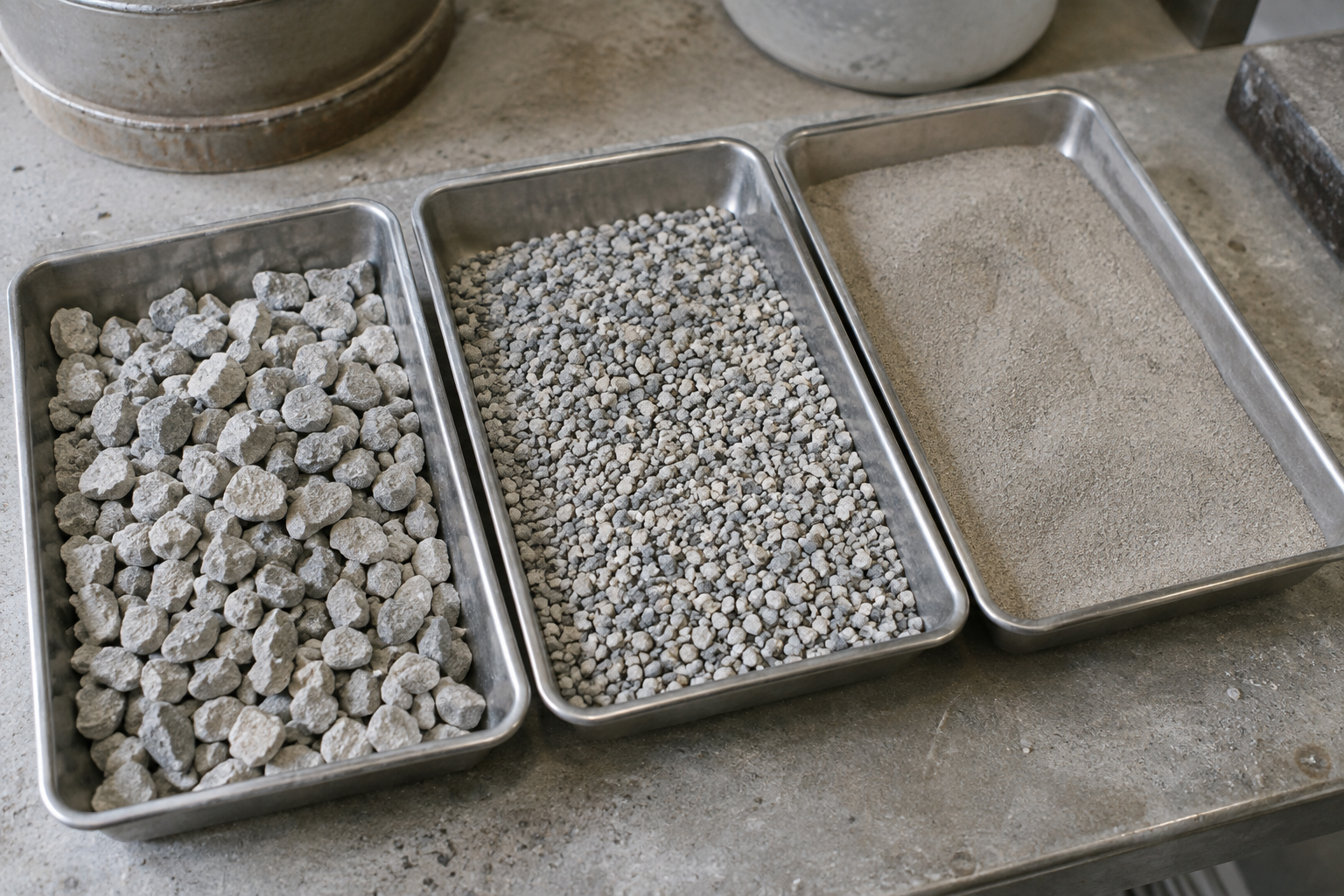
Sifting segregation occurs when smaller particles move through gaps between larger ones; ASTM D6940/D6940M treats this tendency as a distinct test subject. Different component behaviour under the influence of air relates to fluidization segregation addressed by ASTM D6941. The distinction matters: particle-size distribution alone may not explain the effect of air movement. These test scopes do not establish a universal acceptance limit or a plant performance guarantee for every formulation.
Silo research by Engblom and colleagues shows that the distribution created during filling affects subsequent discharge. A transfer route therefore deserves more than a throughput check. On site, mark drop points, filling direction, pauses and hopper-level changes on a flow sketch. Place sample results on the same timeline as these events. Two bags that differ may contain material from different discharge stages of the same batch rather than different feed materials.
Do not sample only to obtain an average
Start the comparison with the same formulation and a traceable batch. Using an approved sampling arrangement, plan separate samples covering early, middle and late stages of mixer discharge and bagging; let the quality plan determine the number and frequency. These three stages are a planning framework, not a claim that a particular sample count is sufficient. Record sampling point, time, batch, hopper level and bag sequence. Do not reach into moving equipment to collect samples; use the site's authorized procedure.
Combining separate samples into one composite can hide changes over time. Select the component to monitor and the measurement method in advance; do not rely on colour alone. Sample quantity, subdivision method and analytical conditions must be comparable, and laboratory repeatability must be understood. Examine the distribution at each location first, then compare mixer and bagging results. Similar averages with greater scatter at bagging are an important reason to investigate, not conclusive proof of a particular mechanism.
Test changes where the variation begins
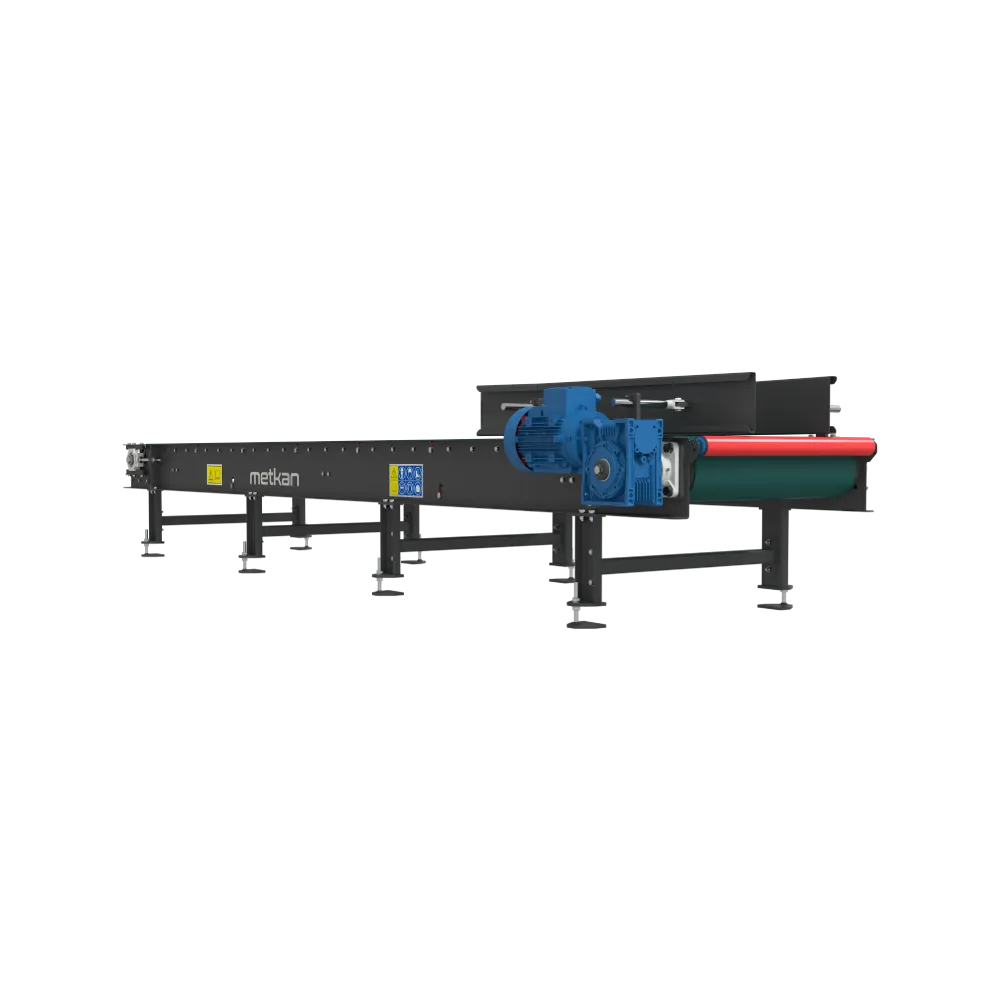
If variation appears after a transfer, engineering review should cover unnecessary drops and transfer stages, conveyor feeding, air venting and hopper filling. Adding vibration, changing air flow or accelerating discharge without diagnosis is not a sound starting point. Define a controlled trial for one variable first, keeping other conditions as stable as possible. Agree on success criteria beforehand using composition distribution in the finished bags and the product specification.
If hopper geometry or flow pattern is to change, assess actual material flow properties alongside the existing layout. One wall angle is not a solution for every dry blend. A promising trial also cannot be generalized to all formulations. Plan repeat checks at different batch sizes and within the normal level range. Keep previous and revised settings, measurement conditions and sample results together; do not treat total production tonnage alone as evidence of success.
What data is needed for a proposal or retrofit?
For a new line or a retrofit, include the transfer route in the proposal scope alongside mixer capacity. Formulation family, ingredient particle-size distributions, bulk density, moisture, batch size, drop distances, hopper drawing and filling/discharge sequence all support assessment. Include comparative sampling results approved by the quality team. This shifts the discussion from simply choosing a larger mixer to maintaining blend quality all the way to the bag.
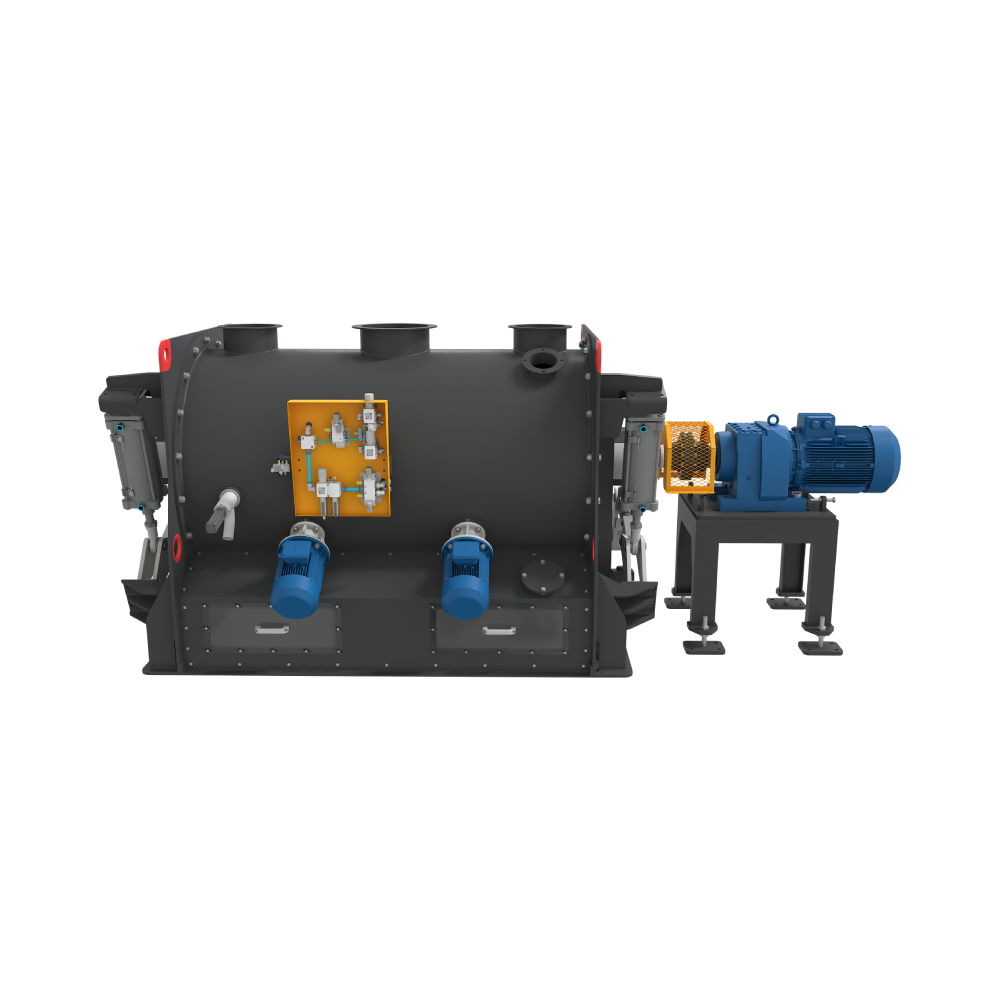
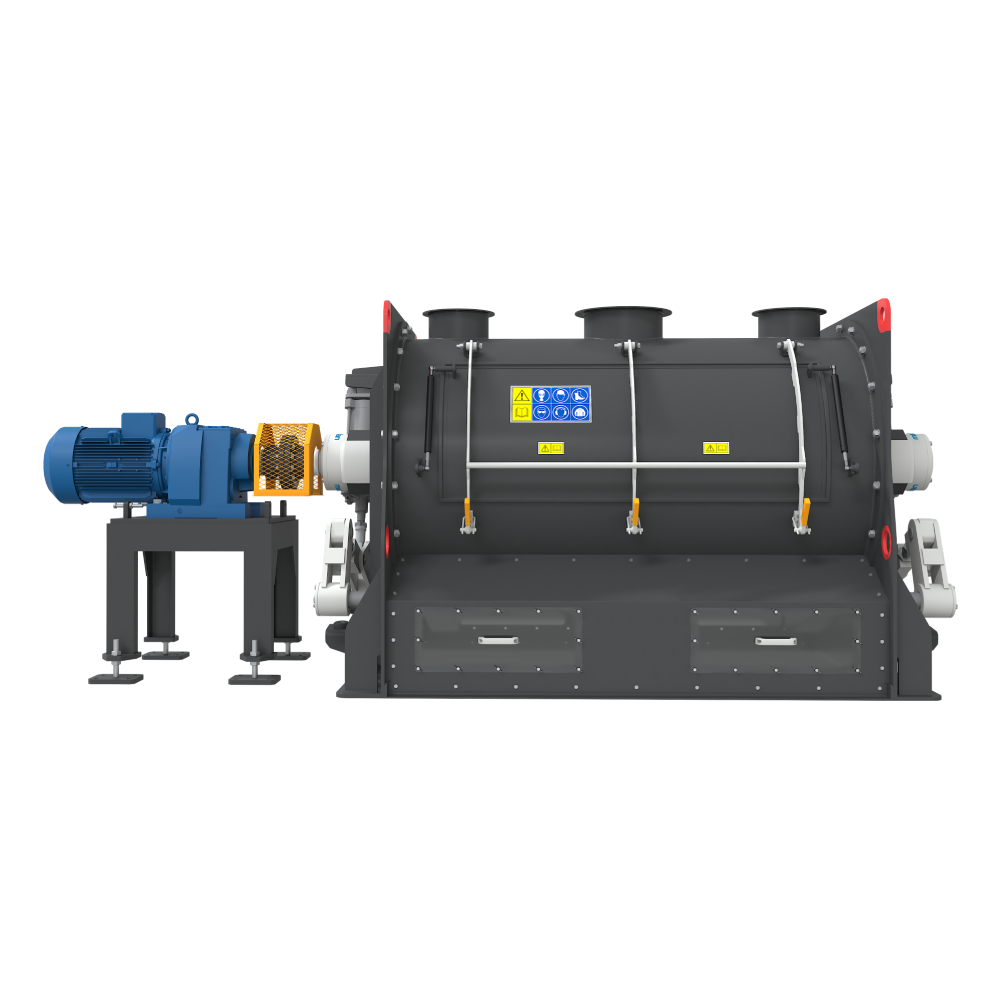
Share these data with Metkan to discuss the transfer scope of your horizontal powder mixer and construction-chemicals line. The product and service pages below describe the equipment context; use the contact page to send your existing flow diagram and quality objective. This article is neither a site measurement nor a performance commitment for a particular formulation. The cover is a conceptual illustration of differing particle distributions, not a real Metkan installation.
Technical sources and scope
Sources checked on 15 October 2026. Public standard scope descriptions and the academic publication record were used; this is not the full standard text or a conformity test. The sample-comparison approach is a diagnostic framework informed by these mechanisms, not a replacement for the site's approved quality plan.