How to Manage Dust in Micronized Product Production? A Guide to Filtration and Line Discipline
Micronized product production, due to very fine particle sizes, requires robust dust management. Grinding, crushing, screening, conveying, silo storage, and packaging stages can release fine particles into the air. When a facility fails to control these particles, visibility in the production area decreases. Furthermore, worker comfort declines, equipment surfaces become contaminated, and product loss increases. Heavy dust accumulation also makes it difficult for maintenance teams to detect malfunctions early. Therefore, facilities should not view dust control merely as a cleaning task. Effective dust management encompasses process design, filtration, enclosed conveying, proper air balance, and a discipline of regular maintenance.
Metkan Makine, treats dust control as an integral part of the production line in micronized crushing and screening plants. The project team individually examines every transfer point, equipment connection, and risk of air leakage. Subsequently, they plan filter capacity, duct cross-sections, fan power, and collection points according to process requirements. Thus, the system does not merely extract airborne dust; it also reduces product loss and creates a more organized production environment. In this guide, micronized product productionWe will examine in detail the sources of dust generation, filtration methods, and line discipline.
Contents
- Why does dust generation increase in micronized production?
- How are dust sources identified?
- How does a central filtration system work?
- At which points is local extraction required?
- How is filter capacity determined?
- Why are duct and fan design important?
- What are the benefits of a closed conveying system?
- How are transfer points controlled?
- How does line discipline affect dust management?
- Why must filter maintenance not be neglected?
- How does automation support dust control?
- Frequently Asked Questions
- Metkan Makine micronization plant solutions
Why Does Dust Increase During Micronization?
Micronizationaims to reduce raw material to very small particle sizes. As the particle size decreases, the product's total surface area increases. Consequently, particles are more easily affected by air currents. Fine product exiting crushers, mills, or screens disperses rapidly into the environment at open connection points. Dry and low-density raw materials, in particular, remain airborne for longer periods. Additionally, high rotor speeds, rapid feeding rates, and points of abrupt material impact increase dust levels. If a facility focuses solely on the final packaging area, it may overlook the actual sources.
Dust generation rarely originates from a single piece of equipment. Feeder outlets, crusher housings, screen connections, conveyor transfer points, elevator heads, and silo vents collectively contribute to the dust load. Therefore, teams must examine the production line as a whole. Every leakage point places an additional burden on the filtration system. Furthermore, uncontrolled air intake disrupts suction balance. A proper dust management plan identifies the sources first and then selects the appropriate control method for each source.
How Are Dust Sources Identified?
The first step toward effective control is determining where and under what conditions dust is generated. The production team should observe the line operating at actual capacity rather than while idling, as many leaks only manifest during high-volume feeding. Operators should specifically inspect cover edges, flange connections, flexible sleeves, and discharge outlets. Surfaces where fine product accumulates also indicate the direction of the source. Additionally, when the filter fan activates, air intake may occur at certain points; this movement easily reveals any gaps in the connections.
Smoke testing or observing controlled airflow helps determine the direction of suction. Furthermore, differential pressure, fan current, and duct air velocity values provide important clues. If a line is continuously leaking dust, simply increasing the suction flow rate may not be the right solution. First, the connection geometry and the direction of product flow must be examined. In its project analyses, Metkan Makine evaluates these sources on an equipment-specific basis and positions filtration points without creating unnecessary loads.
How Does a Central Filtration System Work?
A central filtration systemcollects dusty air from various pieces of equipment into a common duct line. zFilter elements capture the particles while clean air exits the system. The collected product returns to the hopper beneath the filter or back into the process. This setup offers the advantage of managing multiple suction points from a single central location. It also allows the maintenance team to perform filter inspections in one specific area.
However, a central system requires precise balancing. Points close to the main duct may draw excessive air, while distant points might receive insufficient suction. Therefore, duct diameters, damper settings, and fan pressure must be carefully planned. Not every extraction point requires the same airflow rate. The crusher discharge and the packaging outlet involve different airflow characteristics. The system operates more efficiently when the project team calculates the requirements for each point individually; otherwise, even a powerful fan cannot effectively control the entire line.
Where Is Local Extraction Required?
Local extraction aims to capture dust at the very point where it is generated. This method yields excellent results, particularly for concentrated dust sources of limited size. Crusher feed inlets, screen discharges, bagging stations, and silo hatches are suitable locations for local extraction. If the extraction hood is positioned too far from the source, the fan must draw a larger volume of air, which increases energy consumption and pulls surrounding clean air into the system.
Proper hood geometry ensures dust is collected directly from the source rather than from a wide area. The hood must not obstruct product flow or restrict access for maintenance. Additionally, the extraction point must take the direction of product movement into account. An extraction hood facing the wrong direction cannot capture the dust.Metkan Makine designs local extraction hoods to match the equipment's geometry. This enables the system to provide effective control with lower airflow rates.
How to Select Filter Capacity?
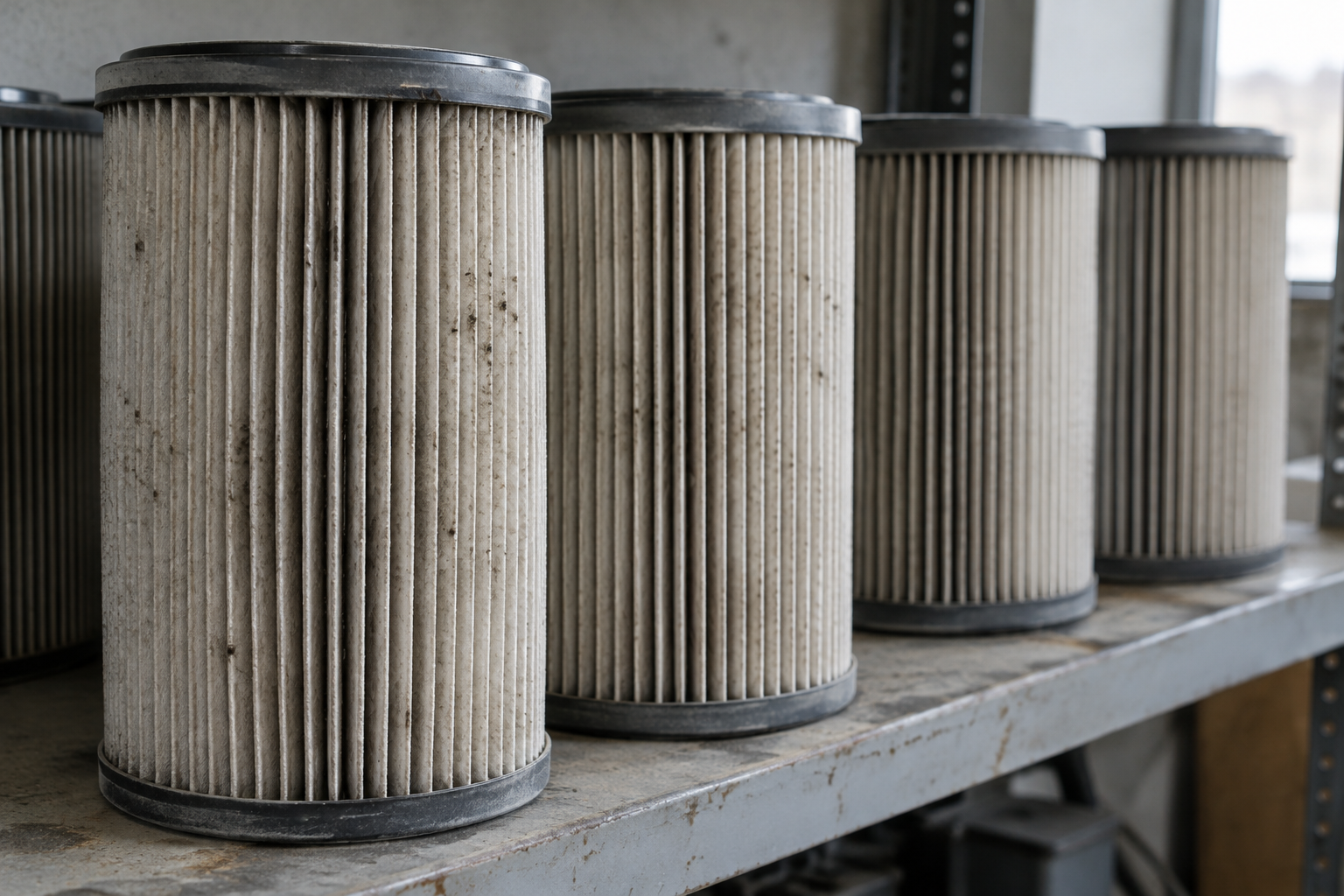
Filter selection should not be based solely on total air flow rate. Dust density, particle size, moisture content, and tendency to adhere also affect filter performance.Very fine and dry particles can form a dense layer on the filter surface, while moist products may stick to the surface of bags or cartridges. Therefore, the filter media must be selected to suit the product characteristics; otherwise, pressure drop rises rapidly and fan capacity decreases.
Filter surface area is also critical. Insufficient surface area places an excessive load on the filter element, resulting in more frequent cleaning cycles and a shorter equipment lifespan. Conversely, an oversized filter increases investment and space costs. To make the right choice, the air-to-dust ratio, inlet load, and operating time must be calculated together. Additionally, the discharge system beneath the filter must operate continuously; if accumulated product fills the hopper, the filter will begin to leak dust again.
Why Are Duct and Fan Design Important?
The duct system directly determines filter performance. If the internal air velocity is too low, dust settles and the duct narrows over time.Excessively high velocity increases wear, noise levels, and energy consumption. Therefore, the appropriate conveying velocity must be selected for each product. Sharp elbows and sudden changes in diameter increase pressure drop; furthermore, these areas are prone to rapid wear when handling abrasive dusts.
Fan selection must be based on total pressure loss. A fan that merely offers high airflow will not deliver the expected performance in a system with high resistance. The project team must collectively calculate duct length, the number of elbows, filter resistance, and intake hood requirements. Dampers are used to balance the system. Metkan Makine minimizes unnecessary energy loss by planning the duct and fan system in conjunction with the production line.
What Are the Benefits of an Enclosed Conveying System?
Open conveyors and unprotected transfer points rapidly disperse micronized products into the surrounding environment. Enclosed belt conveyors, screw conveyors, or pneumatic conveying systems mitigate this risk. Equipment covers limit the product's exposure to airflow, allowing the filtration system to operate with a lower dust load. Furthermore, this reduces product loss and keeps the production area cleaner.
An enclosed system alone is not enough; cover joints, inspection windows, and maintenance hatches must be properly sealed. Flexible connections must not come loose due to vibration, and operators must correctly close all covers after maintenance. Even a small gap can allow fine dust to escape into the environment. Therefore, both mechanical design and operational discipline are crucial.
How Are Transfer Points Controlled?
As material moves from one piece of equipment to another, it changes speed and direction. This movement generates significant dust at transfer points. A long drop distance can break up the product and agitate the air, while a narrow inlet can cause material kickback. Consequently, transfer chutes are designed with angles suited to the product flow. Excessive drop distance must be minimized.
Flexible sleeves create a sealed connection between vibrating equipment components. However, worn sleeves quickly lead to leaks. The maintenance team must inspect these parts regularly. Furthermore, product accumulation within the chute must be prevented. Accumulated material narrows the cross-section and increases pressure. Metkan Makine ensures controlled product transfer by simultaneously evaluating flow geometry and suction requirements at transfer points.
How Does Line Discipline Affect Dust Management?
A robust filtration system cannot compensate for poor operational habits on its own. If operators run production with hatches left open, the system loses its air balance. Additionally, using compressed air during cleaning disperses surface dust back into the environment. Therefore, the facility must establish clear line discipline. Each shift is responsible for checking hatches, sleeves, suction points, and filter readings.
Discipline is also crucial during product changes. Variations in density and moisture levels alter the filter load. If an operator continues production using old settings, dust leakage may occur. Recipe-based fan and damper settings mitigate this issue. Furthermore, teams must promptly collect any spilled product. Accumulated dust can spread back into the production area due to air currents. Regular cleaning also makes it easier to identify the source of any leaks.
Why Should Filter Maintenance Not Be Neglected?
Filter elements develop resistance over time as they accumulate dust. As differential pressure rises, suction power decreases. Even if the operator sees the fan running, the system may not be drawing sufficient air. Therefore, the maintenance team should not rely solely on the sound of the fan; they must regularly record pressure readings and monitor any fluctuations.
The pulse-jet cleaning system removes dust from filter elements using controlled bursts of air. However, insufficient air pressure or incorrect cycle times can impair cleaning efficiency. Additionally, worn diaphragms can cause irregular system operation. Filter bags or cartridges must be inspected at regular intervals; even a small tear allows product to pass into the clean-air side. Regular maintenance preserves both suction performance and product recovery.
How Does Automation Support Dust Control?
The automation system synchronizes the filter with the production line. The fan starts and establishes negative pressure before the crusher engages. When production stops, the system continues to operate for a set period to collect any remaining dust in the ductwork. This reduces the risk of leakage during initial commissioning. Additionally, differential pressure sensors continuously monitor the filter load.
Fan frequency control balances energy consumption according to the varying process load. The fan does not consume unnecessary power at low capacities; when the load increases, the automation system boosts suction power. An alarm system alerts the operator regarding high pressure, fan failure, or filter saturation. By integrating the dust collection system into the plant automation, Metkan Makine establishes a more controlled and traceable production infrastructure.
Dust management in Metkan Makine micronized product plants
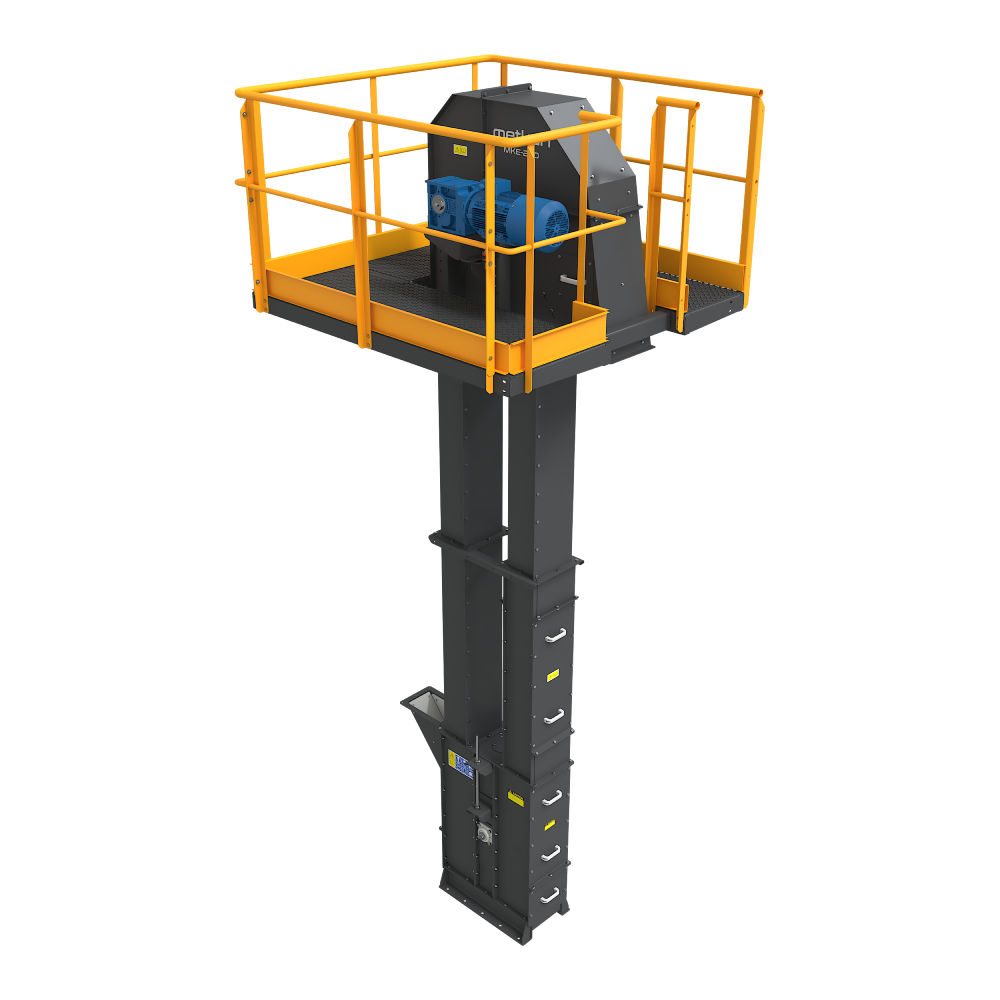
Dust management in micronized crushing and screening plants...plans [the system] from the very beginning of the project. The company designs equipment—such as hammer crushers, circular vibrating screens, bucket elevators, belt conveyors, silos, mixers, and packaging units—based on a unified process logic. This approach helps control airflow at every transfer point. The project team determines filter flow rates, ductwork structure, and suction points based on the line's capacity.
Metkan Makine also incorporates ease of maintenance and operation into the design process. Features such as easy-to-open inspection hatches, optimal filter placement, and accessible duct connections reduce servicing time. Automation support coordinates the fan, filter, and production equipment, enabling facilities to achieve a cleaner production environment, reduced product loss, and more stable line performance.
Frequently Asked Questions
At which points is dust generation highest in micronized production?
Crusher outlets, screen connections, conveyor transfer points, and packaging discharge points generate significant amounts of dust. Additionally, silo filling points and elevator heads carry a risk of leakage. The facility must regularly inspect these points during production.
Should a central filter or a local filter be preferred?
A central system collects intake from multiple points into a common duct. A local filter, on the other hand, offers rapid control at specific sources. Plant layout, dust load, and maintenance accessibility determine the right choice.
Why does dust leakage occur even when the filter fan is running?
Clogged filter elements, incorrect damper settings, or duct leaks reduce suction power. Additionally, open maintenance hatches disrupt air balance. The maintenance team should check the differential pressure and duct connections.
Why do fine dust particles clog filter bags quickly?
Micronized particles form a dense layer on the filter surface. Moisture and stickiness make this layer more tenacious. Using appropriate filter media and correct pulse cleaning reduces clogging.
Is cleaning floors with compressed air appropriate?
Compressed air kicks settled dust back into the air.This method increases worker exposure and filter load. An industrial vacuum system offers more controlled cleaning.
What causes dust accumulation inside ducts?
Low air velocity causes particles to settle on the bottom of the duct. Sharp elbows and incorrect diameter selection also increase accumulation. Proper duct design reduces this risk.
How often should filter maintenance be performed?
Maintenance frequency depends on dust load, operating time, and filter type. Operating pressure values should be monitored during every shift. Filter elements and the pulse system should be inspected during periodic checks.
Does Metkan Makine provide filter systems for micronizing plants?
Metkan Makine plans micronizing crushing and screening lines alongside filtration requirements. The project team selects suction points, ducting, and filter capacity based on process data. This ensures the system operates in harmony with the production line.
Strengthen Dust Control in Your Micronizing Production Line
Successful dust management in micronized product manufacturingdoes not rely solely on a powerful filter unit. Enclosed equipment design, precise extraction points, balanced ductwork, and regular maintenance work together to deliver results. When operational discipline is maintained, the filtration system operates under a lighter load, and the production area remains tidy over the long term.
Metkan Makinedevelops process-oriented solutions for crushing, screening, conveying, mixing, and filtration in micronized product facilities. To minimize dust sources in your production line and design a system tailored to your facility, Metkan Makine you can contact their experts..