What does a horizontal powder mixer do? ...is a question particularly relevant to... Construction chemicals, Dry mortar and powder-based industrial production ...is of critical importance for businesses engaged in [this type of] production. This is because, even if the raw materials used on the production line are combined according to the same recipe, the standard of the final product cannot be maintained if the mixture's homogeneity is insufficient. When cement, calcite, mineral fillers, polymer additives, and various chemical components are included in the same mixture, each component must be distributed evenly. Otherwise, the product's flow characteristics, strength, adhesion, and application performance may be compromised. Therefore, the horizontal powder mixer is not merely a piece of equipment that combines raw materials; it is a fundamental system that directly influences mixture quality, batch repeatability, and production reliability.
On the production side, the technical topics of greatest interest generally center on mixing time, capacity selection, the behavior of raw materials with varying densities, and the mixer's cycle efficiency. Failure to select the right mixer can lead to extended mixing times, reduced discharge performance, and a loss of overall line capacity. Additionally, factors such as mixer geometry, fill ratio, discharge gate design, and the feeding arrangement are key determinants of system efficiency. This content provides a detailed overview of the function and operation of horizontal powder mixers, the products for which they are used, and the critical technical criteria to consider during the selection process.
Contents
- What is the function of a horizontal powder mixer?
- How does a horizontal powder mixer work?
- For which products are horizontal powder mixers used?
- Why is a homogeneous mixture important?
- What technical criteria are important when selecting a horizontal powder mixer?
- Which factors influence mixing time and efficiency?
- What advantages does the horizontal powder mixer bring to the production line?
- Metkan Makine horizontal powder mixer solutions
- Frequently Asked Questions
What is the function of a horizontal powder mixer?
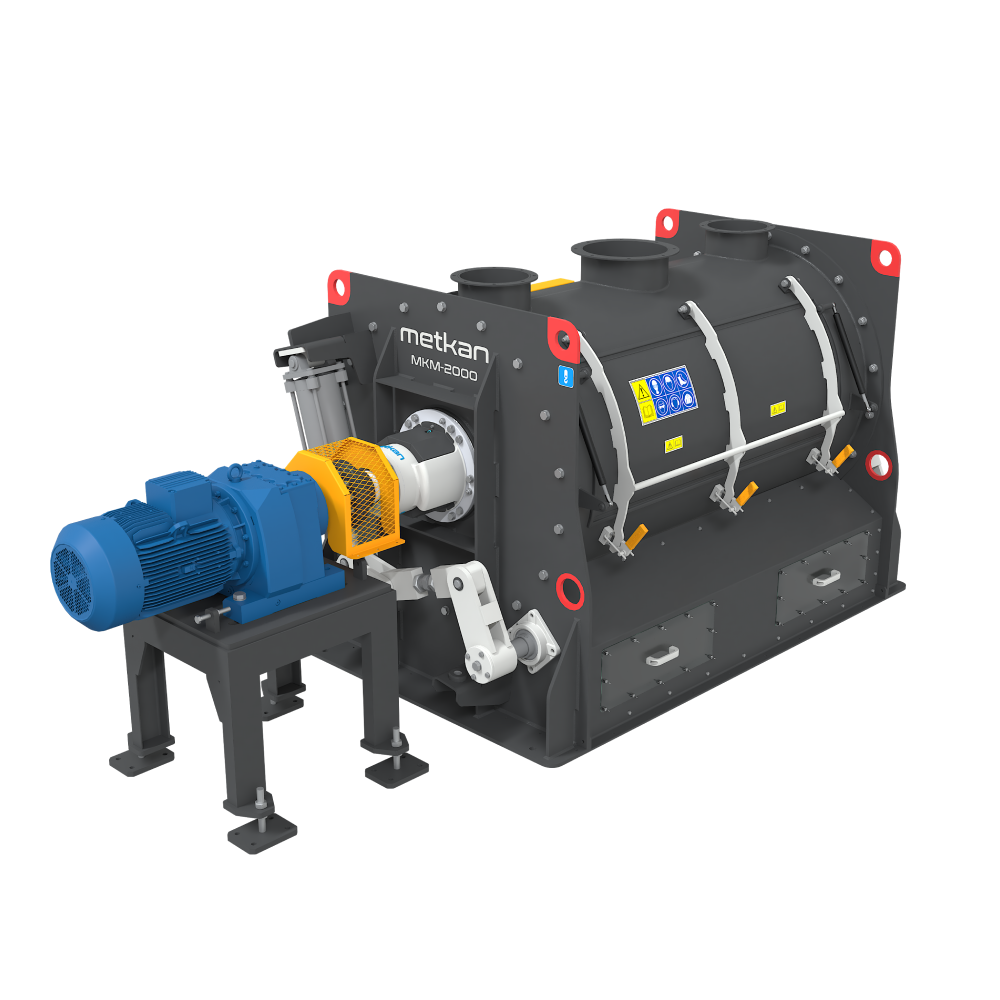
Horizontal powder mixerIt serves to homogeneously mix raw materials that differ in density, particle size, and composition. Within the production line, the machine's primary objective is to ensure a uniform distribution throughout the mixture. This aspect is particularly critical Construction chemicals in production, as cement, calcite, mineral fillers, polymer additives, and chemical components are combined in a single recipe. If the mixture's balance is compromised, the product standard suffers. Consequently, application performance changes, batch quality declines, and customer expectations are not met.
A Horizontal powder mixer It does not merely rotate raw materials within the mixing chamber; the system conveys, distributes, and recombines the material throughout the entire volume, thereby reducing the risk of "dead zones" within the product. One of the most frequently asked questions in factories is: "Why do we get different results with the same recipe?" Inadequate mixing is one of the most common causes of this issue. Even if the recipe is correct, if homogeneity is poor, the product's behavior changes. Therefore, Horizontal powder mixerit stands out as a key piece of equipment that directly impacts production quality.
How does a horizontal powder mixer work?
The machine's body is positioned along a horizontal axis. Internal mixing elements move the raw materials from one end to the other. During this process, the system does not simply rotate the material; it simultaneously lifts it, lowers it, draws it toward the center, and disperses it to the sides. This multidirectional flow ensures a more balanced combination of raw materials with varying characteristics. Mixer When the configuration is selected correctly, the product moves uniformly within the vessel.
The discharge mechanism is just as important as the mixing process itself. Even if a mixer provides powerful mixing, slow discharge extends the total cycle time. Therefore, a technical evaluation should not focus solely on mixing performance; the discharge gate, outlet design, and compatibility of downstream equipment must also be examined. Especially in mass-production facilities, loading, mixing, and discharge times determine overall efficiency. A high-performance mixer should offer a balanced cycle time in addition to producing a homogeneous mixture.
For which products are horizontal powder mixers used?
Horizontal powder mixer It stands out primarily in the production of construction chemicals. Dry mortar, tile grout, tile adhesive, repair mortar, plaster mixes, and similar products are blended using this machine. Additionally, industrial formulations involving mineral-based powder blends and combinations of granules and powders benefit from this system. The common requirement is clear: maintaining consistent quality across every batch. This is because, in powder-based production, even minor variations in distribution can significantly impact the final result.
Some raw materials are lightweight, while others are denser. Fine additives may tend to remain in the upper zone, whereas heavy minerals might settle at the bottom. Consequently, not every mixer delivers the same level of success for every formulation. As the product range expands, so do the technical requirements. Facilities handling a wide variety of formulations must pay closer attention to mixer geometry and cycle consistency. A system operating with the right configuration Horizontal powder mixerdelivers more stable results across diverse product groups.
Why is a homogeneous mixture important?
Homogeneous mixtureIt forms the foundation of product quality. If the additive concentration is high in one part of the mixture and low in another, performance discrepancies arise—even within the same bag. This issue becomes immediately apparent during application: flow characteristics vary, setting times shift, adhesion balance weakens, or color tones deviate. From the manufacturer's perspective, this scenario increases the burden of quality control. On the post-sales front, it raises the risk of complaints and product returns.
Furthermore, a homogeneous mixture plays a critical role in building brand trust. Manufacturers who deliver consistent quality secure a stronger market position, whereas inconsistent quality leads to an increase in technical complaints. Moreover, the problem does not always stem from the formula. In many facilities, the formula remains correct, yet the mixing quality is poor. In such cases, the issue arises from the choice of mixer, the mixing time, or the loading sequence. Therefore, Horizontal powder mixer The investment should not be viewed merely as an investment in machinery; it must also be considered an investment in quality standards.
What technical criteria are important when selecting a horizontal powder mixer?
First, one must consider batch capacity. However, focusing solely on vessel volume at this stage does not yield accurate results; useful volume, fill ratio, and cycle time must be considered together. A large vessel does not always equate to high efficiency; if the appropriate fill level is not achieved, mixture quality may suffer. Therefore, actual production conditions should form the basis of the technical selection process.
Secondly, the recipe structure requires attention. Free-flowing dry products and special formulas containing low-dosage additives do not behave in the same way; consequently, the choice of mixer should be tailored to the product type. The third factor is mixer geometry. The mixer design determines how the material moves within the vessel; a suitable design reduces the risk of dead zones and accelerates the mixing process. The fourth factor is discharge speed. Products that discharge slowly extend the total cycle time and limit capacity. The fifth factor is maintenance access. Ease of cleaning, rapid part inspection, and convenient service access offer significant advantages for daily operations.
Which factors influence mixing time and efficiency?
Mixing time is directly related to recipe composition, particle size, density differences, fill ratio, and the structure of the mixing system. The same mixer will achieve a homogeneous result in different timeframes depending on the product. Therefore, a "one-size-fits-all" approach regarding time is incorrect. For products with a high proportion of fine additives, dispersion precision becomes more critical; in such cases, the ideal cycle time must be determined with greater care.
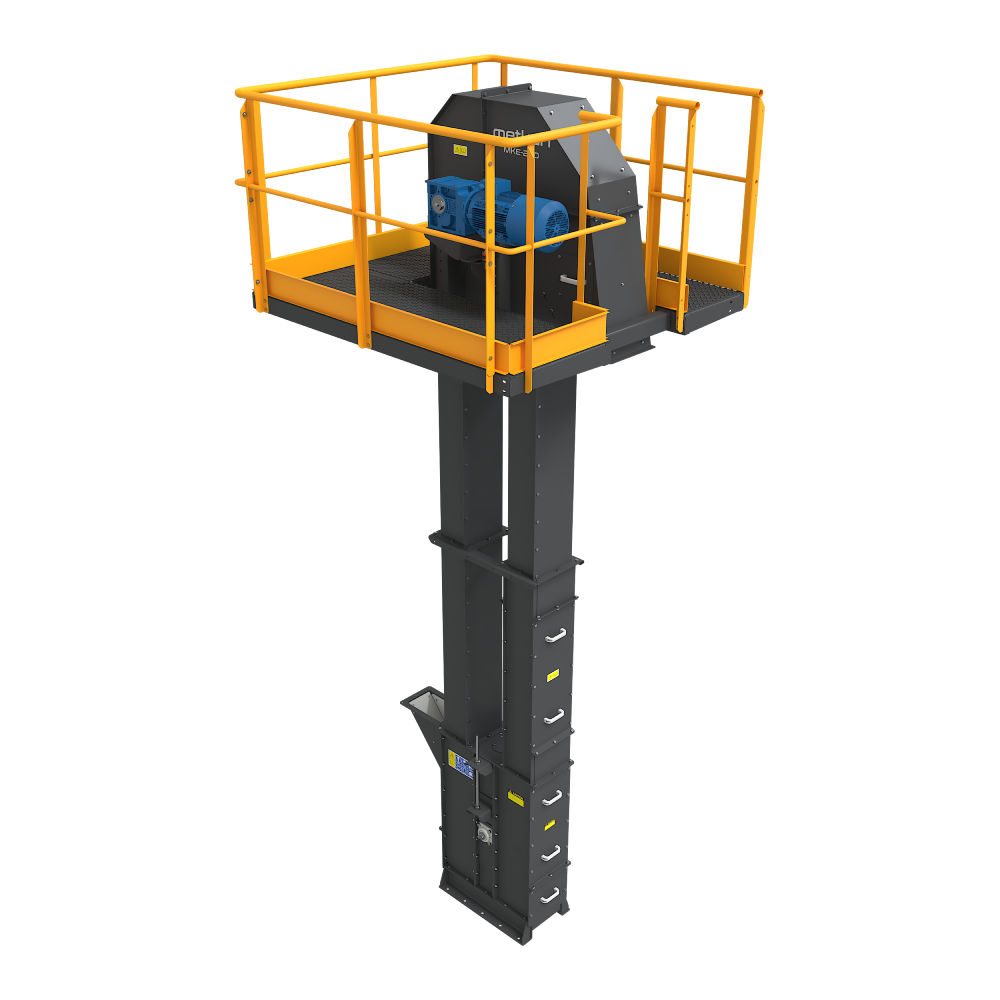
Extended mixing times do not always yield better results. Some products tend to degrade if the mixing cycle is excessively long. Furthermore, prolonged processing times reduce overall efficiency. Therefore, the goal is not the longest duration, but the optimal one. The loading sequence also affects the outcome; if raw materials are fed irregularly, the mixer requires more time. Additionally, the compatibility between the feeding equipment and the mixer is crucial. When screw conveyors, bucket elevators, or other conveying systems ensure a steady flow, the mixture quality becomes more consistent. Efficiency does not begin solely within the mixer; it is determined across the entire production line.
What advantages does the horizontal powder mixer bring to the production line?
This machine primarily enhances product standards. A homogeneous mixture ensures consistent performance across every batch, thereby simplifying the quality control process. Furthermore, achieving similar results from the same recipe offers a significant advantage in terms of production reliability. A line that delivers consistent quality allows for easier management of shipping schedules and helps maintain customer trust.
In addition, cycle efficiency increases. Thanks to effective mixing and rapid discharge, the line operates more smoothly. Operational downtime is reduced, and batch repeatability becomes more controlled. Processes such as bagging, conveying, and palletizing also benefit from this stability. Another advantage is recipe flexibility; a correctly selected Horizontal powder mixerenables more controlled transitions between different product groups. When combined with ease of cleaning and maintenance, the production line achieves a more sustainable structure.
Metkan Makine horizontal powder mixer solutions
Metkan Makine, Construction chemicals, mining and aggregate It operates within a corporate manufacturing framework that provides machinery and plant solutions for various sectors. Within this product portfolio, Horizontal powder mixerplays a critical role, particularly in powder-based production lines. Mixture quality, cycle balance, and line compatibility are the key factors determining the value of this equipment. Crushing, screening, conveying, mixing, and palletizing processes form an integrated whole within the production line. Therefore, Horizontal powder mixer should not be evaluated in isolation but rather within the context of the overall process structure.
From a technical standpoint, the combination of the correct capacity, an appropriate mixer design, and balanced line integration ensures more stable production. This leads to consistent product quality and strengthens operational continuity. Mixing quality is particularly critical in the construction chemicals sector due to the high sensitivity of formulations. The solution approach offered by Metkan Makineprovides a framework that addresses this technical requirement alongside the realities of production. Consequently, Horizontal powder mixerbecomes not merely a piece of mixing equipment, but the central machine within a controlled production system.
Frequently Asked Questions
What is the function of a horizontal powder mixer?
Horizontal powder mixerhomogeneously mixes various powdered and granular raw materials, ensuring a uniform distribution throughout the mixture. This configuration maintains product standards and enhances batch quality.
In which sectors is the horizontal powder mixer used?
Its primary application is in the production of construction chemicals. It is also utilized in industrial lines processing dry mortar, mineral-based powder products, and granular-powder blends.
Why is a homogeneous mixture important?
A homogeneous mixture ensures consistent product performance across every bag and batch. An uneven mixture leads to quality variations and directly impacts application results.
How is the capacity of a horizontal powder mixer determined?
Vessel volume alone is insufficient for determining capacity; factors such as effective volume, fill ratio, mixing time, and discharge time must be evaluated together.
Why does the mixing time vary for different products?
Because each formulation involves different densities, particle sizes, and additive ratios. These differences alter the material's mixing behavior and influence the ideal cycle time.
What is the most common mistake made when selecting a horizontal powder mixer?
The most common mistake is focusing solely on capacity. However, the formulation structure, maintenance requirements, discharge speed, and line compatibility also play a significant role in the decision-making process.
Can raw materials with different densities be mixed in the same mixer?
Yes, they can be mixed, provided there is a suitable mixer configuration and the correct cycle time. The level of success depends on the compatibility between the mixer design and the formulation structure.
How does a horizontal powder mixer affect production efficiency?
A correctly selected mixer optimizes cycle time, improves mixture quality, and enhances batch repeatability. This directly translates into increased production efficiency.
Metkan Makine for Horizontal powder mixer When planning the investment, factors such as formulation structure, mixing precision, cycle time, and line compatibility should be evaluated together. The right technical configuration maintains product standards and boosts production efficiency.
To obtain more information and a quote Contact Us