Selecting a Horizontal Powder Mixer
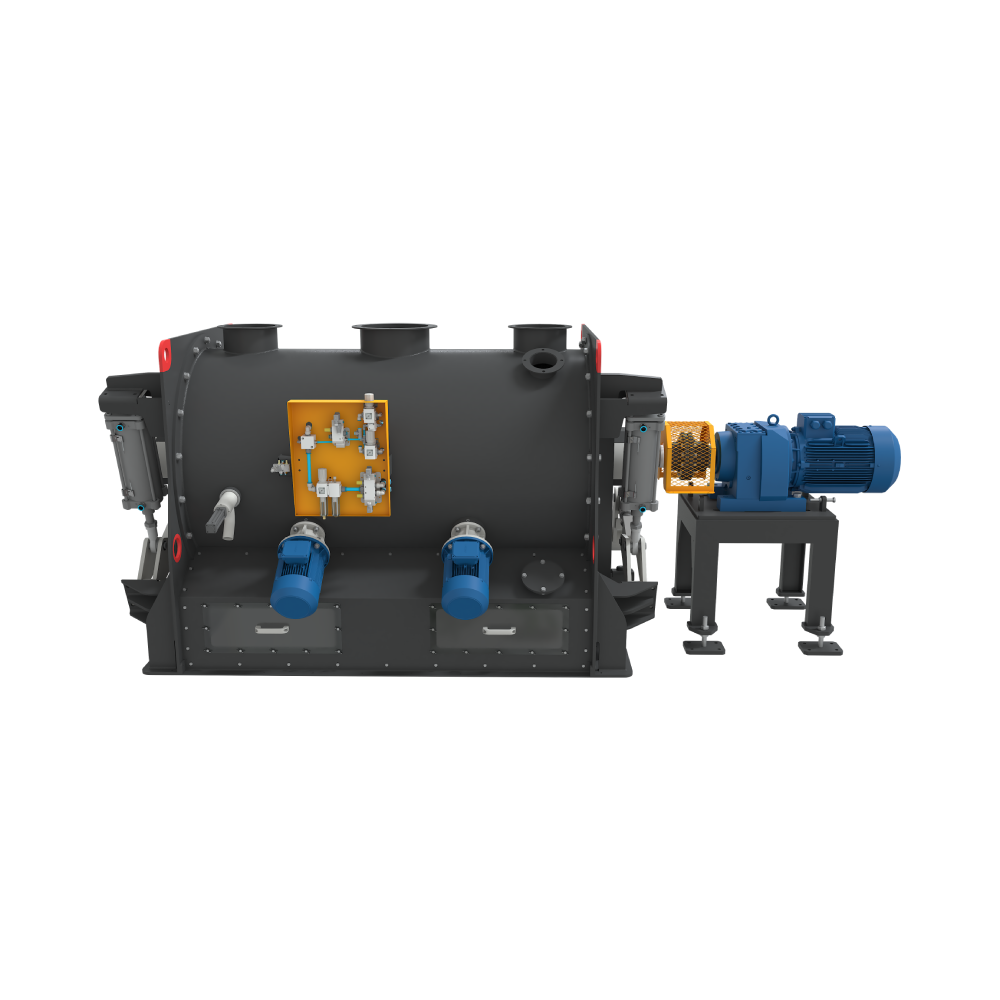
Selecting a horizontal powder mixer...directly affects the mixing quality of the production line. Incorrect capacity or motor selection extends production time. It also increases energy consumption and negatively impacts mixture homogeneity. Therefore, businesses should not focus solely on mixer volume. The vessel volume determines the quantity of product to be processed in a single batch. Motor power enables the mixing system to generate the necessary motion. However, these two values alone do not determine the correct mixer choice; product density, flow characteristics, and target capacity are also significant factors.
At Metkan, we evaluate all these variables collectively in our horizontal powder mixer projects. Consequently, we do not simply propose a system with a large volume or a powerful motor; instead, we design a balanced mixer configuration tailored to the production process. In this guide, selecting a horizontal powder mixer we will compare vessel volume and motor power. We will also explain the key criteria that influence accurate capacity calculations.
Contents
- What criteria are important when selecting a horizontal powder mixer?
- Why is vessel volume important?
- What does motor power determine?
- Is a large vessel volume always advantageous?
- Does high motor power result in better mixing?
- How does product density affect the selection?
- Why is the fill ratio important?
- Why should mixer geometry be considered?
- How are capacity and cycle time evaluated together?
- How is energy consumption managed?
- How do you choose the right horizontal powder mixer?
- Frequently Asked Questions
What Criteria Are Important When Selecting a Horizontal Powder Mixer?
Process analysis constitutes the first step in selecting a horizontal powder mixer. The facility must first determine its hourly production target. Subsequently, batch size, product density, and mixing time must be taken into account. This reveals the system's actual operational requirements. For instance, two different products of the same volume may have different weights. Therefore, an assessment based solely on liters or cubic meters does not yield sufficient results. The product's bulk density alters the actual load within the mixer; this load, in turn, directly affects motor requirements.
Furthermore, the proportions of the components to be mixed are significant. As the ratio between the main component and the additives increases, the requirement for homogeneity rises. Additionally, the product's flow characteristics alter the resistance exerted on the mixer. For this reason, selecting a horizontal powder mixer decisions should not be based on a single technical value. Vessel volume, motor power, and mixer geometry work in conjunction.
Why Is Vessel Volume Important in Horizontal Powder Mixers?
This refers to the physical mixing zone of the mixer. However, the nominal vessel volume does not directly equate to production capacity. Filling the mixer completely with product does not yield optimal results in most processes; sufficient working space is required within the vessel for the mixing elements to move the product effectively. Therefore, the fill level is critical. Overfilling restricts product movement, which can prolong mixing times and reduce homogeneity.
Conversely, an excessively low fill level can also impair mixing performance, as the mixing elements may fail to move the product in the intended flow pattern. Consequently, the operating volume must be determined based on product characteristics. At Metkan, we do not base vessel volume solely on the target batch size; we also evaluate density, fill ratio, and cycle time in conjunction. This ensures the vessel volume aligns with actual production requirements.
What Does Motor Power Determine in a Horizontal Powder Mixer?
The motor provides the mechanical motion required by the mixing mechanism. However, motor power alone does not determine mixing quality; the power rating must be compatible with the mixer geometry and product resistance. Dense products or those with high resistance to movement require more torque, whereas free-flowing, lightweight powders have different power requirements. Thus, two mixers operating at the same volume may require different motor power ratings.
Furthermore, the initial startup phase imposes a significant load. When the mixer starts while full, the drive system may encounter high resistance; therefore, the motor, gearbox, and transmission system must be evaluated as an integrated unit. That said, selecting an oversized motor is not the ideal approach, as it can unnecessarily increase investment costs. Furthermore, it is not possible to resolve other system design issues simply by using high power.
Is Vessel Volume or Motor Power More Important?
There is no single answer to this question—vessel volumeormotor power—because the two criteria serve different functions. Vessel volume affects batch capacity, whereas motor power supports the movement of the product within the mixer. For instance, a facility might choose a mixer with a large vessel but an inadequate drive system. Such a system can accommodate a large quantity of product; however, the mixer fails to perform adequately under the product load. Consequently, the targeted cycle time increases.
Conversely, installing a motor with excessive power on a small vessel does not increase capacity, as the physical working volume remains unchanged. Therefore, a proper balance between motor power and vessel volume is essential. In short, when selecting a horizontal powder mixer, system compatibility is the most critical factor. Proper engineering aligns volume and power with product characteristics.
Does Large Vessel Volume Always Offer an Advantage?
At first glance, a large vessel volume might imply higher capacity. However, production performance does not depend solely on mixer size; the facility's batch schedule and cycle time also determine total capacity. For example, a large mixer may require lengthy filling and discharging times. In this scenario, a high batch capacity does not translate into hourly production at the same rate. Furthermore, the capacity of auxiliary equipment must also be compatible with the mixer.
If feeding systems cannot fill the mixer quickly enough, idle time occurs. Similarly, if discharge equipment is inadequate, the cycle time increases. Consequently, a large vessel alone does not guarantee high line throughput. Therefore, Metkan we treat the mixer as an integral part of the entire process. We evaluate feeding, mixing, discharging, and subsequent process steps holistically.
Does High Motor Power Ensure Better Mixing?
High motor power does not automatically result in a more homogeneous mixture. A combination of variables determines the quality of the mixture. Mixer geometry, in particular, plays a crucial role in this regard. The angle of the paddles or mixing elements directly influences product movement. Furthermore, the rotational speed alters how the product is distributed within the vessel. The motor simply generates the power required for this movement.
Excessive speeds can lead to undesirable results with certain products.For instance, delicate granules may suffer physical damage. Dust generation might increase, or components with varying densities could exhibit unwanted movement. Therefore, the correct approach is not based on the logic ofa more powerful motor.Operations should aim for torque and speed values suited to the specific product structure.
How Does Product Density Affect Mixer Selection?
Product density influences both the vessel volume and motor requirements, as the same volume results in different masses depending on the product. This difference directly alters the mechanical load on the mixer. For example, a low-density powder might occupy a large volume within the vessel, yet the total weight remains relatively low. Conversely, a high-density product creates a much heavier load within the same volume.
Consequently, selecting equipment based solely on kilograms does not yield accurate results; likewise, evaluating based only on liters or cubic meters is insufficient. Both volume and weight must be calculated together. The product's frictional characteristics are also significant. High friction increases mechanical resistance on the mixer, a factor that requires additional consideration when selecting the motor and gearbox.
Why Does the Fill Level Play a Critical Role?
Space is required within the horizontal mixer for the product to move. Mixing elements transport the product in various directions, allowing the components to disperse throughout the vessel. Excessive filling restricts this movement space, causing the mixer to encounter higher resistance. Consequently, motor load may increase, and cycle times may lengthen.
Conversely, an insufficiently low fill level reduces production efficiency. The operation is forced to perform more cycles to achieve the same production volume, thereby increasing energy consumption and operating time. Therefore, the correct fill level supports both homogeneity and capacity. During the project design phase, Metkan analyzes product characteristics and target batch sizes in conjunction.
Why Is Mixer Geometry Just as Important as Motor Power?
Mixer geometry transfers the motion generated by the motor to the product; therefore, issues arising from incorrect geometry cannot be resolved simply by increasing motor power. The positioning of the mixing elements influences the product's horizontal and radial movement. An appropriate design ensures controlled circulation of the product within the mixer, resulting in a more balanced blending of the various components.
Furthermore, the contact area between the elements and the product affects mechanical resistance; a large contact surface can generate higher loads. Consequently, the drive system and the mixer design must be calculated in tandem. Ultimately, the motor, gearbox, shaft, and mixing elements form a unified system, and the compatibility among these components determines the mixer's performance.
How Should Capacity and Cycle Time Be Evaluated Together?
Relying solely on batch size when determining hourly capacity is misleading. The operation must also take the total cycle time into account. The cycle includes filling, mixing and discharge. For example, a 2.000 kg batch may suggest high capacity. However, if the cycle takes too long, the hourly production target falls. Conversely, a smaller mixer can achieve high line capacity through faster cycles.
Therefore, capacity calculations must be based on the integrity of the entire process. Feeding equipment, the mixer, and the discharge system must all support the same production pace. Furthermore, the level of automation influences cycle times. Controlled recipe management and proper sequencing minimize unnecessary delays, allowing the operation to utilize mixer capacity more effectively.
How Can Energy Consumption Be Controlled?
Selecting the right motor is crucial for energy efficiency. Choosing an oversized motor does not always yield advantages; conversely, an undersized motor may operate continuously under excessive load. First, the mechanical resistance of the product must be accurately calculated. Next, the mixer geometry and rotational speed are taken into account. The gearbox ratio also contributes to generating the required torque.
Additionally, mechanical friction can increase energy consumption. Bearing issues, misalignment, or a lack of maintenance raise the motor load; therefore, regular maintenance supports energy performance. At Metkan, we do not evaluate energy efficiency solely based on the motor nameplate; we consider the entire mechanical and process structure holistically.
Can Different Powder Products Use the Same Mixer Design?
Not every powder product shares the same physical characteristics. Some products flow easily, while others tend to clump. Moisture content, particle size, and density also alter behavior. Consequently, a standard mixer configuration does not yield the same result in every process. For instance, construction chemicals and mineral powders may create different mixing requirements. Additive ratios also influence design decisions.
Dispersion precision becomes particularly important with low-ratio additives. The mixer geometry must distribute these substances evenly throughout the main product. Simply increasing the volume is insufficient for this purpose. Therefore, product characterization provides the essential data for selecting a horizontal powder mixer the correct approach.
What Mistakes Should Be Avoided When Selecting a Horizontal Powder Mixer?
The first common mistake is looking only at the catalog capacity. Nominal capacity alone does not reflect actual process performance; the operation must also consider product density and working volume. A second common mistake is viewing motor power as an indicator of quality. A higher kilowatt rating does not guarantee a better mix; mixer geometry and rotational speed are equally important.
Furthermore, overlooking the capacity of the existing line creates serious issues. If the feeding system is inadequate, a large mixer will sit idle; if the discharge line is slow, cycle times increase. Finally, maintenance access must be considered during selection. The facility should ensure that the maintenance team can easily reach critical components, thereby shortening maintenance times and reducing the risk of unplanned downtime.
How to Choose the Right Horizontal Powder Mixer?
To make the right choice, production goals must first be clearly defined. The facility needs to determine hourly capacity and batch size. Next, the bulk density, particle structure, and flow characteristics of the products must be evaluated. The appropriate working volume is calculated in the subsequent stage. Mixer geometry is determined based on product movement, while the selection of the motor and gearbox is based on the resulting mechanical load.
Additionally, the mixer's compatibility with upstream and downstream equipment must be verified, as a powerful mixer cannot resolve all the issues of an unbalanced line. Every piece of equipment on the line must support the same capacity target. At Metkan, we base our horizontal powder mixer projects on this approach. We evaluate the vessel volume, drive system, and mixing mechanism holistically according to process requirements, thereby creating a system that aligns with the facility's production goals.
Frequently Asked Questions
How is the vessel volume selected for a horizontal powder mixer?
The vessel volume is determined by the target batch size and product density. The operating fill level must also be taken into account. Operations should focus on the actual working volume rather than the nominal volume; this ensures the mixer provides sufficient space for product movement.
How is the motor power determined for a horizontal powder mixer?
Product density, mixer geometry, and rotational speed requirements influence motor selection. As mechanical resistance increases, so does the required torque. Additionally, the gearbox ratio plays a crucial role in the drive system; therefore, engineering calculations must evaluate the entire system holistically.
Does a larger mixer provide higher production capacity?
A large mixer can handle a larger volume of product in a single batch. However, the hourly capacity is determined by the cycle time. If filling and discharging times are prolonged, the advantage of the large volume diminishes. Therefore, the operation must evaluate the capacity of the entire line holistically.
Does a more powerful motor ensure a more homogeneous mixture?
No. Motor power alone does not determine homogeneity. Mixer geometry, rotational speed, fill level, and product characteristics directly influence mixture quality. The right system strikes a balance among these variables.
Why is product density important when selecting a mixer?
Density determines the weight of the product within a specific volume. Consequently, as density changes, the mechanical load on the mixer changes as well. This variation affects the requirements for the motor and gearbox. Additionally, density data is necessary to calculate the actual batch capacity.
Is mixing time important when selecting a horizontal powder mixer?
Yes. Mixing time directly affects hourly production capacity. However, extending the time beyond what is necessary does not always result in better homogeneity. A proper mixer design supports a cycle time that aligns with the target mixture quality.
Should a horizontal powder mixer be selected based on the existing production line?
Yes. A mixer is not a standalone piece of equipment that operates in isolation. Feeding, dosing, conveying, and discharging systems all impact mixer performance. Therefore, the operation must evaluate the entire process line as a whole.
Horizontal Powder Mixer Solutions Tailored to Your Process with Metkan
Focusing solely on vessel volume or motor power does not yield the right results when selecting a horizontal powder mixer. Product characteristics, target capacity, working volume, mixer geometry, and the drive system must all be evaluated together.
Metkan We analyze your production process and develop horizontal powder mixer solutions tailored to your specific needs.For a system that meets your capacity, homogeneity, and energy efficiency goals, please contact us..