Micronized Crushing and Screening Plant...refers to specialized production lines designed to yield fine-grained and controlled products. Unlike standard crushing and screening systems, these plants target more precise product sizing. Therefore, the line configuration is not determined solely by crushing capacity; product fineness, classification precision, dust management, and process balance are equally important. This approach directly dictates quality, particularly in the production of construction chemicals, minerals, and fine fillers. This is because any deviation in the final product's particle size distribution compromises both the formulation balance and application performance.
To achieve successful results in fine product manufacturing, every stage of the plant must operate in harmony. If the feed is irregular, the crusher fails to deliver the expected output. If the crusher does not produce the correct product range, the screening system becomes overburdened. If the screen fails to perform precise separation, the final product standard is compromised. Furthermore, if the flow within the conveying system is unstable, the entire line loses its rhythm. For this reason, micronized crushing and screening plant...requires far more than just the piecemeal selection of machinery. A proper plant configuration aligns production targets with equipment capabilities.
Contents
- What is a micronized crushing and screening plant?
- Why is a specialized plant configuration required for fine product production?
- What stages make up a micronized crushing and screening line?
- How does the choice of crusher affect fine product quality?
- How should the screening and classification system be planned?
- Why do feeding and conveying equipment play a critical role?
- How are capacity planning and dust control managed?
- What mistakes should be avoided when setting up a micronized crushing and screening plant?
- Metkan Makine’s approach to micronized plants
- Frequently Asked Questions
What is a micronized crushing and screening plant?
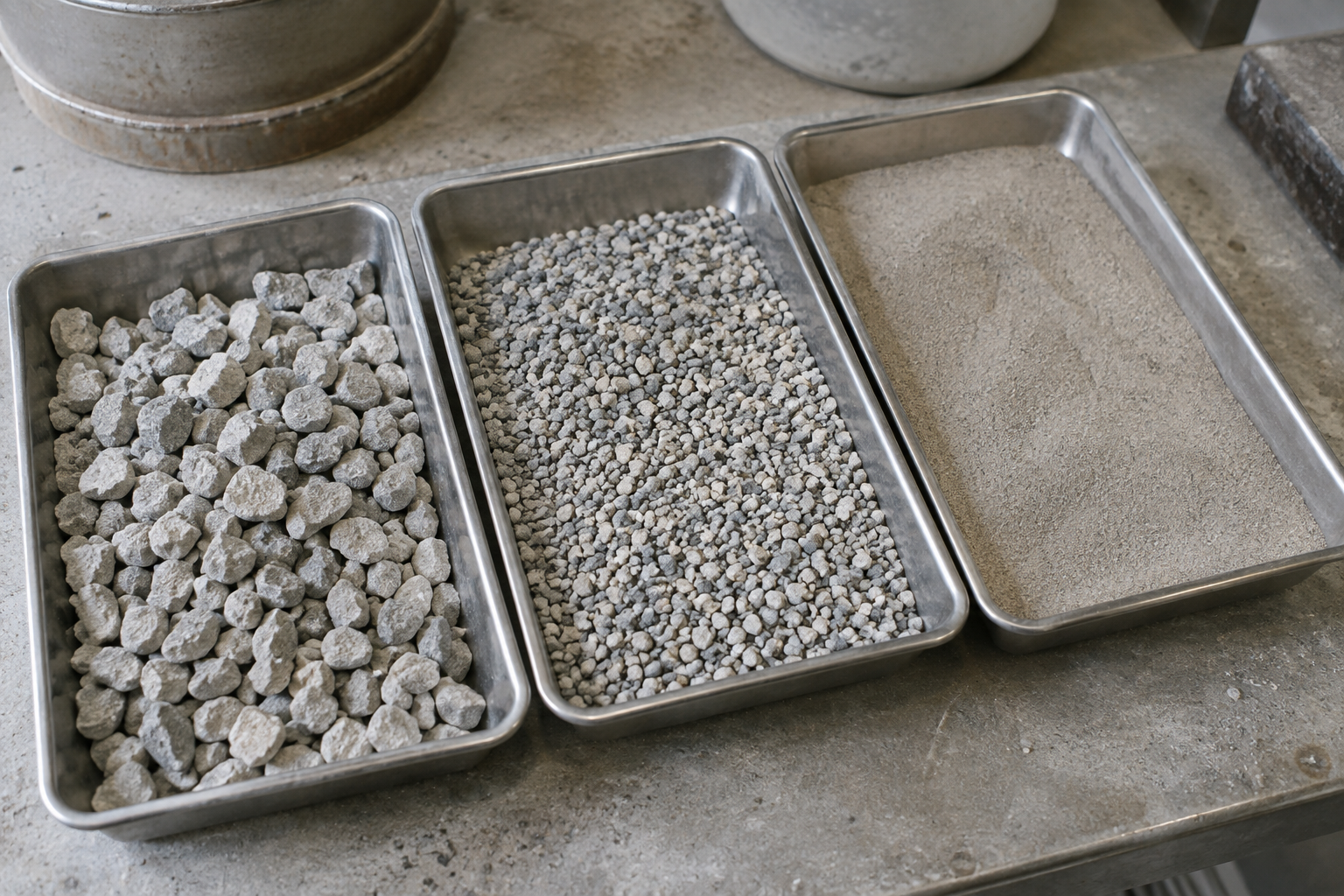
Micronized Crushing and Screening Plant...refers to production lines where raw material is reduced to finer and more precisely controlled product sizes. In these plants, the goal is not merely to reduce the material's size; the primary objective is to consistently produce the targeted particle size distribution. Consequently, the system demands more precise planning than standard crushing and screening plants. As the product becomes finer, process control becomes increasingly critical, because even minor deviations can significantly impact the final result. This is particularly evident in the production of construction chemicals and mineral-based products.
In these plants, the crushing, screening, and classification stages operate in tandem. Furthermore, the feeding arrangement, conveying flow, and dust control become integral parts of the same system. A facility aiming to produce fine products cannot achieve the desired result solely with a powerful crusher; it also requires the right screen configuration, a suitable conveying system, and a balanced capacity plan. Metkan Makine This approach is crucial, as all equipment in a line targeting micronized products must adhere to the same quality standards.
Why is a specialized plant configuration required for fine product production?
Producing fine products requires a more precise process than producing coarse products, because the need for system control increases as the target particle size decreases. While a standard crushing line can handle coarse reduction, that same logic is insufficient when targeting micronized products. Product flow must be more balanced, the crushing stage must operate with greater control, and the screening and classification steps must ensure sharper separation. Additionally, dust generation and product loss must be managed more carefully. Therefore, the facility layout for fine product production must be designed with this specific goal in mind from the outset.
A specialized facility layoutdirectly impacts production quality. Inconsistent flow results in a heterogeneous product structure, which creates significant quality discrepancies—particularly in construction chemicals and filler materials. Product behavior can change even if the formulation remains constant. Moreover, irregular particle size distribution can lead to further issues in subsequent production stages. For this reason, micronized crushing and screening plant every piece of equipment must be selected with the same objective in mind during installation. A successful line configuration preserves not only capacity but also product quality standards.
What stages make up a micronized crushing and screening line?
Micronized Crushing and Screening Line It generally consists of feeding, crushing, screening/classification, conveying, and product transfer stages. In the first stage, the system ensures the steady feeding of raw material. Next, the crusher reduces the material to a size approaching the target specification. The screening and classification system then comes into play; this section separates the product according to the desired particle size distribution. Subsequently, conveying equipment transports the product to the next point. The final product is transferred to storage, an intermediate hopper, or another section of the production line. Although this flow may appear simple, each stage directly impacts the others.
If the balance within the line is disrupted, the entire system loses efficiency. Excessive feed places a strain on the crusher. If the crusher produces inconsistent output, the screen cannot perform classification effectively. If the screen fails to separate material precisely, the quality of the fine product drops. If conveying equipment causes unstable flow, product accumulation occurs. Therefore, planning a micronized processing line should not focus on individual machines in isolation; the entire process must be viewed as a continuous flow chain. A properly planned chain safeguards both capacity and quality.
How does the choice of crusher affect fine product quality?
Selecting the crusher is one of the most critical steps in a micronization plant, as the line's initial size-reduction characteristics are established at this stage. The crusher does not merely reduce the material's size; it also prepares a product structure suitable for the subsequent classification system. If the crusher produces an unbalanced product distribution, the screen is subjected to an excessive load, and the proportion of fine product may fail to meet desired levels. Therefore, crusher selection should not be based solely on hourly capacity; factors such as material hardness, breakage characteristics, and target product fineness must be evaluated together.
Hammer crusher Impact-based systems can yield efficient results for specific material groups. However, the key issue is matching the right crusher with the right material, as not all materials exhibit the same crushing behavior. In lines targeting fine products, parameters such as product shape, particle size distribution, and dust generation must be carefully monitored. Metkan Makine This stage is of strategic importance, as crusher performance impacts not only the initial stage but the entire line. Selecting the appropriate crusher contributes to more stable operation of the subsequent screening and classification systems.
How should the screening and classification system be planned?
The screening and classification system micronized crushing and screening plantserves as the quality control hub of the operation, as this is where the final product's separation range is determined. When producing fine products, the goal is not simply to pass material through the screen; the primary objective is to consistently maintain the desired particle size distribution. Consequently, factors such as screen surface, number of decks, vibration characteristics, and discharge configuration must be evaluated holistically. An incorrect choice of screen surface compromises product separation, while a poorly planned deck configuration can make the line unnecessarily complex.
Systems such as circular vibrating screens ensure stable classification for the appropriate product structure. However, the key factor here is selecting a screen that aligns with the facility's objectives. If the goal is a fine product, surface area, separation precision, and line flow must be considered holistically. Furthermore, screen discharge points must be designed to prevent product accumulation. The product should not be lost in the undersize flow, nor should it create unnecessary recirculation in the oversize flow. Therefore, selecting a screen for a micronization plant is not merely an equipment decision; it is a direct decision regarding quality.
Why do feeding and conveying equipment play a critical role?
Feeding and conveying equipment determine the flow discipline of the micronization line. This is because even the most powerful crusher and the most precise screen will fail to yield the desired results if the feed is irregular. When raw material delivery is uncontrolled, the system experiences load fluctuations. This disrupts the crushing characteristics, causes the screen to operate less stably, and compromises the final product standard. Consequently, the feeding system serves as the facility's primary point of balance; the more consistent the flow, the more stable the entire line's operation.
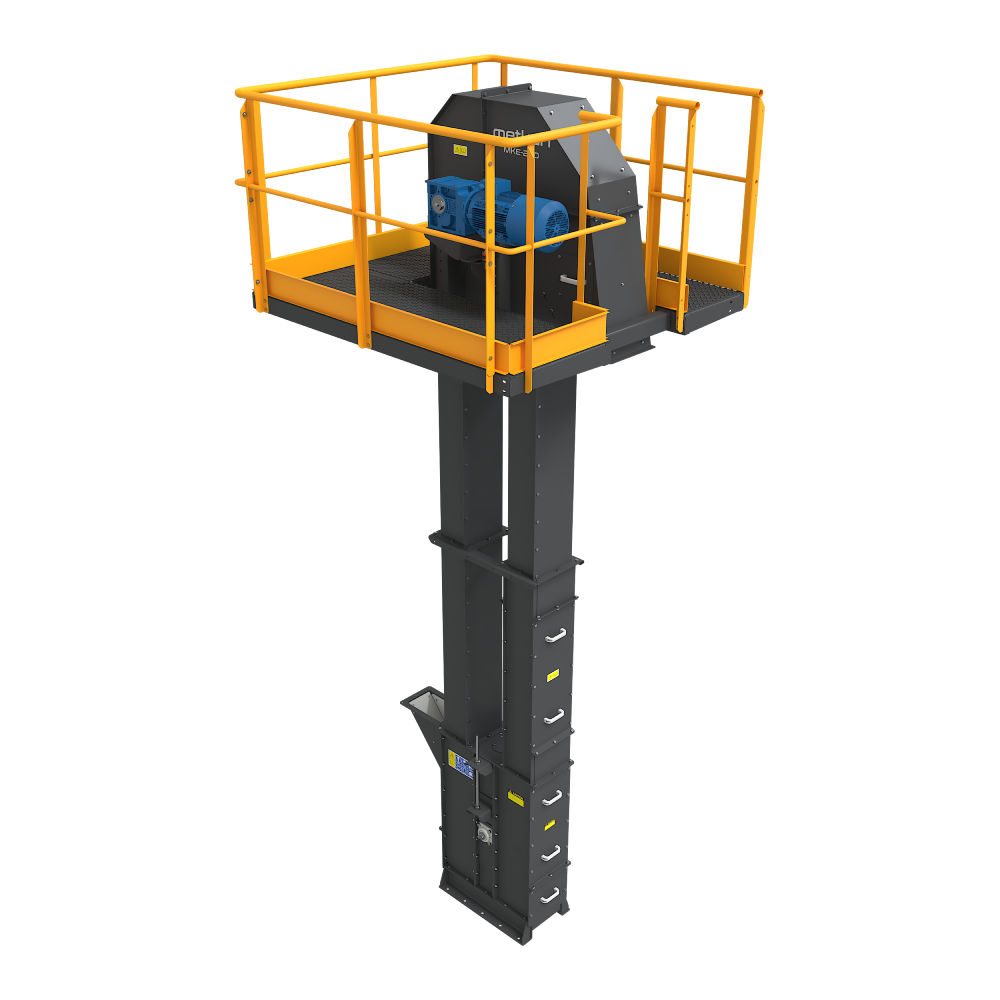
Conveying equipment is equally important. Conveyors, elevators, and other transport systems must convey the product flow rhythmically. Product accumulation, rollback, or irregularities in conveyance negatively impact the entire line. This effect is particularly pronounced when targeting micronized products, as flow stability directly influences quality in fine product manufacturing. Metkan MakineA process-oriented approach comes to the fore here as well. The conveying system does not merely establish connections; it also maintains process balance.
How are capacity planning and dust control managed?
Capacity planning is one of the most critical decisions when investing in a micronization plant. This is because insufficient capacity renders the line inadequate in a short time, whereas excessive capacity drives up investment costs. Accurate planning requires a clear hourly production target. Additionally, factors such as material type, shift schedules, and product variety must be taken into account. Furthermore, capacity calculations should not be based solely on the crusher; the screen, feeding system, and conveying equipment must also be balanced to match the same operational speed. A successful capacity plan ensures the entire line operates in unison.
Dust control is equally critical in micronization plants, as the production of fine products naturally generates increased dust movement. This situation impacts equipment lifespan and can create challenging working conditions, while also potentially increasing product loss and maintenance requirements. Therefore, enclosed conveying structures, precise routing details, and an appropriate plant layout must be considered from the outset. Dust control is not merely a matter of cleanliness; it is also a question of efficiency, safety, and product consistency. A well-planned facility treats this aspect with the same seriousness as its production targets.
What mistakes should be avoided when setting up a micronized crushing and screening plant?
A common mistake is planning the line solely around the primary machinery. However, a micronization plant requires a balanced integration of feeding, crushing, screening, and conveying systems. Another frequent error is determining capacity based only on current needs, an approach that can quickly necessitate additional investment. Furthermore, some plants aim for specific product fineness but fail to install the appropriate screening and classification systems. In such cases, quality standards cannot be maintained even if production volume increases; consequently, the target product fails to meet the desired specifications, even when the investment operates at full capacity.
Another error is neglecting maintenance and access planning. Since micronization lines involve precise processes, a disciplined approach to maintenance is vital. If the technical team lacks easy access to the system, even minor interventions can result in prolonged downtime. Additionally, failing to consider dust control from the start can lead to increased product loss and equipment wear. Metkan Makine The correct approach is not merely to install the plant, but to design a structure that ensures efficient operation over the long term. Therefore, it is essential to prevent errors during the installation phase right from the beginning.
Metkan Makine’s approach to micronized plants
Metkan Makine, micronized crushing and screening plant ...prioritizes process integrity in its approach. This approach does not center on a single machine; instead, it is based on the entire line working toward the same goal. This is because success in fine product manufacturing stems from the balance established between equipment components rather than the individual power of the machines. The crusher must operate correctly, the screen must perform precise separation, the conveying systems must maintain flow, and capacity must be distributed evenly across the entire line. Thus, the plant does not merely produce goods; it consistently maintains quality standards.
Metkan Makine...the corporate perspective reflecting this also becomes evident here. A micronized product plant is not just an installation project; it is a process of simultaneously planning for quality, efficiency, and continuity. This approach makes a significant difference, particularly in plants aiming to produce fine products. A well-designed line configuration enhances the return on investment and instills a safer, more predictable production discipline within the operation. Therefore, micronized crushing and screening plant ...system integrity must be the foundation during the planning phase.
Frequently Asked Questions
What is a micronized crushing and screening plant?
Micronized Crushing and Screening Plant...refers to specialized process lines designed to produce fine-grained, controlled products. These plants target more precise product sizing than standard crushing and screening systems. Consequently, the crushing, screening, and conveying systems are planned with a greater emphasis on balance.
What is the most critical section in micronized product manufacturing?
No single section determines overall success on its own. However, the crusher and screen system together constitute the most critical component. If the crusher does not prepare the product structure correctly, the screen cannot perform precise separation. Therefore, the harmony between these two sections is crucial.
Why is the circular vibrating screen important in a micronized product plant?
The circular vibrating screen enables the separation of the product according to the target particle size distribution. This stage largely determines the final quality standard in fine product manufacturing; therefore, the surface area, number of decks, and vibration characteristics must be carefully selected.
How is capacity planned when setting up a micronized crushing and screening plant?
When preparing a capacity plan, factors such as the hourly production target, material characteristics, shift schedule, and product variety are evaluated together. Furthermore, the crushers, screens, and conveying equipment must operate in synchronization; calculations based on a single machine alone will not yield accurate results.
Why is dust control important in fine product manufacturing?
Fine product manufacturing inherently generates increased dust movement. This can affect equipment lifespan, lead to product loss, and increase maintenance requirements. Consequently, dust control is crucial for both operational efficiency and workplace safety.
What is the most common mistake made when setting up a micronized processing plant?
The most common mistake is planning the line based solely on the main machinery. However, feeding, conveying, screening, and maintenance access are equally important. If the entire process is not considered holistically, the plant cannot consistently produce the desired quality.
In which sectors do micronized crushing and screening plants stand out?
They stand out in sectors such as construction chemicals, mineral processing, filler material production, and industrial manufacturing requiring fine particle size distribution, as product fineness and classification precision are critical in these fields.
Why is the micronized plant approach important for Metkan Makine?
Because process balance plays a decisive role in the production of fine products. For Metkan Makine, the right plant configuration means planning the entire production flow—not just selecting machinery—according to consistent quality standards.
Metkan Makine with micronized crushing and screening plant By correctly planning the configuration, you can create a more controlled, efficient, and sustainable fine-product production line. To define the technical structure best suited to your project... contact us