Construction chemicals facility construction...requires not only the installation of the production line but also the proper configuration of the entire process. This is because, in construction chemicals production, raw material flow, mixture homogeneity, conveying arrangements, and bagging performance all contribute to the same quality standard. If feeding systems do not advance raw materials at the correct rhythm, the mixer cannot achieve the desired efficiency. If the mixer... Homogeneous mixture ...fails to do so, product quality standards suffer. Bagging and palletizing line if it does not align with the process, shipment quality suffers. Therefore, plant constructionrequires far more extensive technical planning than the installation of individual machines.
A properly planned Construction chemicals facilitybalances production capacity, simplifies the maintenance process, and strengthens operational continuity. Screw conveyors, Bucket elevators, horizontal powder mixers, Belt conveyors and palletizing systems form the core components of this whole. However, true success is achieved when this equipment operates in unison within a unified process logic. Here, you can examine in detail why the construction of a construction chemicals plant is a critical investment, the stages that make up the production line, and the key technical details involved in a proper plant setup.
Contents
- Why is the construction of a construction chemicals plant important?
- What stages make up a construction chemicals production line?
- Which machines are involved in the construction of a construction chemicals plant?
- Why are raw material feeding and conveying systems decisive factors?
- How does the choice of mixer affect production quality?
- How is the bagging and palletizing line planned?
- How is capacity planning carried out?
- Why do dust control and maintenance access play a critical role?
- How is Metkan Makine positioned in the manufacturing of construction chemicals plants?
- Frequently Asked Questions
Why is the construction of a construction chemicals plant important?
Construction chemicals facility construction...directly determines production quality. This is because when the plant layout is designed correctly, the raw material flow becomes organized, mixture quality improves, and Bagging the process operates more consistently. Conversely, an improperly planned line results in a loss of efficiency right from the initial stage. Raw material flow becomes irregular, the mixture loses homogeneity, and product standards suffer. Therefore, plant construction...it is not merely a matter of machinery installation; it becomes a key investment component that defines the production logic itself.
Construction chemicals ...even minor process variations create significant differences in quality. For instance, products such as dry mortar, joint grout, tile adhesive, and plaster require high precision in their formulations. Consequently, the feeding arrangement, conveying control, mixing time, and bagging flow must all align with the same objective. Furthermore, when the production line operates continuously throughout the day, the compatibility between pieces of equipment becomes even more crucial. That is why construction chemicals plant manufacturing...stands out as one of the most strategic aspects of investment decisions.
What stages make up a construction chemicals production line?
Construction chemicals production lineconsists of several interconnected key stages. In the first stage, the facility stores raw materials and feeds them in a controlled manner. In the second stage, conveying systems come into play, transporting the material to the correct points along the production line. In the third stage, the mixer creates the mixture according to the recipe. In the next stage, the system transports the product to the bagging point. Subsequently, processes such as bag conveying, alignment, weighing, and palletizing complete the production. In short, the facility generates value not through a single machine, but through an integrated system where components work in harmony.
Each section within this workflow holds its own importance. However, true success emerges from the way these sections support one another. For instance, if irregular flow occurs at the silo outlet, the mixer cannot operate stably. If control is lost at the mixer outlet, the bagging line cannot maintain its rhythm. Bagging line If the bagging line operates irregularly, efficiency drops at the palletizing stage. Therefore, the construction of a construction chemicals facility does not allow for a fragmented approach; rather, it requires an engineering perspective that aligns every piece of equipment with a common goal.
Which machines are involved in the construction of a construction chemicals plant?
Construction chemicals plant In manufacturing, machine selection depends as much on the product type as it does on production targets. However, the general backbone remains similar across most projects. Raw material feeding systems, Screw conveyors, Bucket elevators, Horizontal powder mixer, bagging line, Belt conveyors and palletizing systems form this backbone. Each piece of equipment performs a distinct task; however, true efficiency is achieved when these machines operate in unison.
At this stage, businesses often focus on the performance of individual machines. However, the correct approach prioritizes the integrity of the entire line. This is because a high-performance mixer cannot deliver the desired results if paired with a weak feeding system. Similarly, a high-speed bagging unit will not operate reliably if the conveying line is inconsistent. Therefore, when constructing a facility for construction chemicals, equipment compatibility must be evaluated before considering individual equipment power. Furthermore, this compatibility becomes increasingly critical as product diversity grows. In this way, the facility does not merely produce goods; it also consistently maintains quality standards.
Why are raw material feeding and conveying systems decisive factors?
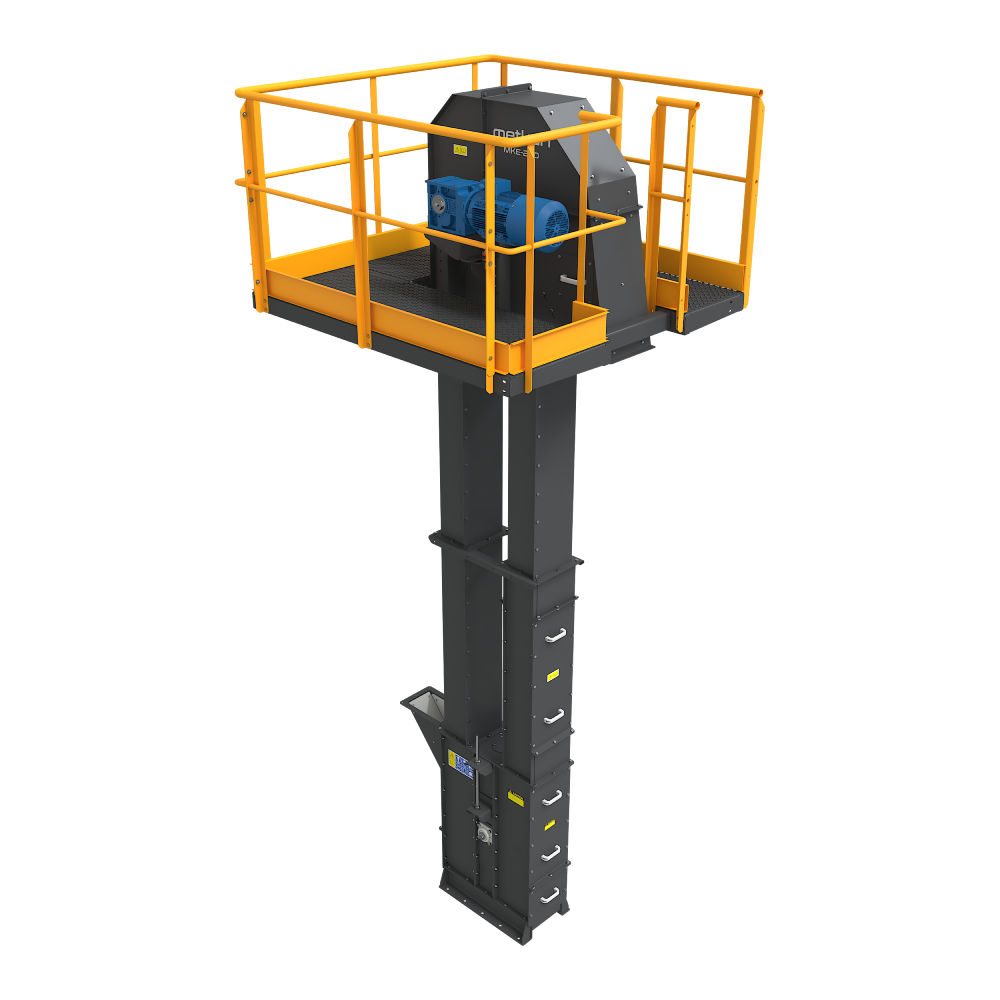
Raw material feeding systems...sets the initial rhythm of the facility. No matter how powerful the production line is, the system cannot maintain balance if the material supply is irregular. Screw conveyors ensure controlled flow at this stage. Bucket elevators, on the other hand, meet the need for vertical conveying.When these two systems work in tandem, the material reaches the mixer at the precise quantity and speed required. This preserves the integrity of the formulation and enhances the quality of the mixture.
This aspect is particularly critical in the production of construction chemicals, as cement, calcite, filler minerals, and chemical additives must move at the same speed and with equal precision. Furthermore, controlled conveying offers significant advantages in production environments characterized by high dust levels. A proper feeding system reduces raw material waste, minimizes the need for operator intervention, and ensures a more stable flow along the production line. Consequently, feeding and conveying systems should not be viewed merely as auxiliary equipment in the construction of construction chemicals plants.
How does the choice of mixer affect production quality?
The horizontal powder mixer lies at the heart of construction chemicals plant operations.This is because product quality depends directly on the quality of the mixture. Raw materials with varying densities, particle sizes, and flow characteristics must be blended homogeneously within the same vessel. If the mixer fails to perform this task consistently, the same recipe will yield different results across different batches, thereby compromising product standardization.
Volume capacity alone is insufficient when selecting a mixer; factors such as mixing time, discharge performance, recipe versatility, and cycle speed must also be considered. Additionally, if the production line switches between different product groups during the day, ease of access for cleaning and maintenance becomes crucial. The right mixer ensures a homogeneous mixture, accelerates the production cycle, enhances batch consistency, and simplifies quality control. Therefore, the choice of mixer in a construction chemicals plant impacts not only production capacity but also brand reliability.
How is the bagging and palletizing line planned?
Construction chemicals plant The manufacturing process does not end at the mixer; the product must be filled into bags at the correct weight, formed properly, and palletized for shipment. Therefore, the post-bagging line layout is just as important as the mixing section. Bag conveyors regulate product flow. Bag shaping systems improve the bag's form. Vibration-assisted conveying systems settle the material inside the bag. Check-weighing stations ensure weight standards are met. In the final stage, the palletizing system establishes the shipment configuration.
Each of these stages affects product quality in a different way. For instance, if bags emerge with a poor shape, the pallet surface becomes uneven. Inadequate weight control leads to a loss of customer trust. An inconsistent palletizing rhythm slows down shipment speeds. Therefore, the bagging and palletizing line is not merely "end-of-line" equipment; rather, it is the final link that completes the production quality chain. A well-planned line enhances both visual quality and logistical efficiency.
How is capacity planning carried out?
Capacity planning is one of the most critical decisions when setting up a construction chemicals plant. An investment in low capacity quickly becomes insufficient, while excessive capacity creates unnecessary costs. Consequently, planning must take into account hourly production targets, daily shift durations, product variety, and growth projections. This ensures the plant can accommodate future demands just as effectively as current needs.
Capacity planning is not based solely on mixer volume; the flow rate of feeding systems, the conveying capacity of elevators, bagging rates, and palletizing speeds must all be considered within the same framework. This is because a production line moves only as fast as its weakest link, not its most powerful machine. Therefore, when constructing a facility, the capacities of all equipment must complement one another. This balance becomes even more critical when product recipes involve varying densities and cycle times. Successful capacity planning takes these differences into account to establish a balanced flow across the entire line.
Why do dust control and maintenance access play a critical role?
In the construction of facilities for construction chemicals, dust control is as vital for equipment longevity as it is for occupational safety. A dusty, high-intensity working environment accelerates wear on moving parts, extends cleaning times, and increases maintenance demands. Consequently, enclosed conveying structures, proper sealing mechanisms, and systems that ensure smooth material flow offer significant advantages. A well-controlled facility layout not only keeps the production area organized but also minimizes material loss.
Maintenance access directly impacts production continuity. Systems that are difficult to access cause prolonged downtime even for minor interventions, whereas continuity is the primary objective in construction chemicals production. Flanged connections, accessible housing structures, and a modular line layout facilitate the maintenance process. This allows the technical team to complete inspections more quickly and reduces the risk of unplanned facility downtime. Therefore, ease of maintenance—not just ease of installation—must be considered with equal seriousness when manufacturing construction chemicals facilities.
How is Metkan Makine positioned in the manufacturing of construction chemicals plants?
Metkan Makine, Construction chemicals operates with a production philosophy that prioritizes a process-oriented approach. This approach is based on evaluating the entire production chain holistically rather than highlighting a single machine. Because Construction chemicals success in production stems from a collaborative operational discipline rather than the individual power of the equipment alone. Consequently, the right configuration for a facility encompasses the entire process, from the feeding system to palletizing.
Metkan Makine’s production structure supports this integrity. Machines performing tasks at various stages—such as mixing, conveying, feeding, and palletizing—are evaluated within the same process logic. Thus, the facility does not remain merely a space for manufacturing products; it evolves into a system that simultaneously manages quality, continuity, and efficiency. From a corporate perspective, construction chemicals plant manufacturingforms the technical backbone of the investment. Metkan Makine offers a perspective in this field that aligns production goals with process realities.
Frequently Asked Questions
What is construction chemicals facility manufacturing?
Construction chemicals facility construction; It refers to the establishment of a production infrastructure that encompasses everything from the storage, transport, and mixing of raw materials to bagging and palletizing. This process focuses not only on machinery layout but also determines the production flow, capacity balance, and quality standards.
What machinery is required when setting up a construction chemicals plant?
Most plants Horizontal powder mixer, screw conveyor, bucket elevator, belt conveyor, include a bagging system. and palletizing line However, the final list of machinery varies depending on the product type, capacity targets, and the plant's operational model. Therefore, equipment selection is tailored to the technical requirements of each project.
What is the most critical section in the construction of a construction chemicals plant?
No single section represents the entire plant on its own. However, the mixing section, feeding systems, and bagging line collectively constitute the most critical area. This is because if the feeding process is disrupted, mixer efficiency drops; if the mixer fails to produce a homogeneous mixture, the bagging line cannot maintain quality. Thus, success stems from the harmony between these sections.
How is capacity planned for a construction chemicals plant?
When preparing a capacity plan, factors such as hourly production targets, product variety, shift structures, and growth projections are evaluated together. Subsequently, mixer volume, conveying systems, bagging speeds, and palletizing rates are planned to maintain this balance. This ensures the plant can meet not only current needs but also future production goals.
Why is dust control important in the construction of a construction chemicals plant?
Dust control maintains order in the production area and extends equipment lifespan. It also reduces maintenance requirements, minimizes material loss, and enhances workplace safety. Enclosed conveying systems and proper sealing offer significant advantages, particularly in facilities handling dusty raw materials.
Is robotic palletizing necessary for a construction chemicals facility?
In high-volume and continuous production facilities, Robotic palletizing it offers significant advantages. The system increases shipping speed, ensures orderly bag stacking, and maintains pallet consistency. However, not every project requires the same level of automation; therefore, the decision should be based on production pace and shipping targets.
Why is the choice of mixer so important?
Mixer...directly determines product quality. If different raw materials do not blend homogeneously within the same chamber, batch consistency is compromised. Therefore, the choice of mixer should not be based solely on volume calculations; factors such as mixing time, discharge performance, recipe variety, and cleaning requirements must also be considered.
What is the most common mistake made when constructing a construction chemicals plant?
The most common mistake is planning the plant based merely on individual machines. However, production efficiency depends on the balance established between the various pieces of equipment. Feeding, mixing, Bagging and palletizing If these sections do not operate in sync, the system loses efficiency. Consequently, plant construction must always be approached holistically.
Metkan Makine with construction chemicals plant manufacturing By planning the process according to capacity, product type, and production targets, you can create a more efficient, organized, and sustainable production line. To define the technical setup best suited to your project, Contact Us.