Construction chemicals plant capacity...directly influences many critical decisions, ranging from investment planning to production costs. This is because the plant's hourly and daily production output is calculated based on factors such as mixer volume, feeding systems, raw material flow, weighing precision, filling time, bagging speed, operator scheduling, and the level of automation. Therefore, simply asking "how many tons does it produce?" does not yield an accurate result. The operation must consider the product recipe, shift duration, production variety, and in-line idle times collectively. Metkan Makine... ...capacity in construction chemicals production lines... ...approaches the calculation not merely based on machine power, but by considering the entire process flow.
Accurate capacity calculation balances the facility's initial investment cost with long-term production efficiency. A facility with insufficient capacity cannot meet demand, forcing the business to make new investments shortly after. Conversely, a facility with excessive capacity results in idle machinery, high energy consumption, and unnecessary investment costs. Therefore, Construction chemicals facility businesses planning to establish a construction chemicals facility must first clearly define their actual production targets. Subsequently, hourly capacity, the daily production schedule, product transition times, and packaging capacity must be calculated in conjunction with one another.
Contents
- What is the capacity of a construction chemicals facility?
- How is hourly production capacity calculated?
- How is a daily production schedule created?
- How does mixer volume affect capacity?
- Why are the weighing and dosing systems important?
- How does the raw material feed rate impact capacity?
- How does the bagging line determine the production schedule?
- How do the product recipe and mixing time alter capacity?
- How is the shift schedule used in capacity calculations?
- How does the automation system increase production efficiency?
- What are the common mistakes made when calculating capacity?
- Frequently Asked Questions
- Metkan Makine construction chemicals plant solutions
What is the capacity of a construction chemicals plant?
Construction chemicals plant capacityIt refers to the net quantity of product a production line can complete within a specific timeframe. This quantity is typically calculated as tons per hour, tons per day, or production per shift. However, capacity is not determined solely by the mixer's volume, as the production line involves numerous stages—such as raw material preparation, weighing, feeding, mixing, discharging, screening, transfer, packaging, and palletizing. If any one of these stages operates slowly, the capacity of the entire line decreases. Therefore, capacity calculations must be based on the line's weakest link.
Furthermore, construction chemicals production It does not proceed based on a single type of product. Tile adhesive, Grout, Plaster mortar, Repair mortar, Screed-additive products and various dry-mix formulas can be produced in the same facility. Each product has a unique recipe, mixing time, filling behavior, and package weight. Therefore, the facility should not calculate capacity based on a single ideal scenario; instead, it should create separate capacity plans for different product groups. This ensures more accurate management of the facility under real production conditions and leads to more reliable order planning.
How is Hourly Production Capacity Calculated?
Hourly production capacityIt is the net quantity of product completed by the production line within one hour. The basic calculation is performed as follows: the production quantity of a single batch is divided by the batch cycle time and converted to an hourly production rate. For example, if the mixer prepares 2 tons of product per cycle and the total cycle time is 12 minutes, the facility targets a production rate of approximately 10 tons per hour. However, this calculation reflects only the theoretical value. To determine actual capacity, factors such as filling, weighing, discharging, bagging, and product transition times must also be taken into account.
Therefore, it is necessary to use an efficiency coefficient when calculating practical capacity, as the production line does not always operate without interruption. Operator intervention, recipe changes, raw material replenishment, bag changes, cleaning, and short stoppages affect net production. Therefore, the business should not simply use the theoretical capacity in the daily plan. In practice, actual capacity is usually lower than theoretical capacity. Metkan Makine...evaluates machine capacities in conjunction with the in-line flow during the facility design process. This allows the investor to plan based on actual production performance rather than just catalog values.
How is the Daily Production Plan Created?
The daily production plan...is created by multiplying the hourly capacity by the shift duration and actual operating efficiency. For example, if a facility has a theoretical production capacity of 10 tons per hour and operates for 8 hours a day, the theoretical daily capacity is 80 tons. However, the net capacity turns out to be lower when factors such as product changeovers, breaks, maintenance checks, raw material preparation, and packaging delays are taken into account. Therefore, the business should prepare the daily production plan based on actual operating time. This ensures that order delivery dates are determined more accurately.
However, the daily plan should not consist solely of a total tonnage target. Factors such as product group, recipe sequence, packaging type, shipment priority, and stock status must also be incorporated into the plan. For instance, producing items of the same color or with similar recipes in succession reduces cleaning time. Furthermore, manufacturing high-demand products during the shift's most productive hours boosts capacity. Consequently, the production plan requires a combination of engineering and operational expertise. Effective planning ensures more efficient use of the facility's machinery and minimizes unnecessary downtime.
How Does Mixer Volume Affect Capacity?
Mixer volume, Construction chemicals facility is one of the most critical equipment parameters determining capacity. However, a large mixer does not always equate to high capacity, as factors such as the fill rate, mixture homogeneity, discharge speed, and recipe composition directly influence output. An oversized mixer leads to inefficiency during small-batch production, whereas an undersized mixer limits output during periods of high demand. Therefore, the choice of mixer must align with product variety and target production tonnage.
Furthermore, The mixer cycle time plays a critical role in capacity calculations. A cycle comprises the time required for weighing, feeding, mixing, discharging, and preparing for the next batch. Even if the mixing time itself is short, the total cycle time increases if the weighing or discharging processes are slow. Thus, the operation should not focus solely on mixer motor power or vessel volume; it must evaluate the entire production line. Metkan Makine Horizontal powder mixer and production line strengthens capacity balance by addressing integration holistically. This ensures the mixer does not become a bottleneck for the line.
Why Are Weighing and Dosing Systems Important?
The weighing and dosing systemimpacts both product quality and production capacity. Construction chemicals Recipe precision is crucial in production. Components such as cement, sand, calcite, polymers, cellulose, additives, and pigments must be fed in the correct proportions. If the weighing system operates slowly, the mixer sits idle, extending the cycle time. Inaccurate weighing compromises product quality and necessitates rework. Therefore, weighing speed and dosing precision must be evaluated when calculating capacity.
Furthermore, there is a significant difference in efficiency between manual and automatic dosing. In manual systems, factors such as operator experience, shift workload, and control processes affect production speed. Automatic dosing systems, however, accelerate recipe repeatability, reduce error rates, and facilitate production tracking. Consequently, in high-capacity plants, the level of automation directly supports capacity. Metkan Makine automation and software for construction chemicals plants plans solutions that are compatible with the production line. This enables businesses to achieve more controlled and measurable production.
How Does Raw Material Feed Rate Affect Capacity?
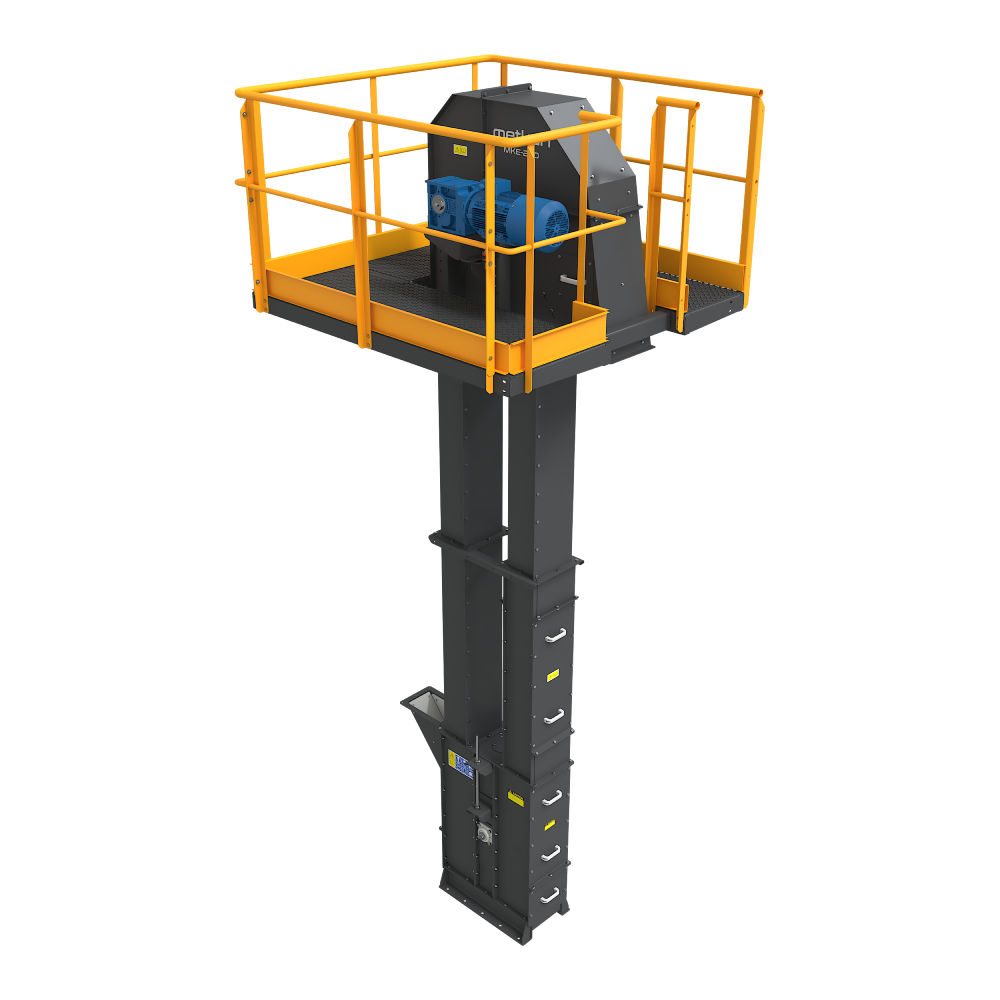
The raw material feed rate is one of the fundamental factors determining the plant's actual capacity. Even if the mixer has a large volume, the plant will experience downtime if the raw material is not fed at a sufficient speed. In this case, the theoretical capacity is not realized in practice. Silos, Bunkers, Screw conveyors, Belt conveyors and Bucket elevators work together at this stage. Each piece of equipment must support the product flow at the correct speed and in the correct sequence. Otherwise, the mixer sits idle, or the formulation process is disrupted due to feeding imbalances.
Furthermore, different raw materials exhibit different flow behaviors. Fine powders, damp sands, granular additives, and lightweight fillers do not move at the same speed. Therefore, the feeding system must be planned according to each product group. Issues such as raw material bridging, clogging at the bunker outlet, insufficient screw conveyor capacity, or material fallback in elevators reduce daily production output. Consequently, raw material flow must be analyzed in detail when calculating capacity. A proper feeding system design enhances both mixer efficiency and product quality.
How Does the Bagging Line Determine the Production Plan?
The bagging line, Construction chemicals It is one of the most critical stages limiting capacity in facilities, as the product must be packaged quickly and accurately once production is complete. While the mixer can produce high tonnage per hour, if the bagging machine cannot keep pace, the product accumulates in storage hoppers. This slows down the production flow and causes the mixer to stand idle. Therefore, bagging speed must be evaluated separately when calculating capacity. Bag weight, filling precision, product flowability, and operator support directly influence this speed.
Furthermore, the palletizing process following bagging also affects daily capacity. Manual palletizing may suffice for low-tonnage lines; however, in high-capacity facilities, robotic palletizing or automated end-of-line solutions enhance production continuity. The orderly handling, stretch-wrapping, and shipment preparation of packaged products are vital components of the daily schedule. Metkan Makine configures its bagging lines and robotic palletizing solutions to align with the facility's capacity, ensuring the packaging process does not become a bottleneck for production.
How Do Product Recipes and Mixing Times Affect Capacity?
The product recipe, construction chemicals facility capacitydirectly alters capacity. While products with simple formulas require shorter mixing times, products with special additives may necessitate longer homogenization periods. Mixing quality is of paramount importance, particularly for recipes containing polymers, cellulose, pigments, or sensitive additives. If the operation excessively reduces mixing time to boost capacity, product quality suffers. Therefore, capacity calculations should not be performed independently of quality targets. An ideal mixing time must be determined for each product group.
Product transitions also impact capacity. Switching from colored to white products, or changing between recipes with different additive compositions or particle size distributions, necessitates time for cleaning and preparation. These transitions must be incorporated into the daily production schedule; otherwise, a significant discrepancy arises between theoretical capacity and actual production. By correctly sequencing product transitions, the facility can reduce downtime. Furthermore, managing recipes via an automation system lowers the risk of errors and boosts production efficiency.
How is the Shift Schedule Used in Capacity Calculations?
The shift schedule forms the basis for calculating daily and monthly capacity. A facility may operate on a single, double, or triple-shift basis. However, as the number of shifts increases, processes related to maintenance, raw material logistics, operator scheduling, and quality control must be strengthened accordingly. Simply increasing operating hours does not automatically raise capacity; the raw material supply, packaging area, storage facilities, and shipping logistics must all support this expansion. Consequently, the facility must evaluate the shift schedule in the context of the entire production chain.
Production efficiency is not the same in every shift. Time is required for preparation at the start of the shift and for cleaning and inspection at the end. The number of operators, access to the maintenance team and the production sequence also affect net capacity. Daily planning should therefore not be based solely on a theoretical 8-hour working period. Net production time and the actual efficiency rate must be included. This approach makes order management more reliable and helps the company meet the delivery dates promised to customers.
How Does an Automation System Increase Production Efficiency?
The automation systemIt is one of the most critical factors for increasing capacity in construction chemicals plants. This is because automation centrally manages recipe management, weighing control, dosing sequences, mixer cycles, hopper levels, bagging data, and production reporting. This structure minimizes human error and accelerates production turnaround. Furthermore, it allows the operator to monitor the entire line with greater control. When switching recipes, the system utilizes stored data to standardize the production process. Consequently, capacity increases based on process discipline rather than relying solely on machine speed.
Furthermore, automation provides data for capacity analysis. The business can see how many minutes it takes to produce a specific product, at which stage delays occur, and which equipment is slowing down the line. This data accelerates the improvement process. For example, if the mixer's idle time is high, the feeding system is examined. If the bagging process causes delays, the packaging line is reinforced. Metkan Makine...contributes to facilities achieving more measurable production through automation and software solutions. Thus, businesses make capacity decisions based on real data rather than estimates.
What Are the Common Mistakes Made in Capacity Calculations?
Construction chemicals plant capacity The most common mistake made in the calculation is looking solely at the mixer volume. However, mixer capacity alone does not determine the capacity of the entire line. If the feeding system is slow, the mixer sits idle. If the bagging line is inadequate, the product output becomes bottlenecked. If the capacity of the bucket elevator or screw conveyor is low, the flow of raw materials is disrupted. Therefore, the investor must select all equipment to align with the same capacity target. Otherwise, a high-performance machine cannot operate at full capacity due to weak auxiliary equipment.
Another mistake is failing to account for product variety. A capacity calculation based on a single product does not reflect the actual production plan, because different products entail different mixing times, filling behaviors, and cleaning requirements. Furthermore, product changeovers reduce daily production volume. When a business fails to factor these times into the plan, it experiences deviations from delivery targets. Therefore, an accurate capacity calculation... ...must be determined in conjunction with the product group, recipe structure, shift duration, maintenance interval, packaging speed, and automation level.
Frequently Asked Questions
How is the capacity of a construction chemicals plant calculated?
Construction chemicals plant capacity; it is calculated by evaluating mixer volume, batch time, feed rate, bagging capacity, and shift duration together. Relying solely on mixer volume does not yield an accurate result. Actual capacity is determined by the harmonious operation of all the line's equipment.
What determines the hourly production capacity?
Hourly production capacity is determined by the quantity of product prepared in a single production cycle and the total cycle time. Times for weighing, feeding, mixing, discharging, and packaging are included in this calculation. Additionally, an efficiency coefficient must be applied for actual production.
What details should be included in the daily production plan?
The daily production plan should include product groups, production sequence, shift duration, cleaning time, raw material preparation, bagging speed, and shipment priorities. This plan should not consist merely of a total tonnage target; proper sequencing increases capacity.
Does capacity always increase as mixer volume increases?
No, capacity does not always increase with mixer volume. If the feeding, weighing, discharging, and bagging lines do not support the same capacity, a large mixer will experience idle time. Therefore, the mixer must be selected to align with the entire plant flow.
Why does the bagging line limit capacity?
If the bagging line operates slowly, the discharge of finished products is delayed. This causes a buildup in the storage hoppers and prevents the mixer from starting a new production cycle. Therefore, bagging speed plays a critical role in calculating the plant's capacity.
Does an automation system increase capacity?
Yes, an automation system It accelerates recipe management, weighing, dosing, and production tracking. It also reduces manual errors and logs production data. This enables the facility to identify bottlenecks more easily and manage capacity more efficiently.
What causes capacity loss in a construction chemicals plant?
Capacity loss occurs due to insufficient feeding, long mixing times, bagging delays, raw material blockages, lack of maintenance, or product changeover times. To minimize these losses, the facility must analyze the entire line holistically.
Does Metkan Makine create capacity plans for construction chemicals plants?
Yes, Metkan Makine Capacity in construction chemicals plants evaluates the target in conjunction with the product range, shift schedule, equipment selection, and plant layout. Thus, the investor receives a plant solution tailored to hourly and daily production targets.
Metkan Makine Construction Chemicals Plant Solutions
Metkan Makine construction chemicals facilities for Crushing-Screening, mixer, bucket elevator, screw conveyor, belt conveyor, bagging line, Robotic palletizing and automation approaches solutions holistically. This approach offers a significant advantage in capacity calculations, as plant performance does not depend solely on the power of a single machine; all equipment must operate in harmony toward the same production goal. Metkan Makine establishes the correct capacity structure by evaluating the investor's product range, target tonnage, shift schedule, and plant layout.
Furthermore, Metkan Makine plans every stage of the production line using a turnkey plant approach. It evaluates the entire workflow—from raw material intake to the output of packaged products—with a focus on capacity. Consequently, when the facility begins production, there is a stronger alignment between theoretical capacity and actual on-site capacity. If Construction chemicals facility you aim to set up a facility, expand your existing line, or accurately calculate your production capacity, Metkan Makine with you can contact us to receive technical support tailored to your project..