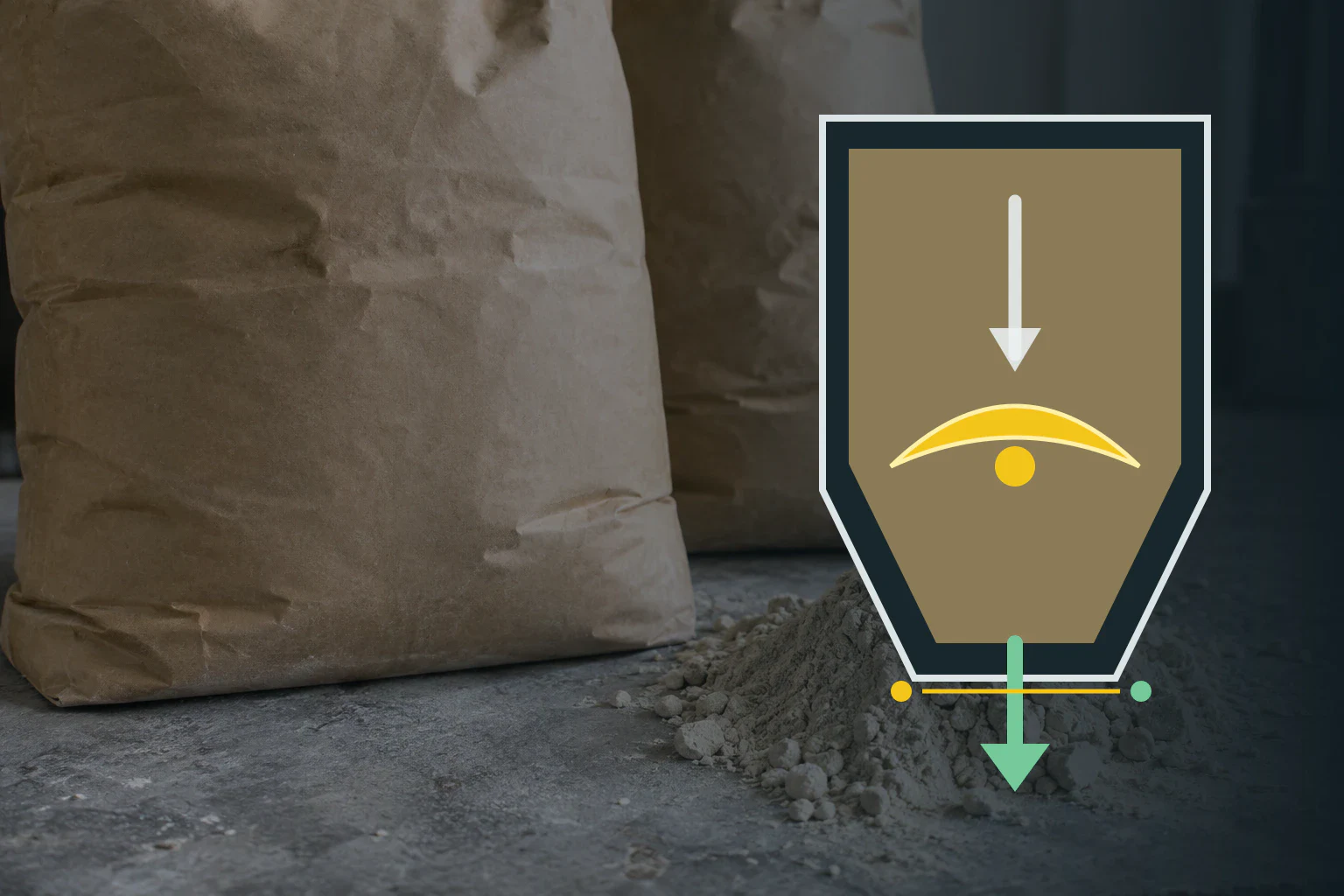
When material does not discharge from a silo or hopper despite an open gate, the problem is not simply a narrow outlet. Fine powder can gain strength through moisture, storage time and consolidation under the material above it. A load-bearing arch over the outlet is bridging; a stable central channel with stagnant material at the walls is ratholing. The two symptoms require different measurements and remedies.
Record the shape of the symptom first
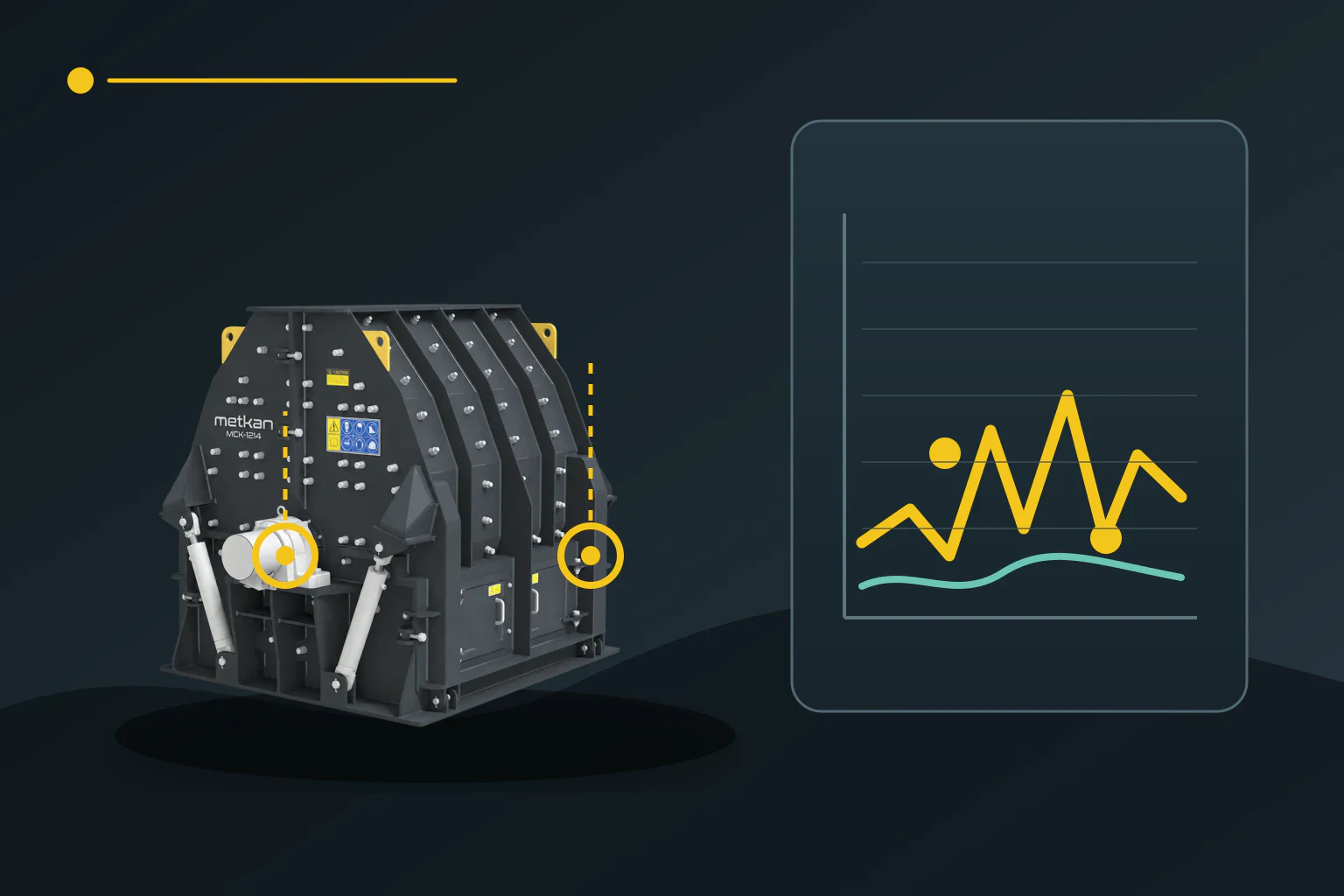
With bridging, flow usually stops abruptly; the level may still read high while the feeder below runs empty. During ratholing, material descends in the centre while the surrounding inventory remains stationary. Flow may later surge irregularly and usable capacity falls. A single-point level switch cannot separate the two conditions. Gate command, feeder current or weighed flow, and level information at different heights should be reviewed on one timeline.
Characterise the material before geometry
The same silo may run freely with one product and block with another recipe. Particle size alone does not explain this. Fines content, moisture, particle shape, oil or additive content, temperature and storage time change cohesion. Consolidation also changes with fill height. A laboratory sample must therefore represent actual moisture and storage conditions; observing a fresh, dry sample is insufficient for a permanent design decision.
A shear-cell test provides flow strength at different consolidation levels, while a wall-friction test describes sliding against the selected surface. Together these data inform outlet size, hopper angle and liner material. Measuring one angle of repose and applying it directly to the silo is misleading: the free-surface slope does not by itself represent consolidated flow strength or wall friction.
Evaluate outlet, hopper and feeder together
The critical outlet dimension that prevents bridging depends on material strength, whether the opening is circular or slot-shaped, and the consolidation condition; there is no universal diameter for all powders. For mass flow, the hopper wall must be sufficiently steep and low-friction for material to move along it. Simply adding a steeper cone to a funnel-flow vessel is not always enough: the transition, outlet and feeder opening must be assessed together.
If a feeder draws from only a small part of the outlet, stagnant zones can form in the silo. A belt, screw or vibratory feeder should withdraw material across its inlet opening. Variable speed can regulate flow rate but cannot remove a mechanical arch. If motor current drops, flow falls to zero with the gate open, and level remains unchanged, investigate the physical flow path before changing control setpoints.
Turn the symptom into a design decision
The table below links field observations with likely cause groups; it is not a definitive diagnosis. The plant's isolation and safe-work procedure must be followed before intervention. Uncontrolled striking, entry or air injection can increase structural loads and personnel risk. A flow aid must be selected through an authorised engineering assessment of the material, vessel and process.
| Field observation | Likely cause group | Data to confirm |
|---|---|---|
| Flow stops abruptly | arch over outlet | moisture/storage, outlet size, feeder current |
| Centre empties, material remains at walls | ratholing or stable channel | wall friction, hopper angle, multi-point level |
| Flow surges after pauses | channel collapse or uneven extraction | weighing trend, full feeder inlet, level |
| Gate open, low motor current, zero flow | material not reaching feeder | outlet inspection, event sequence, level |
What data are needed for technical assessment?
Prepare particle-size distribution, bulk density, moisture and temperature together with product and recipe; maximum storage time; silo diameter and straight height; hopper angle, surface and outlet dimensions; gate and feeder geometry; and level, feeder current and flow trend during the event. Metkan's dry-mix and automation scope assesses these data with equipment layout. A dimensioned section and event trend support a durable solution better than a symptom photograph alone.
Sources and scope limits
Sources were checked on 10 November 2026. Standards and studies describe general bulk-solids flow; they do not promise an outlet size, hopper angle or flow aid for a particular Metkan silo. The actual decision requires material testing and project geometry.