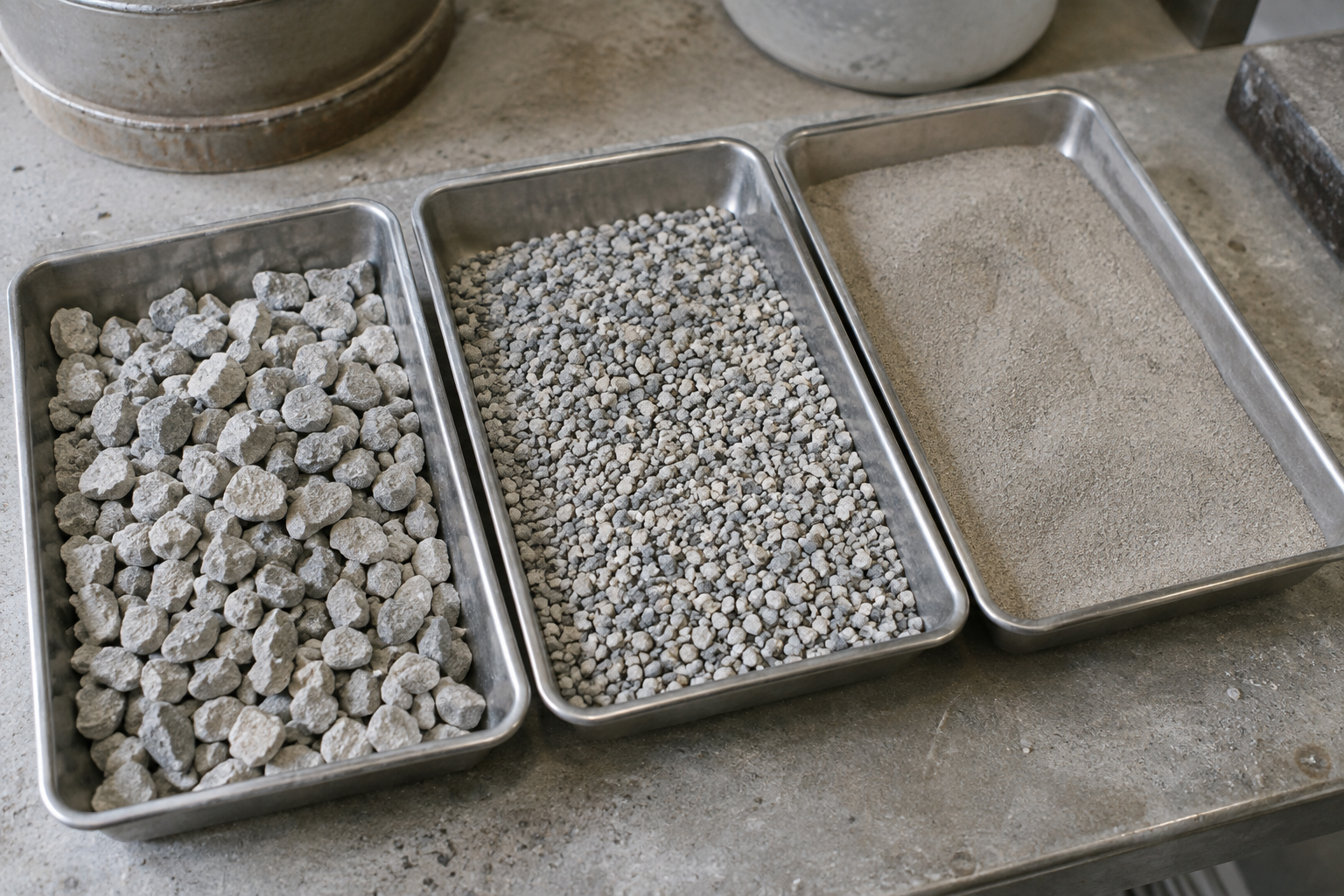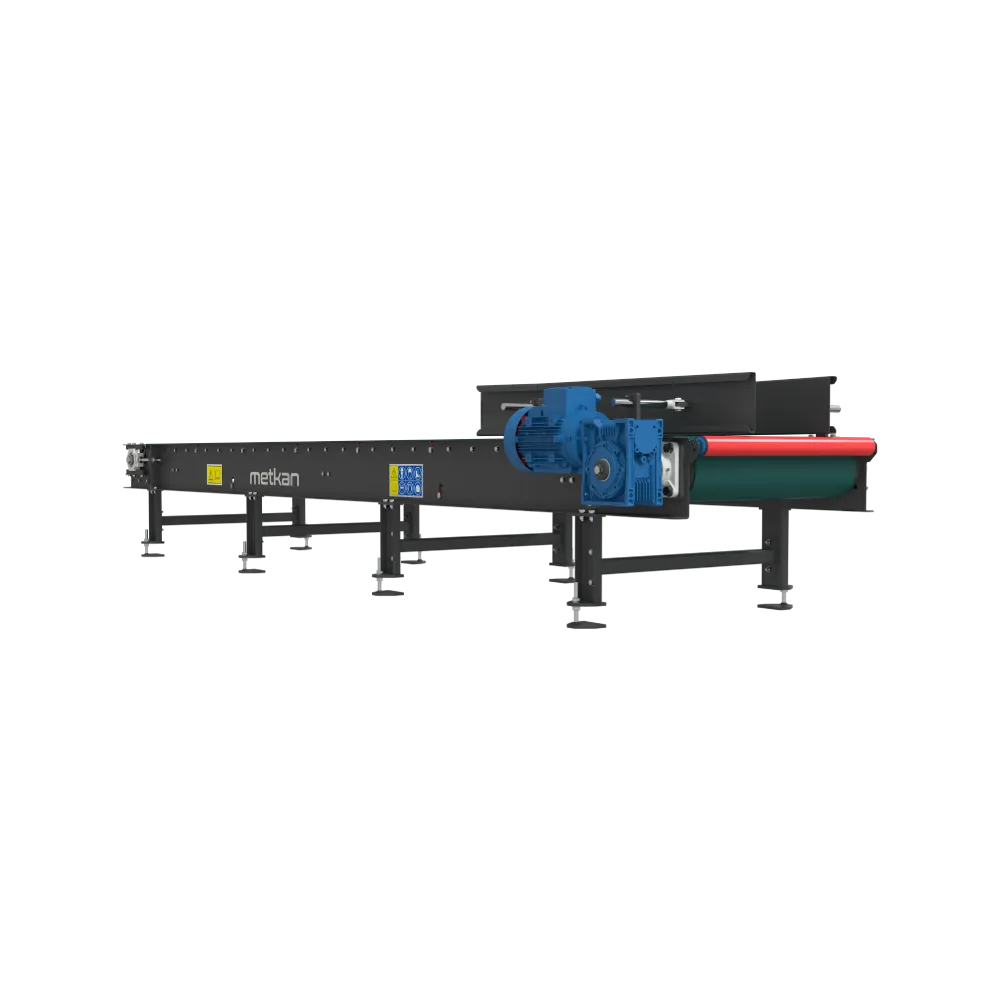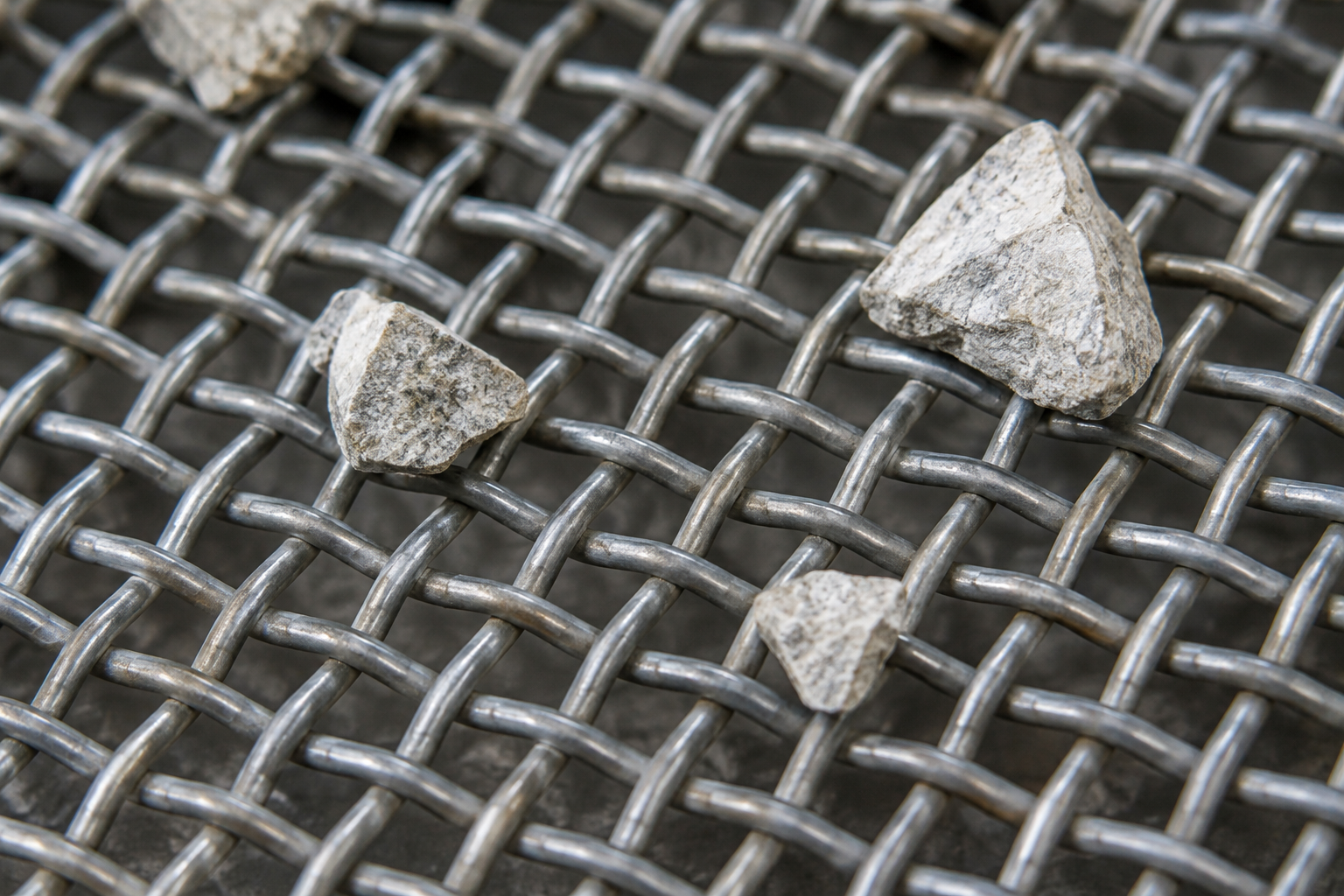
In a closed crushing and screening circuit, the crusher does not process fresh feed alone. Material retained above the target size by the screen also returns to the crusher. Plant feed and actual crusher load are therefore not the same. A sound calculation first defines which stream the return percentage refers to, then combines fresh feed and recycle in one mass balance.
Define the percentage first: which stream is the denominator?
On site, the statement “40% return” can have two different meanings. In the first definition, recycle flow C is divided by fresh feed F: R = C/F. This is the circulating-load ratio commonly used in mineral processing. In the second, screen oversize return is divided by total screen feed T: q = C/T. The two ratios are not equal. If a proposal, measurement or shift report omits the denominator, the same percentage can imply different equipment loads.
A simple mass balance reveals total crusher load
At steady operation, with no unmeasured side stream, total crusher feed is T = F + C. If circulating load is R = C/F, the total-load multiplier is T/F = 1 + R. When screen oversize is stated as a fraction of total screen feed, q = C/T, the equation C = q × (F + C) gives R = q/(1-q). This relationship applies only at steady state with constant inventory and defined streams; a snapshot taken while a bin is filling or emptying does not represent the balance.
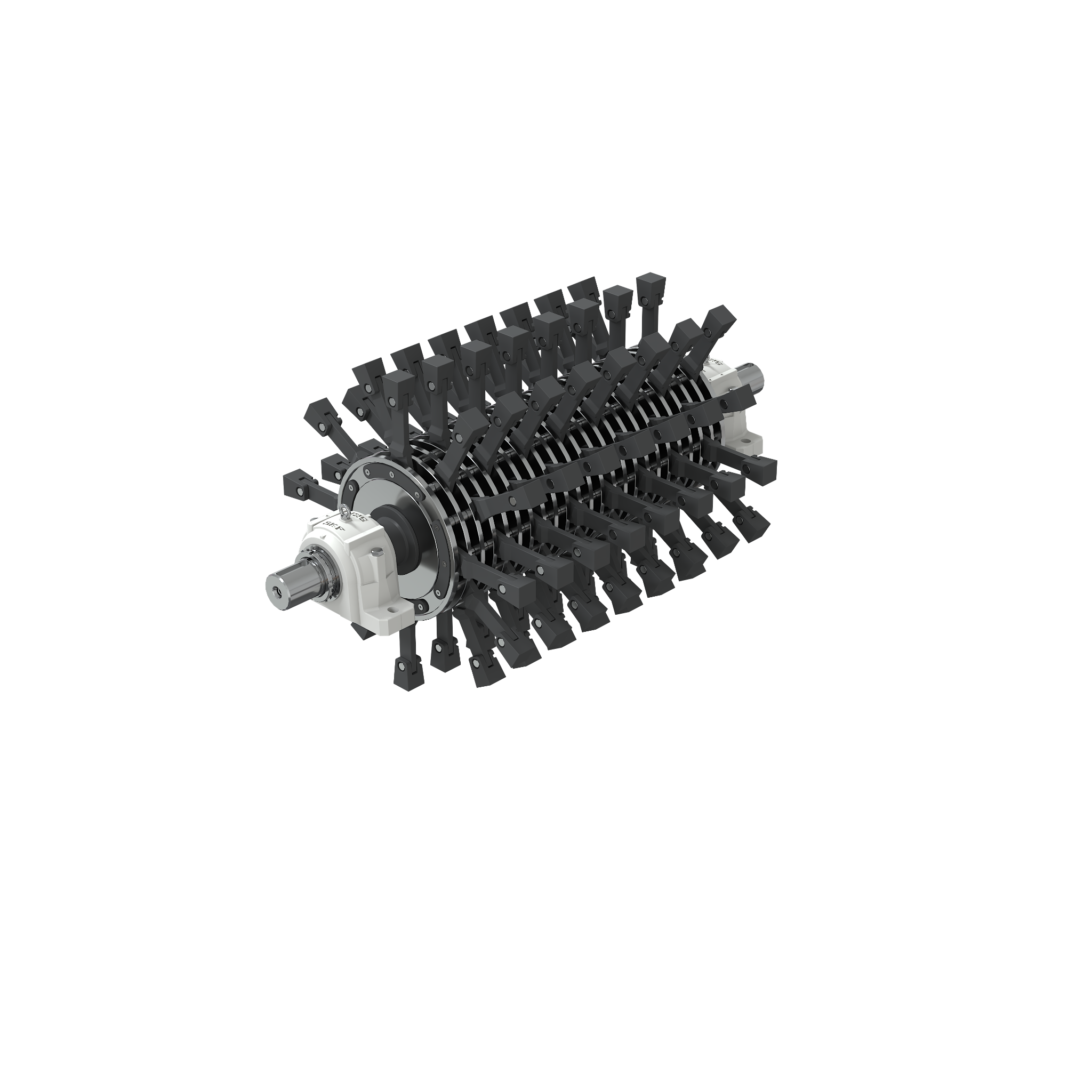
Worked example: why can the same 40% produce two answers?
The following values are illustrative, not a capacity commitment for Metkan equipment. Let fresh feed be F = 20 t/h and assume 40% of total screen feed returns. Here q = 0.40. Therefore R = 0.40/(1-0.40) = 0.67. Recycle C is 13.33 t/h, while total load on the crusher and screen T is 33.33 t/h. In other words, returning 40% of the total stream corresponds to a circulating load of 66.7% relative to fresh feed.
By contrast, if “recycle is 40% of fresh feed,” then R = 0.40. With the same 20 t/h fresh feed, C is 8 t/h and T is 28 t/h. The 5.33 t/h difference between the two results comes solely from changing the denominator. When interpreting crusher current or motor load, ask “relative to which flow?” before asking “what percentage?”.
Why does circulating load increase?
High recycle does not always mean that the crusher is undersized. Crusher-discharge grading is affected by feed size, material breakability, rotor speed, grate or aperture arrangement, worn parts and feed stability. On the screen, aperture, effective area, bed depth, near-size content, moisture and blinding can send more of the same material to oversize. Spillage or segregation at a transfer chute can also distort the measured return flow.
The purity and recovery measures in the 29 September screen-efficiency guide complete this circuit analysis. A clean-looking undersize does not prove that all target-sized material reached the product. If fines report to oversize, unnecessary circulation develops: the crusher reprocesses the same particles, while conveyors and elevators carry more tonnage. Read not only recycle tonnage but also the size distributions of fresh feed, crusher discharge, undersize and oversize at the same control size.
Measure the circuit during a stable operating window
Measure fresh feed and recycle over the same time interval. If belt scales are installed, record their zero, speed and calibration status; otherwise use a suitable method such as controlled timed collection or a verified weigh-bin balance. Samples should represent the full stream and the same stable period. ISO 11648-1 provides general principles for representative sampling and statistical treatment of bulk materials; it does not, by itself, prescribe the site method or equipment settings.
If moisture contents differ, do not compare wet tonnages directly; convert them to dry-solids flow. Add dust extraction, product losses, inventory change or any other side stream to the balance. If fresh feed and final product do not agree at steady state, investigate measurement and inventory change first. A negative or physically impossible circulating load usually indicates non-synchronous samples, an incorrect flow measurement or an omitted stream.
Check equipment against circuit load, not fresh feed alone
The crusher, screen, return conveyor, elevator and chutes carry total circuit load. Using only fresh plant feed when assessing motor current, screen bed depth, conveyor loading or chute overflow understates the actual duty. Calculated tonnage alone does not select a model: bulk density, top size, moisture, target grading, abrasiveness, operating duration and transient peak loads must also be considered.
To locate the bottleneck, close the measurement balance first, then change one variable. Stabilise feed, analyse crusher discharge and screen products, and remeasure recycle under the same shift conditions. If correcting the screen reduces circulation while product quality remains acceptable, classification may be the issue before crusher capacity. If screening is stable but coarse content in crusher discharge rises, inspect crushing conditions and wear parts. Changing several settings at once hides cause and effect.
Which data is needed for a proposal or circuit revamp?
Provide Metkan with fresh-feed tonnage, the denominator used for recycle, particle-size distributions for the feed and four principal streams, moisture, operating hours and existing equipment data. Motor currents, screen apertures, chute and conveyor dimensions, together with samples from the same period, strengthen a revamp assessment. These inputs allow open versus closed circuit, actual equipment duties and whether the bottleneck lies in crushing, screening or transfer to be reviewed together.
Sources and calculation note
The worked example is based on a steady-state mass balance. The sources support the circulating-load definition, closed-circuit relationships and sampling principles; it is not a customer measurement or product guarantee.